On Jan. 20, the Rohatyn Center for Global Affairs and Center for Careers and Internships (CCI) hosted an Alumni Career Conversation featuring Philip Consentino ’00, a retired agent in the Central Intelligence Agency (CIA). The event took place at the Robert A. Jones '59 Conference Room and was advertised as “not an official recruiting event,” but as an opportunity for students to speak with college alumni about careers in the federal government, national intelligence and life in Washington, D.C.
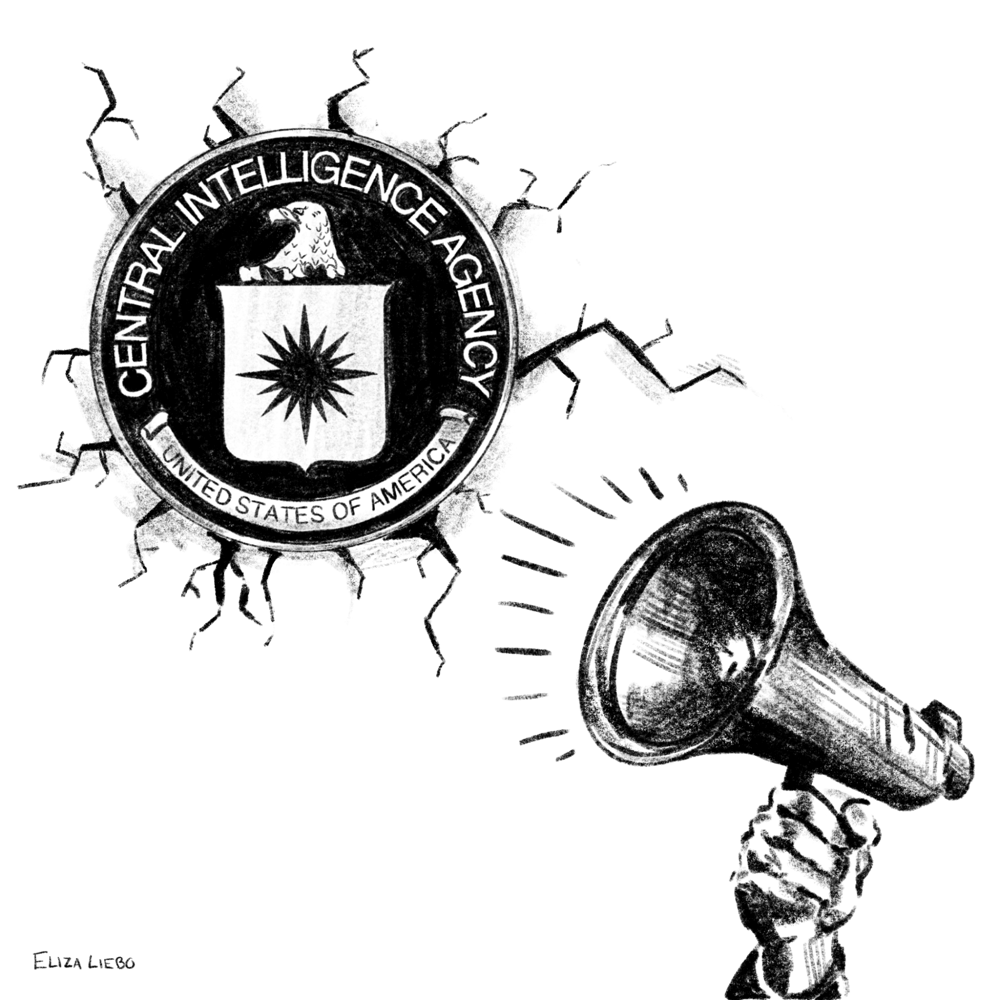
Several students protested the talk, gathering outside the space to distribute material critiziting the agency’s record of foreign intervention and detailing decades of anti-CIA activism at the college, and disrupting the talk.
Consentino also spent the month of J-Term teaching a Political Science course titled Intelligence Analysis and National Security Decisionmaking. In the course, students followed a fictionalized global conflict that escalated over four weeks, culminating in mock national security briefings.
Theo Maniatis ’28.5, was a student of Mr. Consentino’s class and attended the talk.
“We walked up and there were two students who greeted us,” Maniatis said in an interview with The Campus. “One of them handed us a packet labeled ‘The CIA is a terrorist organization.’ Philip was at the head of the room, and he said at the beginning that we weren’t there to talk about the organization, but about lessons from his career. Maybe halfway into the opening remarks, there was some question about the CIA. Philip deflected all of these.”
“Middlebury students have been protesting CIA visits, talks, and recruitment campaigns for decades,” protestor Aren Lau ’27 wrote in an email to the Campus. “We recognize the unforgivable crimes of the CIA and Middlebury's mission of preparing students “to practice ethical citizenship at home and far beyond our Vermont campus," according to its own mission statement, is desecrated by these events.”
Ava Raiser ’28, another student in Consentino’s class who attended the talk, said she viewed the protest as effective in drawing attention to the issue but wished it had taken a different form.
“They got people talking about it, so that’s something in itself. Props to them. They were very brave in what they did,” Raiser said. “I think they could have better facilitated a dialogue. These protesters are advocating for freedom of speech, and in that fight, you sort of have to stay true to your values.”
According to Maniatis, the protestors made noise during the talk, including knocking over water bottles, rustling papers, and typing loudly.
Another protestor, Finley Torrens-Martin ’28 wrote that the protest sought to disrupt the event and convince other students not to join the organization.
“The goals of the protest were to disrupt the event, prevent the speaker from convincing people to join the CIA, and tell Middlebury that we don’t want an organization that has committed international crimes,” Torrens-Martin wrote in an email to The Campus.
The CIA has had a long relationship with the college. The language schools have been a resource for CIA training since the Arabic Summer Language program began in 1982, and Middlebury has hosted CIA recruitment drives for at least that long. This partnership has been met with criticism and protest from students who feel that the CIA’s history represents an ideological and material threat to the college community.
“Higher education should not be a place where language is weaponized to serve governments or actions many consider immoral,” protestor Liam Morris ’26 said in an interview with the Campus. “As a member of this community, I don’t believe that kind of involvement belongs on our campus.”
“The CIA’s a secretive organization, so when you get a chance to learn about that, it’s cool,” said Maniatis. “I wouldn’t say I have particular feelings about the CIA. I understand it’s essential to national security, so you can’t get rid of it. I also realize there’s definitely skeletons.”
Torrens-Martin believed that the protest was successful. “I think we were also very successful in disrupting the meeting itself. The speaker was reasonably distracted by our tactics and our persistent questions showed how little he was willing to actually answer real questions from the public.”
The CIA’s relationship with Middlebury students has historically been somewhat fraught.
This past summer, Middlebury students Ryan Ulen ’26 and Violet Gordon ’26 faced threats of disciplinary action (now rescinded by the college) for handing out pamphlets regarding the CIA’s record of violence and global destabilization. In the summer of 2019, a student in Middlebury’s Arabic graduate language program was investigated (and subsequently cleared) for speaking about kidnappings and torturings perpetrated by the CIA at a recruitment talk.
Raiser, another student in Mr. Consentino’s class offered a more moderate perspective in an interview. “The CIA has done some pretty horrible things. That’s something that I agree with, that’s something that I acknowledge. When it comes to the protesters, I 100% agree with their issues with the CIA. Philip does too. But ultimately, what is a Middlebury education if not to best understand the systems around us?”
Editor’s note: News Editor Rachelle Talbert ’28, Managing Editor Yuvraj Shah ’26 and Editor-in-Chief Mandy Berghela ’26 contributed reporting to this article. Theo Maniatis ’28.5 is a sports editor for The Campus.