
I figured this wouldn’t be an ordinary career talk when I arrived at the Robert A. Jones House (RAJ) on Jan. 20th, and a student handed me a packet with a headline emblazoned in white: “The CIA is a Terrorist Organization.”
The CIA “terrorist” that afternoon was a retired analyst and Middlebury alum, Phillip Consentino ’00, who was there to discuss lessons from his lengthy career. I knew him as the mild-mannered, thoughtful professor teaching my J-Term class; while I don’t intend to join the CIA, I was keen to learn more.
However, with protestors accounting for half of the 40 students present, a productive conversation never stood a chance. A protest should aim to have a positive impact and draw attention to an issue, but this one only seemed to alienate students who were trying to learn. I thought the protesters could at least have explored other ways to make their point before disrupting the conversation.
The protestors sounded alarm horns, stomped, typed loudly, rustled paper, coughed, and knocked over water bottles. Among the interruptions were questions about whether the CIA “still hired Nazis” and pursued “creative torture tactics.”
The former analyst explained his perspective, arguing that open discussion is essential to understanding U.S. national security policy. He offered to talk afterwards with the protestors or go out for coffee in town with them, even though the events he’d been questioned about happened before he worked for the CIA. No one took him up on the offer. The protestors marched out of the building, chanting: “CIA, Terrorists in Action!”
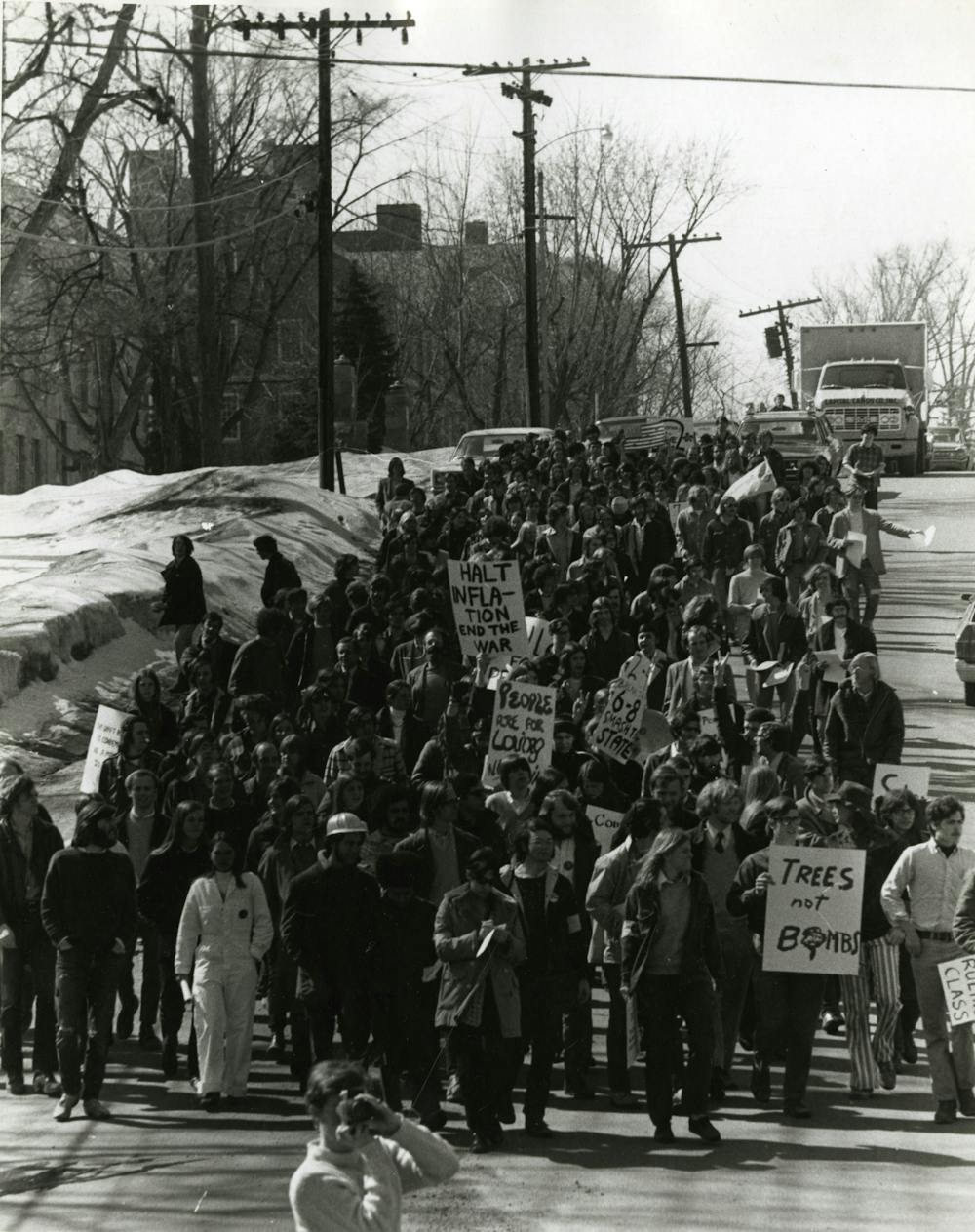
Protests are a crucial part of our commitment to debate and free speech – and they can be meaningful. In the 1970s, student protests nationwide helped pressure Washington to pull out of Vietnam. Some 250 Middlebury College students took part, marching down College Street toward the local draft office in town. Uncovering this story in the archives, I felt proud of the alumni who organized what was the first major protest in Middlebury’s history.
Last May, I was similarly inspired when over 300 Middlebury community members gathered outside the Old Chapel to challenge staff budget cuts and urge the administration to support its hard-working employees. But in the RAJ that day, I felt deflated by the interruptions, which seemed to have no clear objective.
There were other ways to raise awareness about legitimate ethical concerns with the CIA — through a J-Term workshop on the history of the agency, a talk on campus, or an op-ed. In the past, Middlebury students have explored those routes. In 1983, students condemned the CIA’s violation of human rights in a Campus op-ed and five years ago, a group started a petition to ban recruitment sessions on campus from the CIA, FBI and NSA.
However, the students responsible for those efforts have since graduated. With the chance to convince a new generation of students, the protestors chose to heckle a professor and ask unserious questions. It was clear that dialogue and mutual understanding weren’t their goals.
My guess is that the protestors wanted to create enough commotion to discourage future partnerships between Middlebury and the CIA — whether that means hosting a retired analyst on campus or holding a formal recruiting event. In the long run, however, hounding the agency off campus won’t influence how the CIA is run. The muddled afternoon didn’t even make it onto Public Safety’s radar, let alone Langley’s. If the protestors wanted to effect change within the CIA, their best shot would have been to ask advice from the retired analyst in the room.
In the future, we should protest with purpose, not only to disrupt. A protest can be a valuable tool to effect change and has been throughout American history. It’s unhelpful, however, to protest without a goal, to use it only as a megaphone to shout our opinions. If you plan on taking people’s attention, it’s important to have something worthwhile to say.
In the end, the RAJ conversation wasn’t a complete waste of an hour. After the protestors had departed, the remaining 20 or so students lingered to ask questions. What was supposed to last an hour was successfully crammed into the next 15 minutes. When I met with the former analyst afterwards, he said he wasn’t angry at the protestors. His only regret was that they never reached out to talk to him.

