
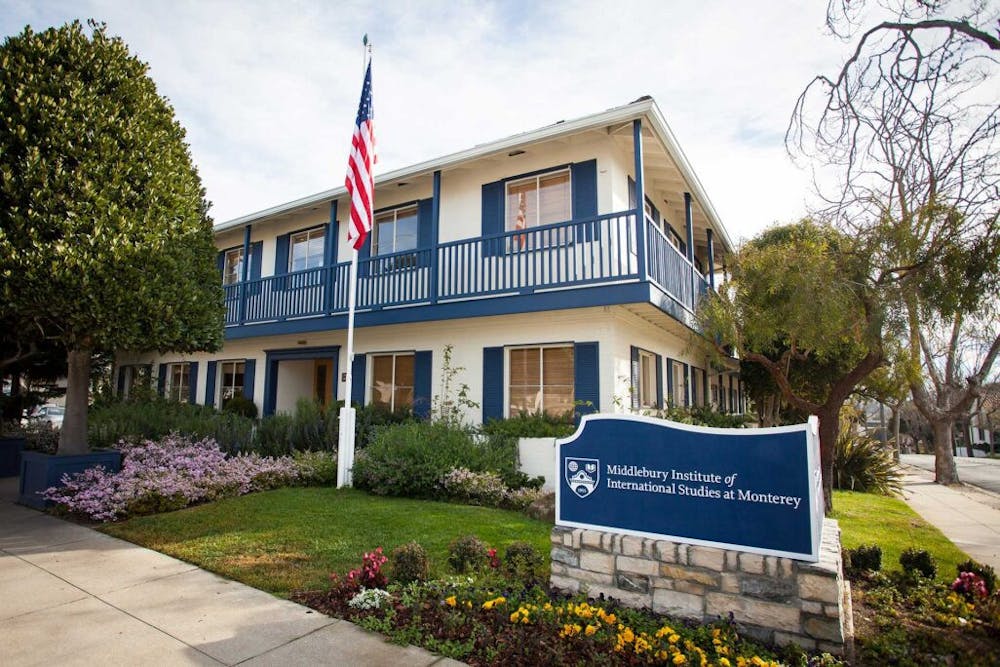
With the decision to shut down several programs at the Middlebury Institute of International Studies (MIIS) within two years finalized, Monterey-based faculty, staff and students are mourning the future of their school. On the other side of the country, the Vermont community has commended the choice, but is left wondering what the pivot will really change in the short term considering the college’s persisting budget deficit. Administrators have decisions to make about what is to come for two campuses that, though thousands of miles apart, have been intertwined for 20 years.
For many at MIIS, the announcement was a shock. Professors of Nonproliferation and Terrorism Studies Jeff Knopf and Avner Cohen, who have both taught at the graduate school for more than a decade, said the August decision to close the Institute was not what they expected.
The faculty were well aware that the Institute had run deficits for years, that enrollment had dropped to an all-time low and that their Vermont colleagues had advocated to close its doors. Knopf’s introductory courses that once filled 50-seat classrooms now use only about two-thirds of the space, he said, and Cohen recalled watching the student population of approximately 750 when he arrived in 2011 shrink overtime to its current full-time enrollment count of under 500, a decline exacerbated by the Covid-19 pandemic.
Still, many believed that MIIS had time to facilitate a revival. A four-year business plan was underway in its second year, aimed at stabilizing finances and boosting enrollment.
“We thought that the commitment to this campus, to its potential, was still there despite the fact that we were bleeding,” Cohen said. “We were stunned.”
Jeff Dayton-Johnson, vice president for academic affairs and dean of the Institute at MIIS, said that besides noting the Institute’s failure to reach certain quantitative metrics outlined in the business plan quickly enough, he thinks the Board of Trustees took the recent pressure on higher education by the Trump administration into consideration when making their decision. Federal funding and enrolling international students are essential to keeping the Institute afloat, he said.
MIIS employs approximately 130 full-time faculty and staff that will lose their jobs as a result of the closure, releasing them into a limited job market in the Monterey area and in higher education at large.
“I don't want to pretend it's going to be an easy adjustment for any of us,” Dayton-Johnson said.
Faculty at MIIS are not tenured but are on contracts of up to six years, providing them with job security until that contract expires. Those with contracts that extend beyond June 2027 will be reassigned and compensated until their allotted working period is over, but the nature of those reassignments are yet to be determined, according to Dayton-Johnson. Knopf said he thinks most professors will begin looking for new jobs right away, given the highly competitive higher education job market. They could leave their positions at MIIS before June 2027, even if they teach a program’s required course.
Some staff have already received notice of their termination with four months notice and more will receive the same news soon. Dayton-Johnson declined to give a count for the first round of layoffs, but said that the first positions to be eliminated will be those that are no longer essential, such as admissions staff. Jobs in areas such as career services and facilities will remain until the very end, but he said that fewer staff across most departments will be necessary because the number of students at MIIS will gradually decrease over the course of the next two years as they complete their degrees. By the Add/Drop deadline for courses on Monday, 14 students had canceled their registration for this semester.
None of the staff members The Campus contacted for this article responded to requests for interviews, which Knopf speculated reflects their worries about being terminated early.
Some Middlebury-based staff also work to support programs in Monterey, and will therefore be able to continue this work as long as necessary. However, this relationship goes both ways: Some Monterey staff are essential to Vermont operations.
“We've been undergoing a process of integration of operations between the campuses for more than 10 years, so untangling that is going to be complicated,” Dayton-Johnson said.
There are some joint Bachelor of Arts/Masters of Arts degrees at MIIS that take longer than two years to earn, placing students who have just enrolled in these programs in an unexpectedly difficult situation. Dayton-Johnson clarified that plans are in the works to accommodate these students, which may include changing requirements or offering extra J-Term or summer courses.
As administrators weigh logistics, faculty in Monterey described a community in mourning and uncertainty. Knopf said that the mood on campus had been on the incline since returning to in-person instruction after the Covid-19 pandemic forced remote programs. But now, they are hurting.
“For me, the most important thing is that this will be a loss for the world, because the contributions we make globally won't exist anymore after we are closed,” Knopf said.
The budget cuts that shook the Middlebury community in Vermont in the spring, particularly employee retirement benefit reductions, are what sparked protests and calls to close the Institute. At a faculty meeting at the Bread Loaf Campus on Sept. 5, college President Ian Baucom addressed those cuts in the context of his and the Board of Trustee’s decision on the closure.
“Our budget is still strained,” Baucom said. “But with the painful actions of the spring and the decision to wind down our programs in Monterey, we are closer than we have been in a long time to getting our budget balanced.”
Laurie Essig, professor of gender, sexuality and feminist studies and a member of Middlebury’s American Association of University Professors (AAUP) chapter, helped write the Sense of the Faculty Motion passed in May calling for the closure of MIIS. She said that while she was gratified to see the college take this important step towards improving Middlebury’s finances, she does not think it will result in employee benefits being restored.
“I certainly am sorry and very concerned for our colleagues out there, and I would love to see a plan for converting this financial albatross into at least a net zero cost,” Essig said. “Continuing the program for two years with no definite plan of selling it or converting those assets into something that's not costing Middlebury money means that it's going to cost another $25 million over the course of the next two years.”
She thinks some employees who will be laid off from MIIS could be rehired to fill shortages on the Vermont campus in understaffed areas such as the library or lab sciences.
Knopf noted that he and other MIIS community members were taken back by the expressions of celebration expressed over the closure on social media.
“I've already had conversations with some of our students who are very hurt by that, and it's been disheartening,” Knopf said.
“The legacy of MIIS will endure,” Dayton-Johnson said. “Even after we stop giving classes, the work that our tens of thousands of alumni… will continue to do us proud in the wider world, in order to embrace this extraordinary academic community during these two years while we still have it.”

Mandy Berghela '26 (she/her) is Editor-in-Chief
Mandy has previously served as the Managing Editor, Senior Local Editor, a Local Section Editor and Staff Writer. She is majoring in Political Science with a minor in History. She currently is Co-President for the Southeast Asian Society and an intern with the Conflict Transformation Collaborative. Last summer, Mandy interned with U.S. Senator Kirsten Gillibrand and participated in the Bloomberg Journalism Diversity Program.
Madeleine Kaptein '25.5 (she/her) is the Editor in Chief.
Madeleine previously served as a managing editor, local editor, staff writer and copy editor. She is a Comparative Literature major with a focus on German and English literatures and was a culture journalism intern at Seven Days for the summer of 2025.


