
It was a bit of a shock when I first saw the headlines announcing the sudden death of Iranian Ayatollah Ali Khamenei. It came so fast, unlike other past U.S.A.-determined targets (Iraqi Saddam Hussein and Libyan Muammar Gaddafi), whose deaths usually marked the end of a long-lasting war. As the mission unfolds, it becomes clear that the Iranian political structure Khamenei has represented differs from political structures that depend on a single or several political figures, and it is not as easy to dismantle as some think. Revolutionary Guard Corps, Basji Militia and Shia religious forces continue to have steady social, economic and population foundations that could create a stream of substitute figures to continue to run the country, even after assassinations and strikes. In my opinion, without an achievable and damage-minimized plan that aligns with a persistent and clear objective, foreign interventions should not be revoked and should never be self-centered.
So far, the U.S.A. and Israel have partially invoked humanitarian reasons such as rescuing protesters to initiate the war. The mass killings and casualties of civilian protesters, internet blackout, imprisonment of activists like Narges Mohammadi and Nasrin Sotoudeh and systematic oppressions against Kurdish and Baloch ethnic minorities are all clear violations of even the most basic human rights principles. In such cases, similar to the Rwandan Massacre or Massacres during the Yugoslav Wars, global intervention is definitely debatable and should be discussed publicly, especially when its domestic checks and balances are malfunctioning or may never have been established. However, I would argue that while international intervention might be part of the reason, it is not the full picture of these operations. Considering the lack of domestic public support to deploy military overseas and the lack of organization of opposition to substitute the current government, even at the start, there is a gap between its public objective of humanitarian intervention and its actual approachable method to achieve regime change.
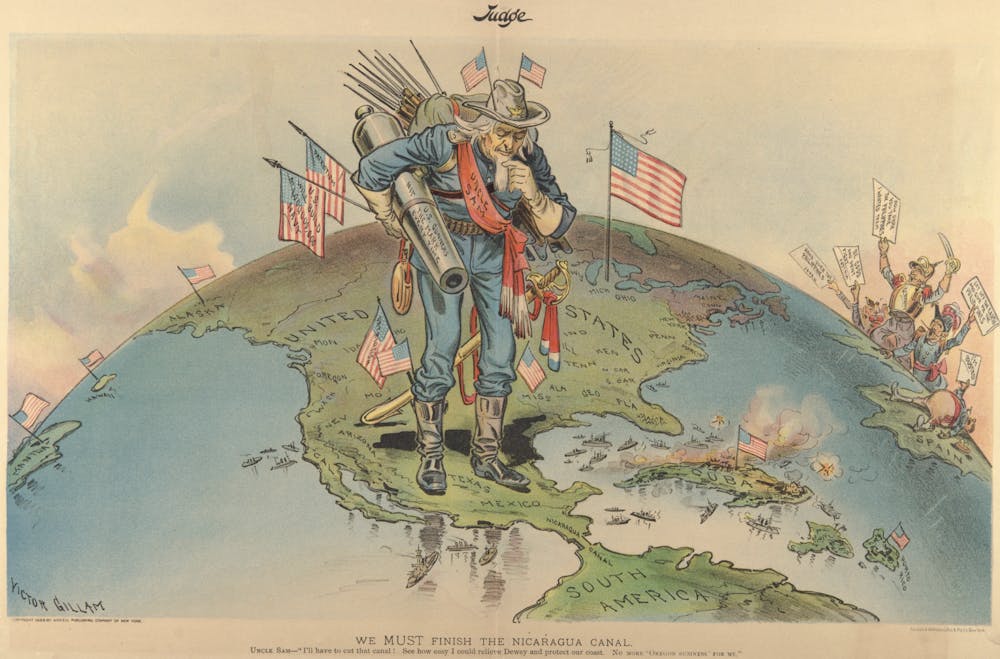
I would nevertheless argue that geopolitical strategic security reasons — their fear of Iran having a sufficient amount of enriched uranium and technology to complete its development of nuclear weapons–are the major driving factors. From Israel's perspective, the successful development of nuclear weapons along with Iran’s support of Hamas, Hezbollah, and Houthis might threaten Israel’s security, especially considering it is a small nation that could not stand even just a single strike of nuclear missiles. Similarly, the U.S.A. has its own fear that Iran’s possession of nuclear weapons might interfere with its vested economic and political interests in the Middle East. Both countries might have determined that Iran possessing nuclear weapons might make it more uncontrollable, and thus concluded an imminent threat in the belief that sacrifice now is smaller than later. Following this logic, the current war in Iran could be considered a close follow-up of the U.S.A.’s secret strike on Iran’s nuclear facility last June. In conjunction with the U.S. mission in Venezuela and its demand for the ownership of Greenland, the current operations in Iran closely align with the U.S. government’s view of dividing the world into different zones of American influence. It is consistent, and to some extent has expanded, the Monroe Doctrine that the current U.S. administration revived. More recently, it has become clear that the U.S.A. will achieve its goal of protecting its interests by fair means or foul.
I believe it is fairly easy for the U.S.A. and Israel, through this mission in Iran, to ultimately curb its nuclear development through threats and bargains. However, I believe this also sets a very dangerous precedent for the world: powerful nations could use their state strength to declare their security zones and pursue their interests by any means. Both the past, such as the colonial era’s Scramble for Africa, and the present, such as the ongoing war in Ukraine, suggest the danger posed by the struggle for a sphere of influence. Unfortunately, it is always the most vulnerable, the civilians, who suffer in the war from both sides, fighting and struggling in a war that often creates a vicious cycle of continuous tension and conflicts without an end in sight.

