
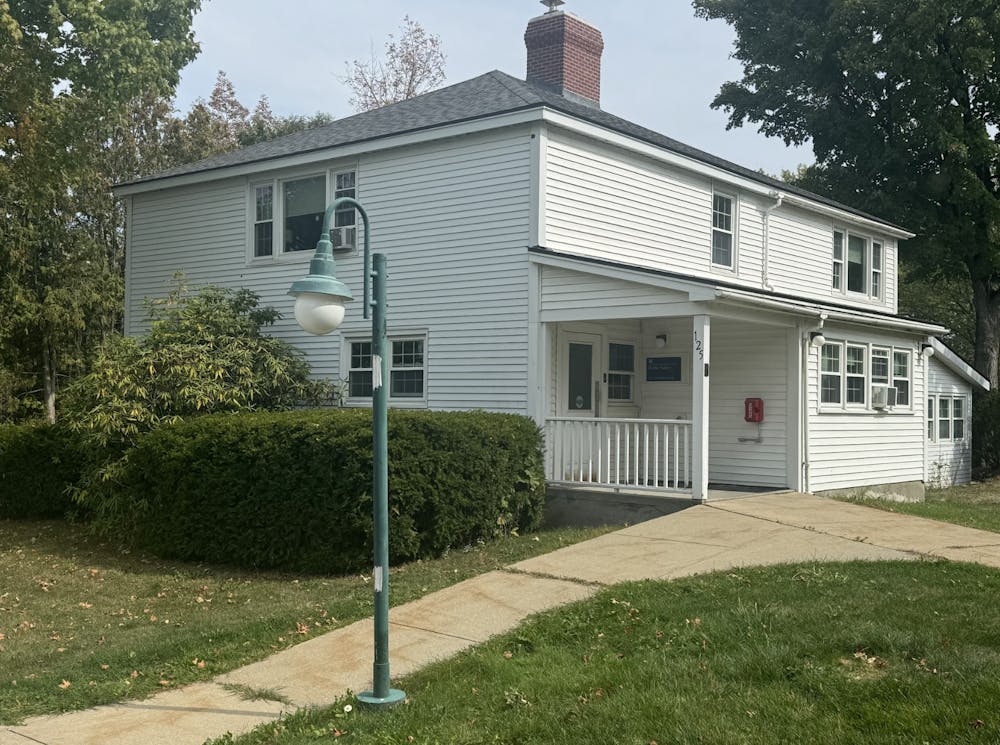
In a Sept. 5 email, Associate Vice President for Safety Demitria Kirby and Dean of Students Joe Russell reminded students that parking on campus is “a privilege, not a right,” listing the college’s escalating accountability pathway to crack down on parking violations this year.
Measures range from tickets with $25-$100 fines to financial holds on students’ accounts and prevention of participation in course registration and housing selection. In the first few weeks of school, students have already noticed Public Safety’s stricter ticketing action.
This announcement follows calls for harsher policies last spring after faculty expressed frustration over limited parking availability and facilities encountered problems snow plowing roads due to parking violations. The complaints led the administration to consider preventing students from graduating unless they paid all of their parking fines.
Department of Public Safety Lieutenant Rick Whitney told The Campus that this semester’s enforcement may look different in certain respects, one being the reintroduction of towing, which did not occur last year. While students may perceive these policies as new, he emphasized that they are not.
“This is not a change in policy, but a return to a necessary process that was taking place routinely several years ago,” Whitney wrote in an email to The Campus. “We try to improve compliance through communication directly to students by phone/e-mail when we are able, issuance of warnings or tickets, and ultimately having the vehicle removed at the owner's expense.”
Enforcement focuses on parking violations in high priority and restricted locations on campus, notably along College Street, behind Proctor Dining Hall and the adjacent tennis courts, and along Old Chapel Road. Whitney shared that warnings and tickets remain important enforcement tools to educate students, despite the potential usage of towing when needed.
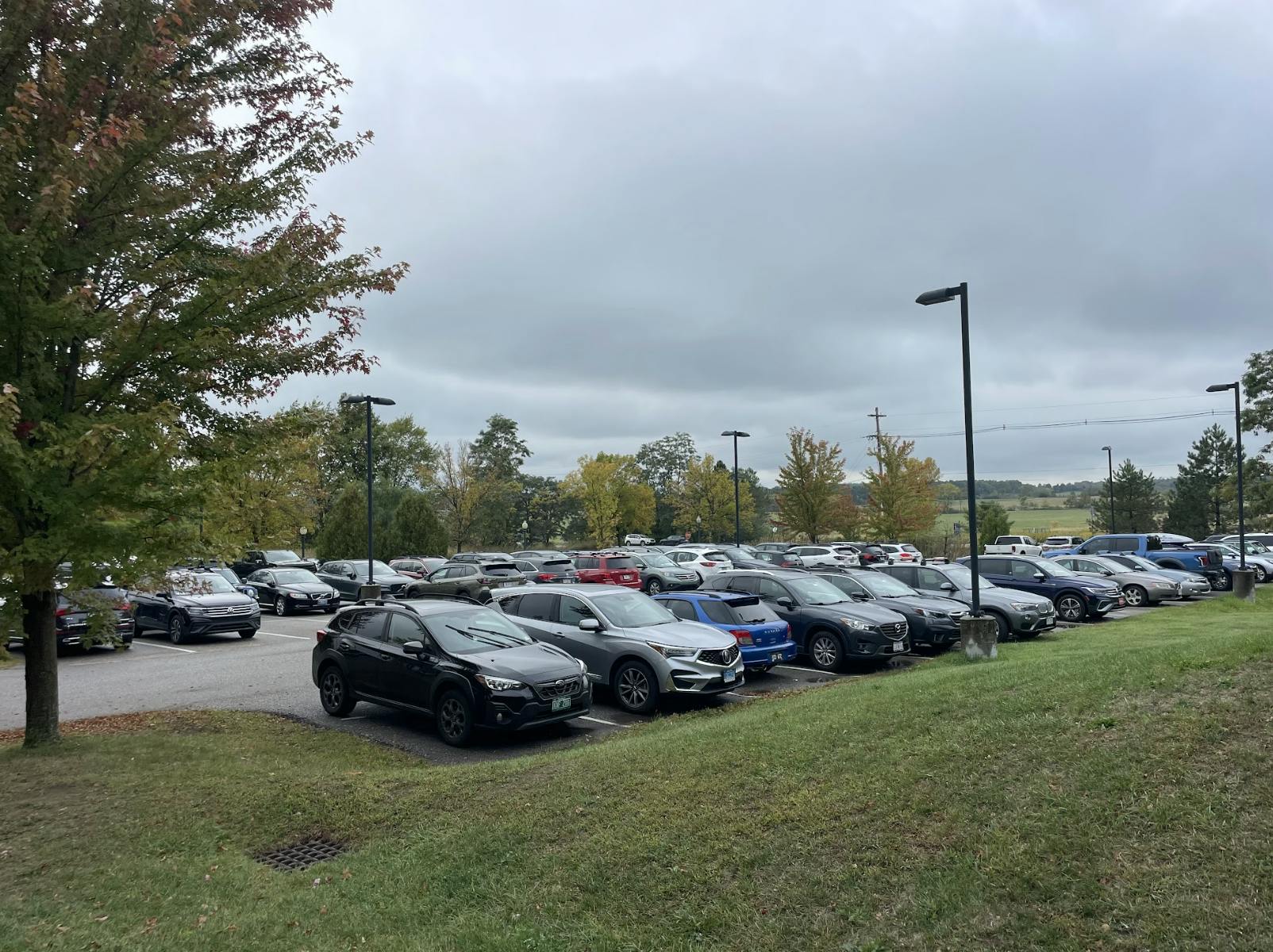
In past years, Public Safety offered a two-week grace period for parking at the start of each semester. That policy ended this fall.
“Traditionally, we've had about two weeks of a grace period for students and faculty and staff to park wherever,” Smita Ruzicka, vice president for student affairs, said in a Sept. 5 faculty meeting on the Bread Loaf Campus before classes began. “We're not going to have that. Come Monday, parking will be fully enforced.”
Murray Helzer ’26 received a $50 ticket on the second day of the semester after parking in the faculty lot next to Atwater Commons, which sits adjacent to a student lot.
“It was quite annoying to get a ticket the second day of school,” Helzer said in an interview with The Campus. “I was moving my stuff from my friend’s place to my dorm. I was so surprised when I got the ticket, and I think that they were in too much of a hurry to start giving tickets.”
Helzer acknowledged that he had parked in the wrong place, but hoped Public Safety could be more flexible and make the distinction between student and faculty lots clearer.
“I understand, since it was a faculty lot, but the distinction between faculty and student lots was quite misleading,” Helzer said. “I wish [Public Safety] could give us more time to adapt to the new semester.”
Francisco Téllez ’26 is in his first semester of having a car on campus and said his parking options feel limited.
“I wouldn’t say student parking locations are the best, and the actual availability is limited,” Téllez said. “Once I came back to campus at 10 p.m., the student lots near Atwater Dining Hall, Atwater Commons and Ridgeline were all full, so I had to park at Mahaney across campus.”
Téllez added that enforcement feels overly strict. He felt the administration was asking more of students than it provides in return.
“[The] requirements don’t match the overall infrastructure the college has,” Téllez said. “My friend forgot to apply for a permit. Of course, that was on him, but when he tried to apply online the website didn’t work. He went to Public Safety’s office, but no one was there.”
In the spring, Associate Professor of History Maggie Clinton shared her frustrations with students constantly parking in faculty spots, preventing professors themselves from finding parking.
“The extra time we spend looking for parking and walking to our classrooms and offices is time that's not reflected in our salaries,” she wrote to The Campus. “For years now, we’ve been asked to give five minutes here, five minutes there, to tasks that used to be addressed by other employees but now fall to us.”
Whitney stated that the crackdown aims to create a more comfortable on-campus parking experience for all stakeholders, including students, faculty, staff and visitors. He mentioned that the administration has been struggling with students’ compliance with parking policies for years.
“Middlebury operates as a residential campus, designed to encourage walking, biking, and use of local transit when needed. Driving between classes, residential buildings, and the dining hall undermines our environmental goals and the residential nature of the college,” the Sept. 5 email from Kirby and Russell reads.
Editor’s Note: Editor-in-Chief Madeleine Kaptein ’25.5 contributed reporting to this article.
Hugo Zhang '28 (he/him) is a News Editor.
Hugo previously served as an Online Editor. He intends to major in Economics and Geography. He enjoys cartography, traveling, and history. Last summer, he studied at Sciences Po Paris and traveled across Europe. He has also conducted research on ethnic minority policies, economic transformation, and urban planning in Northeastern China, also known as Manchuria.


