
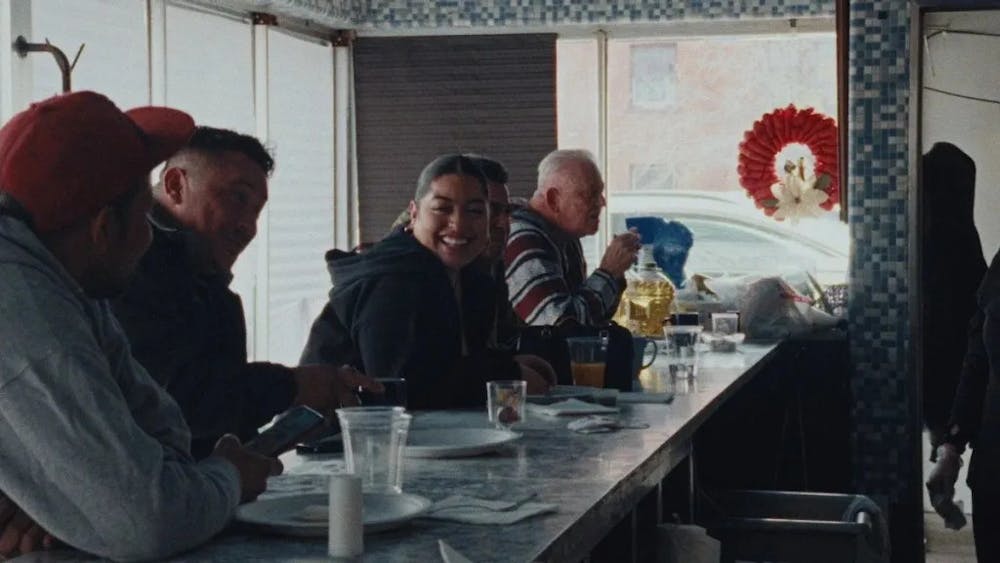
“Valentina” chronicles 48 hours in the life of a fictional young woman in the border city of El Paso, Texas, as director Tatti Ribeiro describes it, “a plotless hangout.” The film premiered at the Mill Valley Film Festival (MVFF) this past fall, where she was awarded the Mind the Gap Creation Prize, a $10,000 grant that recognises a female director making her first or second feature-length narrative film for her artistic vision. Although it has yet to reach the big screen, Middlebury students had the privilege of screening this film on March 3 through the Department of Film & Media Culture.
The showing was accompanied by a Q&A with writer and director Ribeiro. She was born and raised in a small beach town outside of San Francisco. After graduating from the University of Southern California School of Cinematic Arts, she began reporting on immigration in El Paso. Her time working and living there for about ten years inspired Ribeiro to make “Valentina.”
Made in a hybrid documentary format, “Valentina” masterfully blends the reality of those living in El Paso with the crafted, chaotic and humorous world of the central character, Valentina. Ribeiro joked in the Q&A that she chose this style for the film mostly because it is the cheapest way to make a movie. Beyond that, the genre helps the audience fully immerse themselves in the energy of El Paso and the immigrant community that built it.
The opening scene follows Valentina and her brother as they walk and chat while crossing the border. The scene runs for five minutes, the actual amount of time it takes to walk this short distance. What viewers expect to be a moment of tension is actually a piece of the cityscape the characters have grown accustomed to, one that immediately challenges our assumptions about the border.
The film coalesces around a city council hearing where Valentina hopes to abolish OmniBase. This program, which still exists in El Paso, prevents people from renewing their driver’s licenses until all fines and costs have been paid. As traffic violations increase, so do the fines, creating an impossible cycle that disproportionately affects lower-income communities.
The meld of fiction and reality is deepened by the fact that Valentina, portrayed by Keyla Monterosso Mejia, who’s best known for her roles in “The Studio” and “Abbott Elementary", acts alongside her actual brother and father. Monterosso Mejia beautifully directs the story with her charisma, and I would venture to call this a laugh-out-loud comedy. At one point in the film, she sits in a cafe, conversing with locals about BBLs. At another, she offers a theatrical tarot reading that costs around $100. The scenes are loosely scripted, mostly based on what sprang up naturally and on how people responded to the actress's nature.
While the film was comedic, Ribeiro maintained her goals: to show what the El Paso-Juárez border feels like, despite what we are inundated with in the news. When Valentina presents to the city council, the moment coincides with her father performing onstage in a one-man show. The scenes play on top of each other, with her father’s monologue carrying on over a sequence of family photos and home videos. Drawing on personal experiences, Ribeiro also aimed to portray the dimension of Valentina’s father. Ribeiro’s father is an immigrant, and she noted that he has a whole artistic side that the world never really gets to see.
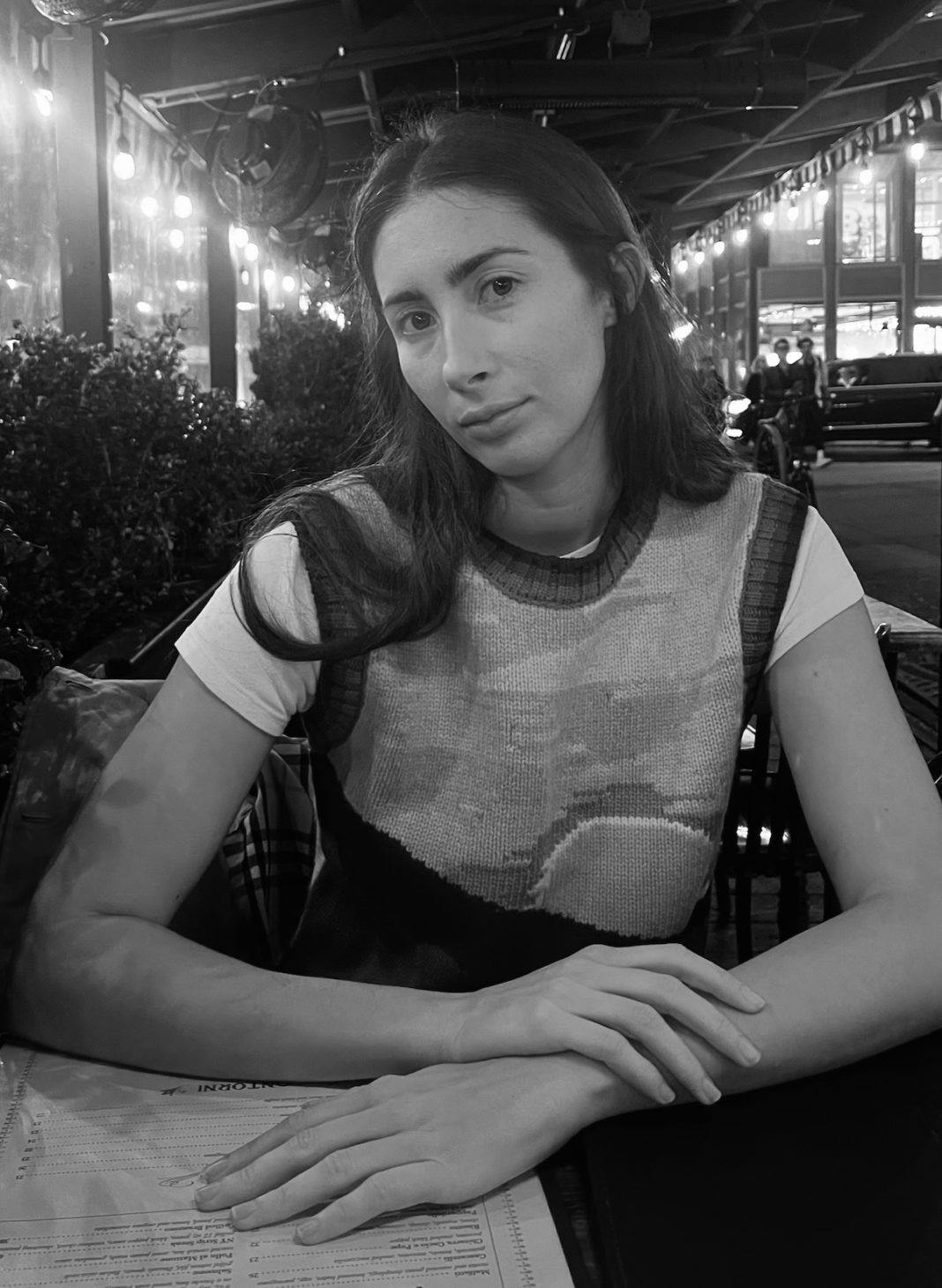
The film falls shy of 80 minutes, making it widely accessible to those who struggle with their attention span, and simultaneously deeply humanizing. In an interview at MVFF, Ribeiro said, “I am really not interested in exploiting somebody’s most painful memory for myself.” Her portrayal certainly is not. It is joyful and stressful, real and raw. In an age of technology that pushes only the bad and rarely the truth, narratives such as these become more important than ever.


