For nearly four years, after long sessions in any number of hidey-holes where I pretend to do work, I have traipsed home in the dark. This is hardly unique at Middlebury, upon Davis’ closing at 12:00 a.m., students stream out of the building, returning to their dormitories like careworn monks. A late-night stroll home has been a standard at our college for over 200 years, a tradition that has been similarly observed at countless other institutions around the world.
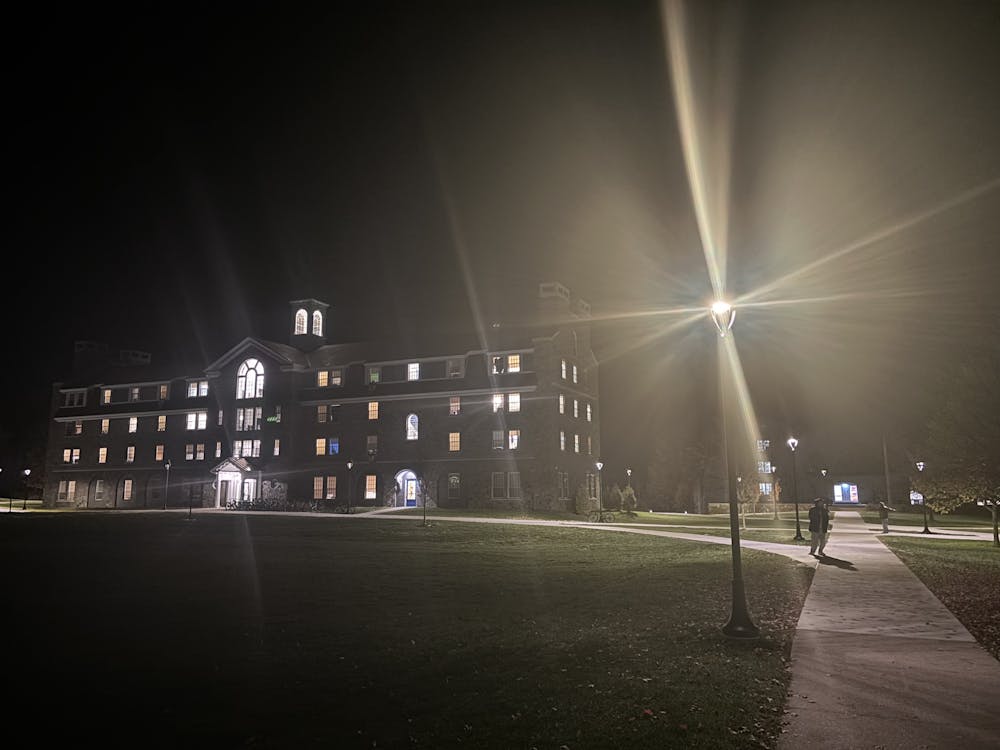
Except, the Middlebury night-owls of today are now greeted with the sallow glow of lampposts placed at startlingly small intervals across campus: When night falls, whatever collegiate charm the school possesses during the day is overpowered by their unearthly hue. Middlebury is replete with satisfyingly designed stone edifices and masterful works of the Georgian and Colonial Revival styles, among others. Yet, one of these light fixtures is never more than three meters from any of these buildings, bathing them in a fluorescence normally reserved for operating rooms.
There will be those of you who will invariably think, “This guy seems a little off-kilter, prattling on about lampposts.” Worry not, dear skeptics, I have a more practical point: Having a 10-foot lamppost whose bulbs emit the power of two suns directly outside your window is hardly a recipe for restful sleep. As a degenerate college student, I compromise my circadian cycles enough on my own time; the last thing I need is to make it to bed, pull my window shade down, and have my lizard brain tell me it’s 2:00 p.m. because my room is filled with enough unnatural light to read the King James Bible in 10-point font.
Middlebury’s classic wrought iron lampposts, which line much of our campus, aspire to an old-world charm, but their lightbulbs rid them of any character they might otherwise possess. This problem can be easily remedied, but the same cannot be said for the newer additions to the college’s haphazard collection of lighting fixtures. The sympathetic critic might simply describe them as austere. I tend to prefer ‘sheet metal rectangle atop concrete podium’ as a more faithful description of these affronts to aesthetic sensibility.
For an example of how this seemingly minor concern has material impacts on our campus, take Middlebury’s most recent major construction project, New Battell. Despite some minor quibbles I have with the garish cupola up top, it is an attractive, classically inspired variation on a Middlebury theme that sits reasonably well in its surroundings.
Evidently, however, the tens of millions that were drummed up for that project did not extend to the surrounding hardscape. The building is beset on all sides by a collection of lampposts that would make even that prophet of modernist design, Le Corbusier, shudder in his boots. Fixing more attractive, warmly lit lanterns around this façade would immeasurably improve the area at night and, in financial terms, would have represented a pittance of the project’s sum total.
While things like these may seem small, they represent a larger carelessness in how and where we spend our money. The big, brash and obvious stuff, like New Battell, gets the same amount of attention as ever, but finer details are sacrificed in a morass of spreadsheets, depreciation schedules and amortization tables. The money spent on things like lampposts is often considered excessive in the moment, but this kind of thinking runs counter to the mission of a higher education institution. As the architects worked to make New Battell a cohesive and aesthetically pleasing part of campus for generations to come, the administration should consider how these details might make someone’s bitterly cold walk back from a five-hour stint in Davis just a little bit better a century from now.