
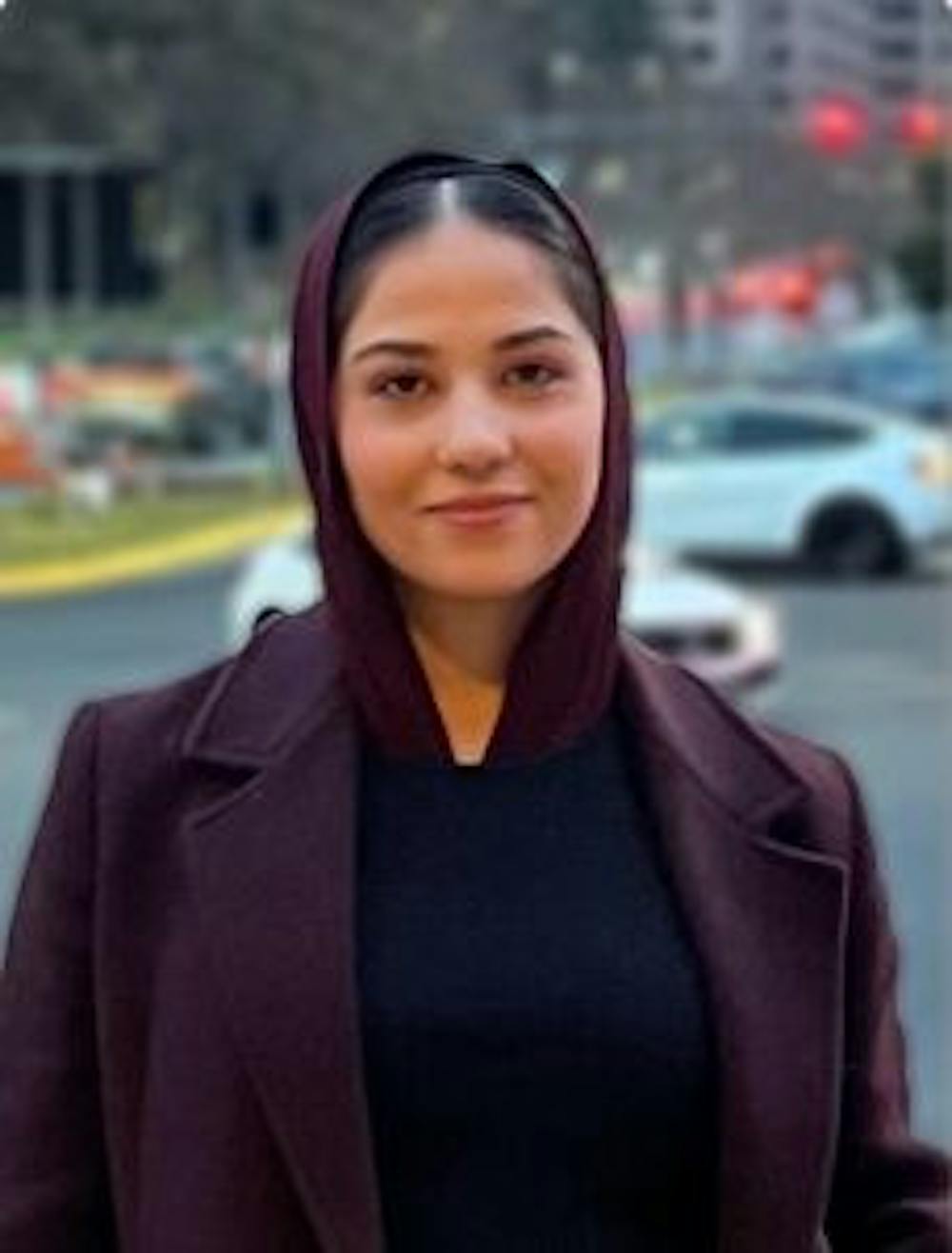
In August of 2021, the Taliban’s violent takeover of Afghanistan halted the education of millions of women. In 2023, Taniya Noori ’25.5 made it possible for a few of them to continue.
Afghan Tutoring Network, founded in 2023 by Noori, is a remote tutoring service that provides support for Afghan women and girls who are now banned from schools under Taliban rule. Since 2021, Afghanistan has been the only country in the world that bans secondary and higher education for girls and women. Increasingly stricter limits are being placed on women’s ability to exist in public. According to a press-release from UNESCO, women are also banned from speaking on the radio and from travelling long-distance without the company of a male relative.
“Women are banned from everything, no opportunities for them. Later on, they weren’t able to go to parks, weren’t able to travel without male companions, so they were stripped of all kinds of rights,” Noori said.
Along with several of her classmates, Noori was forced to leave Afghanistan in 2022. She moved to Qatar, and from Qatar she moved to Rwanda, where she attended the School of Leadership Afghanistan (SOLA), a boarding school for Afghan girls that relocated to Rwanda after the Taliban takeover. SOLA was founded by Middlebury graduate Shabana Basij-Rasikh ’11, who encouraged Noori to continue her education at Middlebury. Five months later, Noori enrolled at the college.
“I just couldn’t look away from the suffering that Afghan girls, my sisters back home, were facing,” Noori said, “They can’t go to school, they can’t go to colleges.”
When she launched the program, Noori had eight students, most of whom she knew from home, as well as relatives of Afghan students at Middlebury. Over the course of two years, the program has expanded to support over 31 students and 40 tutors. Tutors host remote sessions for students once or twice a week, with two or three tutors assigned to each student. Because most tutors are American, English language skills are a priority, but those who have already achieved an advanced level of English might take subjects such as biology and computer science.
Most tutors working with the program are retired educators from Middlebury, though the array of volunteers also includes tutors from the broader Vermont area, as well as current Middlebury students. Ann Straub, Middlebury resident and an organizer for the program, connects students and tutors, as well as offering sensitivity training. Vyas Nageswaran ’26 runs a book club for some students, where they read a range of literature, including “The Kite Runner” by Khaled Hosseini, a book that tells a long and detailed history of violence in Afghanistan.
Tutors meet with students remotely through an encrypted WhatsApp channel, and their information is not shared online.
“We do everything we can to mitigate the risks,” Noori said.
Because many students are coming from impoverished areas, Afghan Tutoring Network also pays for monthly internet bills and phones. Internet connections can be spotty, however, and small phone screens are not always enough to establish a strong learning environment. To rectify this, Afghan Tutoring Network is raising money through GoFundMe in the hopes of providing laptops to students.
Noori also put out a call for any person with relevant skills to volunteer. The program doesn’t just need tutors; anyone willing to help coordinate, create or manage a website, or help fundraise can volunteer.
“Anything could be useful, because our program is expanding every day. However, we need more people to be involved. Not only that, but people should just be aware of what’s happening around the world. Condemn what the Taliban is doing to Afghan girls,” Noori said. “They have banned schools and colleges, but they can’t stop girls from learning.”


