
The Johnson Exhibition Gallery hosted a screening of the documentary film “Beyond Bars: Reimagining Justice and Healing in VT” on Oct. 24 in collaboration with its exhibit “Finding Hope Within.”
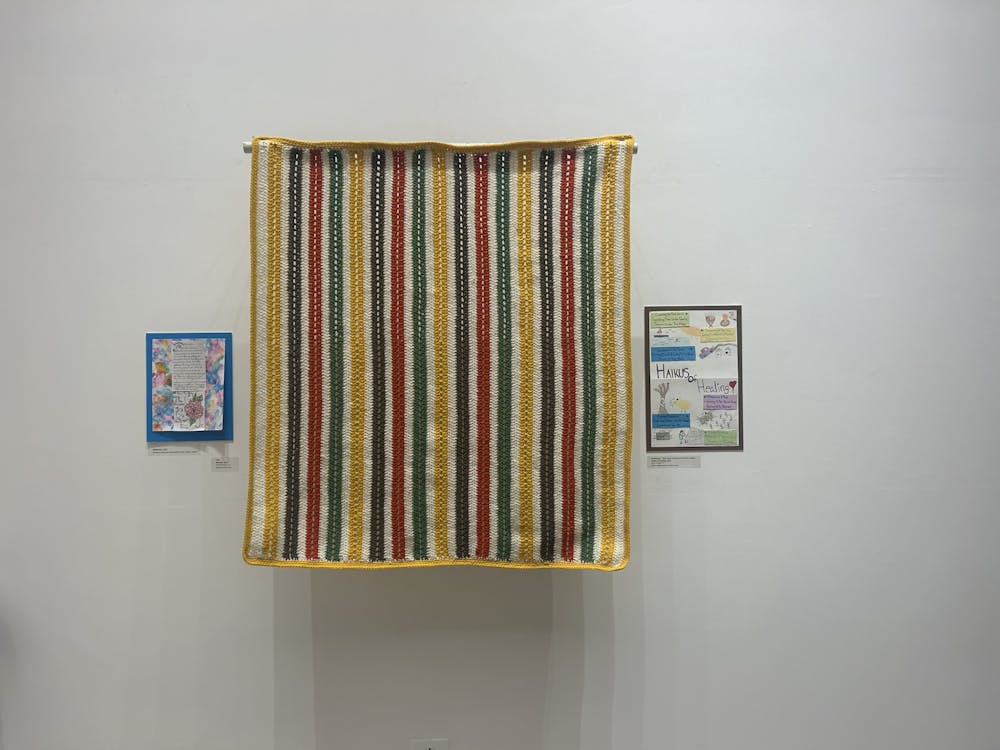
The exhibit was co-curated by John Vincent of “A Revolutionary Press”, Heather Newcomb of “Vermont Works for Women” and Ashley Messier of “Vermont Women’s Justice and Freedom Initiative”. “Finding Hope Within” features artworks of incarcerated women in Vermont, ranging from paintings to poems to crochets. It also featured “Art from Guantanamo"; work made by detainees at Guantanamo Bay who used various mediums to imagine a world far from containment.
Some of these artworks are featured in “Beyond Bars” as well, as the film also focuses on women in the Vermont prison system. The film explores social issues Vermont faces today such as homelessness, substance abuse and the carceral system. It questions our view of crime and who we define as a criminal. The film also explores how the justice system deals with crime, suggesting that we’ve been using the “band-aid” method of solving problems rather than addressing the root causes.
The filmmakers, four Vermonters, went around the state for a year, interviewing people at the forefront of these issues. They visited non-profit organizations, homelessness support groups and cooks and specialists, asking them to share their perspectives and experiences. The film revealed a growing number of people who struggle to support themselves financially in Vermont, with few government resources to help them with basic needs such as food and shelter.
Most of the women incarcerated at the Chittenden Regional Correctional Facility (CRCF), the state's only women’s prison, located in South Burlington, VT, are either victims of abuse, mental health issues, drug addiction or homelessness. CRCF usually houses no more than 200 women at once.
As the filmmakers were gathering content, the Vermont’s Department of Corrections proposed a plan to build a new correctional facility. The starting cost of this project is about $90 million. The film addresses this, questioning whether or not the government is allocating its funds appropriately. After all, the film sheds light on the lack of government support. Without government aid, homelessness, mental health issues and drug addictions become root causes of many acts of crime, and the carceral system is not empathetic towards these root causes. Through this, the film raises important questions: Will a new building solve the larger problems Vermont faces? Or is it just another band-aid?
The final section of the film is a synthesis of four interviews with women currently living at the CRCF. They share the experiences that have led them to be incarcerated and their plans for the future, expressing fear and anxiety about going back into a world lacking support systems. But their words also radiate hope and readiness to become a part of society once again.
One of the women talks about her plans of owning a food truck after her release. She plans to employ younger kids in order to teach them work ethic at an early age. She imagines the truck to be purple with a big sign saying “katastrophe,” along with music and outdoor seating.
As the film comes to an end on this hopeful note, it reserves space for questioning systemic inefficacies. How must we as individuals and as a society change the way we think about people who struggle? How can we navigate and negotiate accountability, punishment, treatment and healing? The answers to these questions are yet to be found.


