
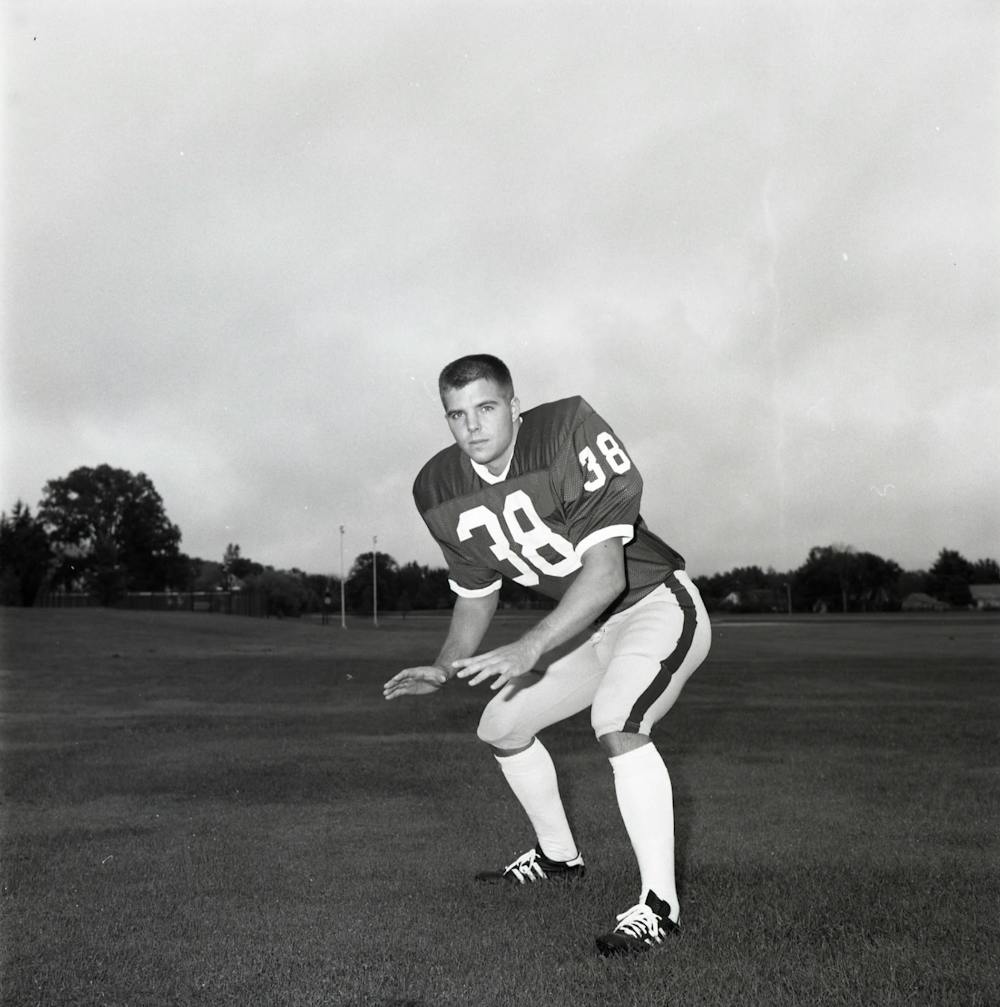
Unlike the Davis Family Library, BiHall and Kenyon Arena, fraternities existed on campus when Erin Quinn ’86 began coaching at Middlebury. Quinn has since overlapped with six college presidents, and in his time as Athletic Director alone, Middlebury has earned 69 NESCAC team titles, 19 NCAA team championships and 29 NCAA individual titles. Now, at the end of this academic year, Quinn will conclude his 41 years with the college.
Having led Middlebury’s athletics department for 20 years, Quinn is the longest-tenured athletic director in the NESCAC. Prior to assuming the role in 2006, Quinn served as an assistant coach for men’s lacrosse and football for one season after graduating in 1986. Afterwards, Quinn continued to coach at Tufts and Lake Forest College, forgoing a head coaching role to return to Middlebury. From 1990 to 1991, he served as the assistant men’s lacrosse coach, and then assistant football coach from 1990 to 2005. In 1992, Quinn became the head men’s lacrosse coach.
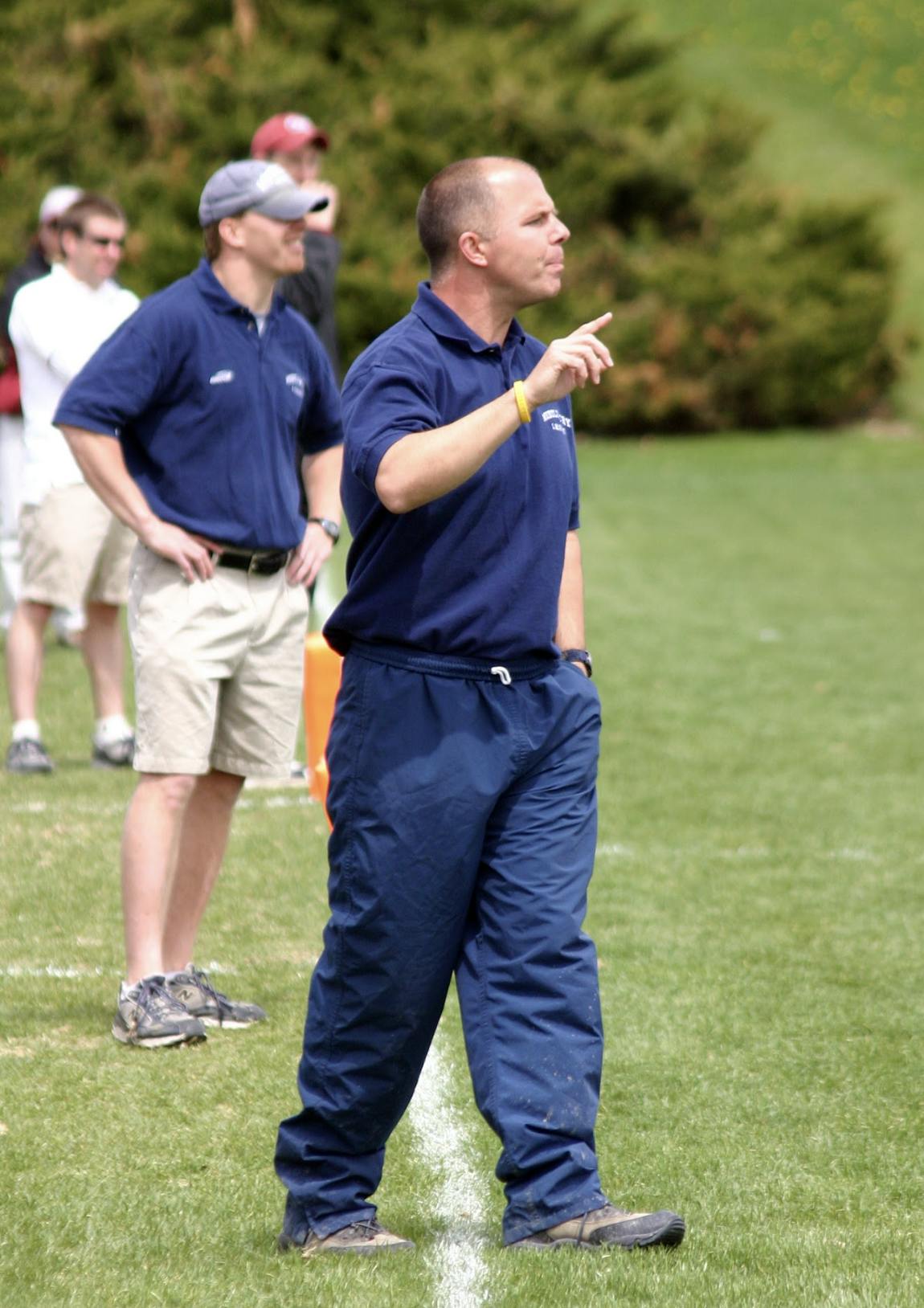
Quinn’s tenure as the men’s lacrosse coach remains a puzzle to some. Having played football for four years at Middlebury, Quinn began coaching lacrosse with no direct playing experience. Yet after 15 seasons at the helm, Quinn’s team won six NESCAC titles, three consecutive NCAA championships and finished with a 202–38 record.
Quinn credits his Middlebury education for his successes, citing a former classmate as an example of how the college teaches its students how to learn.
“This guy [his former classmate] didn’t run a huge division at Microsoft in college, nor did he speak Chinese and Japanese. He studied German and was a basketball player. He has now run Microsoft Japan and Microsoft China. Middlebury made me feel confident in my ability to learn new things,” Quinn said.
Still, the learning curve was steep. Quinn, mentored by the prior men’s lacrosse coach, Jim Grube, completed a crash course in the weeks before his first season.
“We are both early morning guys and like our coffees, so we’d meet at 4:30 in the morning to put in a full workday before the workday started,” Quinn said. Long before students’ 8:15 classes, the pair would study the game, watching and narrating film for hours until their other jobs began.
A proven learner, Quinn then made a strong case for himself when the Athletic Director position opened in 2006.
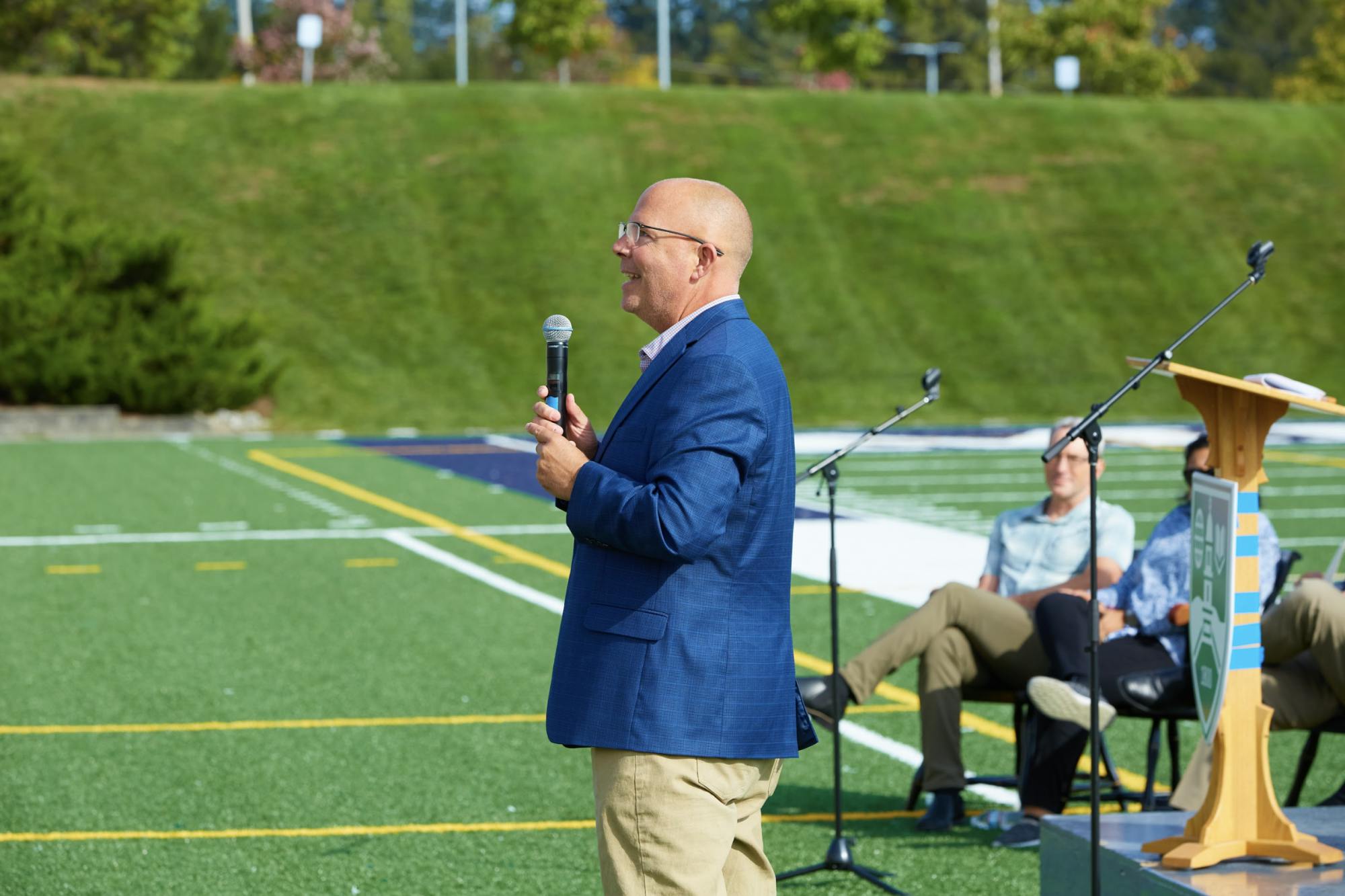
“I knew that this was again something completely different, but that I had transferable skills. I can operate in a new environment with a steep learning curve and succeed at it.”
Having intentionally run the entire men’s lacrosse program, and not merely coached the team, Quinn anticipated scaling his tasks — connecting alumni and students, building culture, fundraising and establishing mentorship programs — to the entire athletic department.
Transitioning from coach to athletic director also meant losing day-to-day contact with students and the joy of working directly with athletes. G. Thomas Lawson, Quinn’s father-in-law and Middlebury’s Athletic Director a decade prior, and Russ Reilly, the Athletic Director at the time, both warned Quinn about this loss.
“The two former people who did the same thing I did — coach at Middlebury, and then become athletic directors — were both trying to talk me out of this job [...] It helped me go into the job with eyes wide open.”
As former president Ron Liebowitz often said, the Athletic Director serves every constituent of the college: Faculty, staff, students, trustees, administration, the local community, alumni, and parents. As a consequence, it is rare that one’s decisions in the role will please everyone.
“You’ve failed a lot over time in various people’s eyes because you can’t please everybody all the time. You’ve got these big decisions that you’re making that are never right. There’s no perfect decision. You’re making these imperfect decisions with imperfect information, doing the best you can.”
In a position where most serve 10 years, Quinn’s two-decade tenure suggests that he overcame these challenges. If anything, Quinn excelled in his role, receiving the National Association of Collegiate Directors of Athletics (NACDA) Division III Athletic Director of the Year award in 2021. Yet between the titles, championships and accolades, it’s the students that have kept him at the helm of the department.
“I think we have great people here. I started with the students because ultimately that’s why we’re here [...] I think of my role as a service role, and it's in service to the students.”
The students themselves have changed over Quinn’s time. Quinn observes that athletes are specializing far earlier in their sports than before, and that the sports systems in which athletes develop have become far more transactional. Rather than playing for the love of the game, athletes — often driven by their parents — focus on mere achievement. The same trend applies to academics, and these changes have all reinforced one another at the expense of students’ mental health.
“It’s this balance of being present and enjoying it in the moment, not being transactional about the academic experience, the educational experience, the athletic experience, the social experience.” Students must learn to “slow down and enjoy and savor and thrive in the moment,” Quinn explained.
That same mindset shaped the success of the men’s lacrosse program under Quinn. Not just athletes, but all students, should distinguish the object from the purpose of an activity — winning from physically pushing yourself, good grades from learning, a perfect concert from the art of playing itself.
“We never talked about winning championships. We talked about culture, showing up every day, [and] being present for each other. We were very focused on being in the present.”
Moving forward, Quinn looks forward to having more time for family, friends and personal interests. In the works are a second-half Ironman, gravel biking, various forms of skiing, reading, and writing. For now, as Quinn prepares to leave his role, students and athletes alike ought to remind themselves of their why. If there’s one lesson to learn from Erin Quinn’s 41 decorated years with Middlebury, it’s the value of “excellence with a purpose.”
Simon Schmieder '26 (he/him) is a Senior Sports Editor.
Simon is an avid runner and biker and enjoys spending time outdoors. He is a philosophy and political science joint major with a minor in German, in addition to being a Philly sports fan.


