
“Cultural Fabrics: The Kimono Through Literary, Cross-Cultural, and Practical Lenses” commenced the Johnson Exhibition Gallery’s spring program on Feb. 9. The photos below present a small glimpse into the exhibit, but of course cannot fully encapsulate it in all its glory, so be sure to check it out before it closes on March 19.
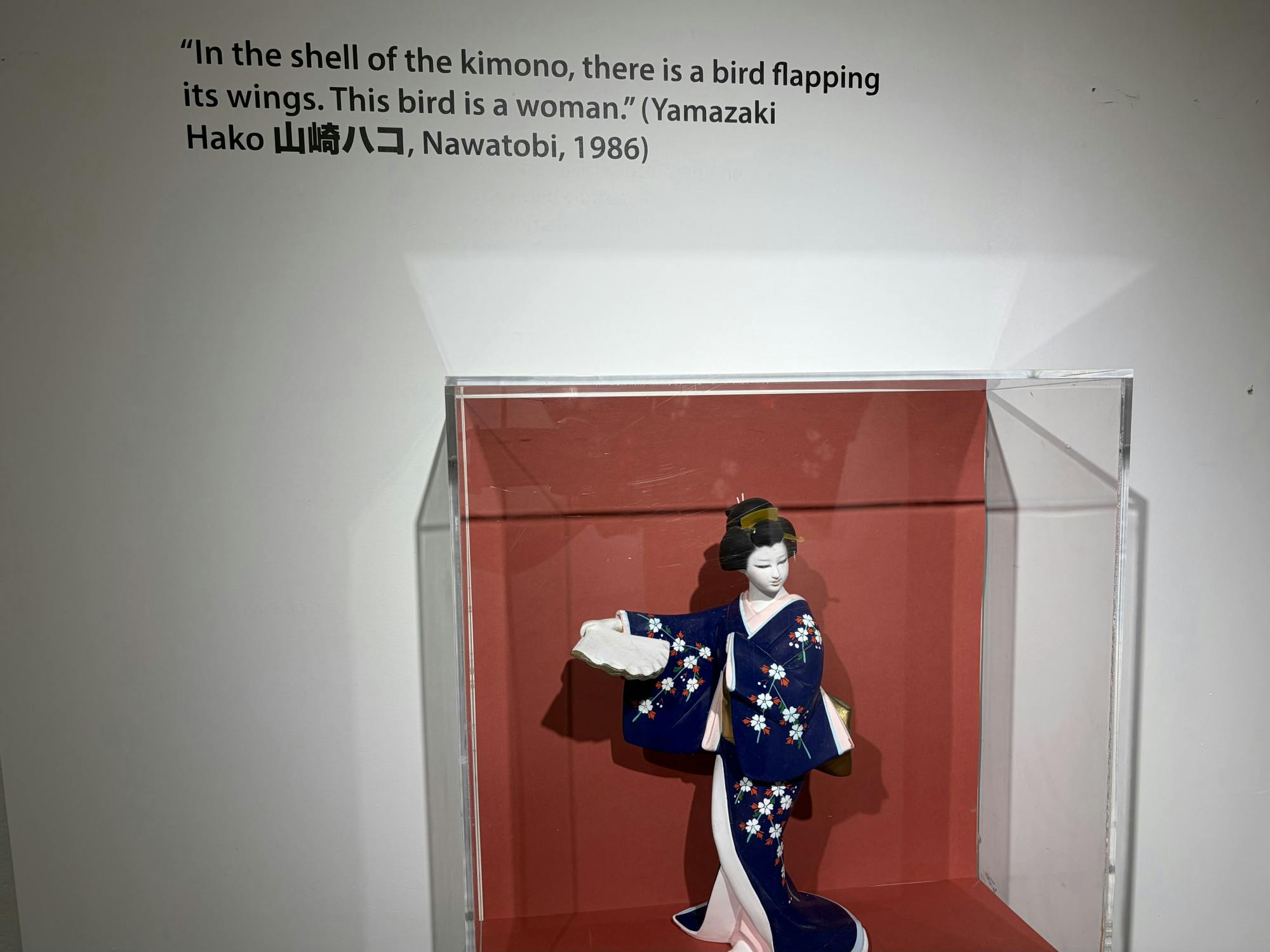
The exhibit boasts an impressive list of collaborators that spans from Japan to Middlebury. Kazi and Wallace L.M. Alward, MD — family members of renowned Japanese dancer Sally Toshiko Pierce — donated the Taishō kimonos for one of the gallery’s exhibits last year, inspiring the current exhibit.
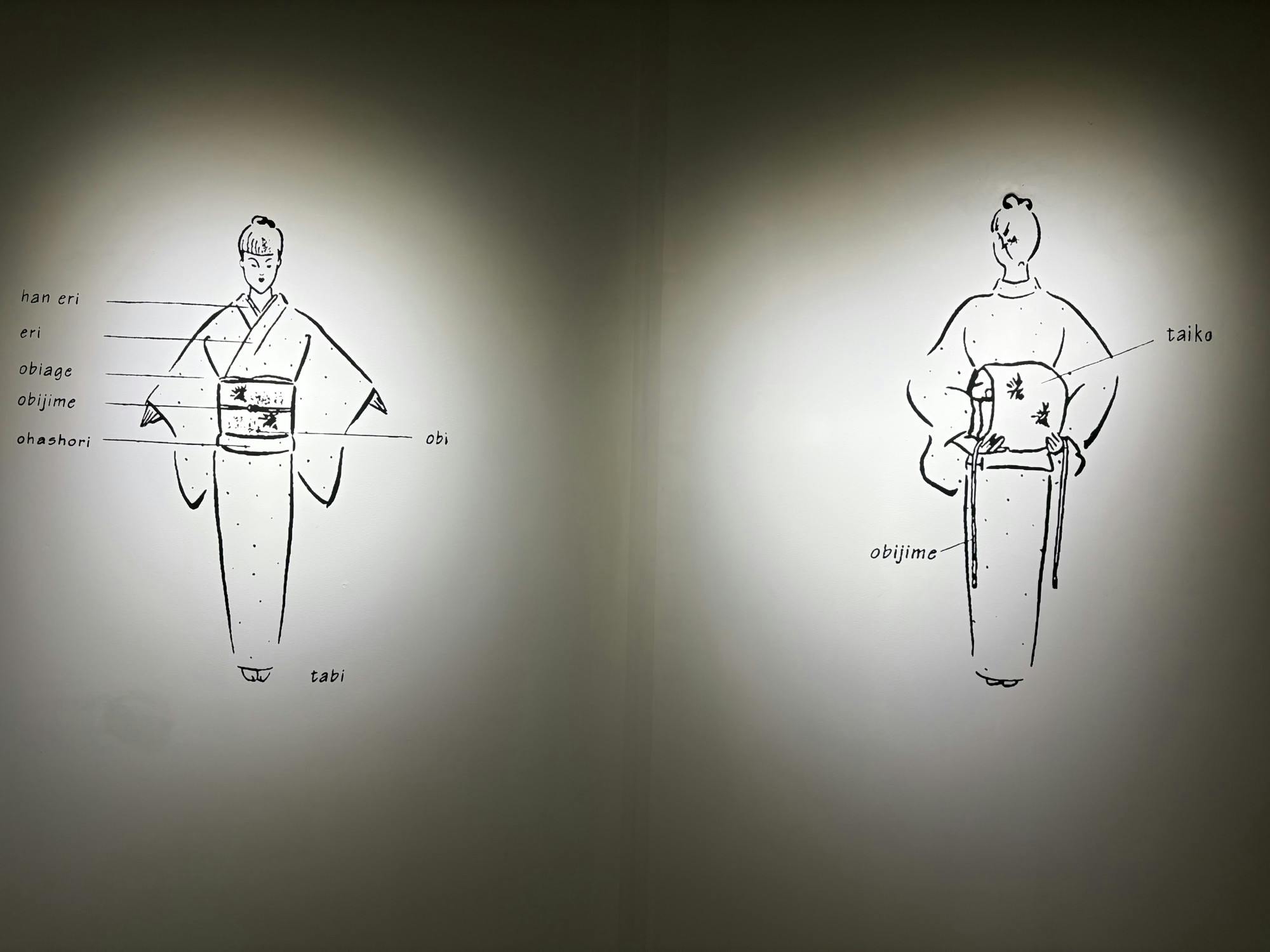
Diagrams dissecting the different parts of the Kimono, which is made of a long piece of fabric that is then cut into small sections and sewn together by hand. The sign next to the diagrams describes that the Kimono was formed during the Edo period (1615-1858), when the Tokugawa family established strict rule over Japan. This put the country in its longest stretch of peace, leading to increased focus on art and fashion.
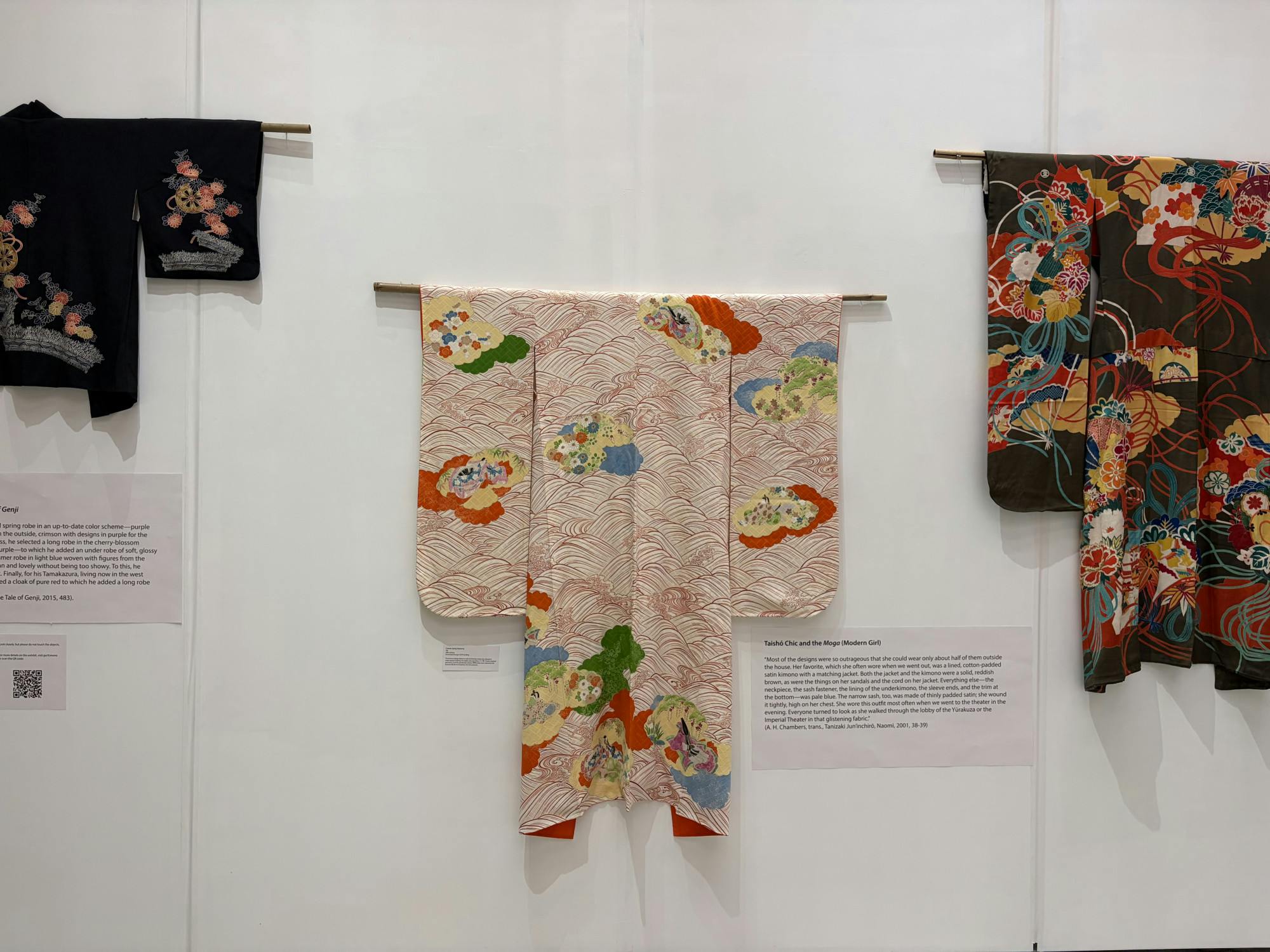
Walking past the diagrams, you’ll be greeted with “The Kimono in Literature” section, which discusses the impact of “The Tale of Genji” during the Heian period (794-1185). The Black Genji haori features a shibagaki 柴垣 motif popular during the Heian period, and the Cream Genji kimono features details of aristocrats dressed in Heian-period clothing.
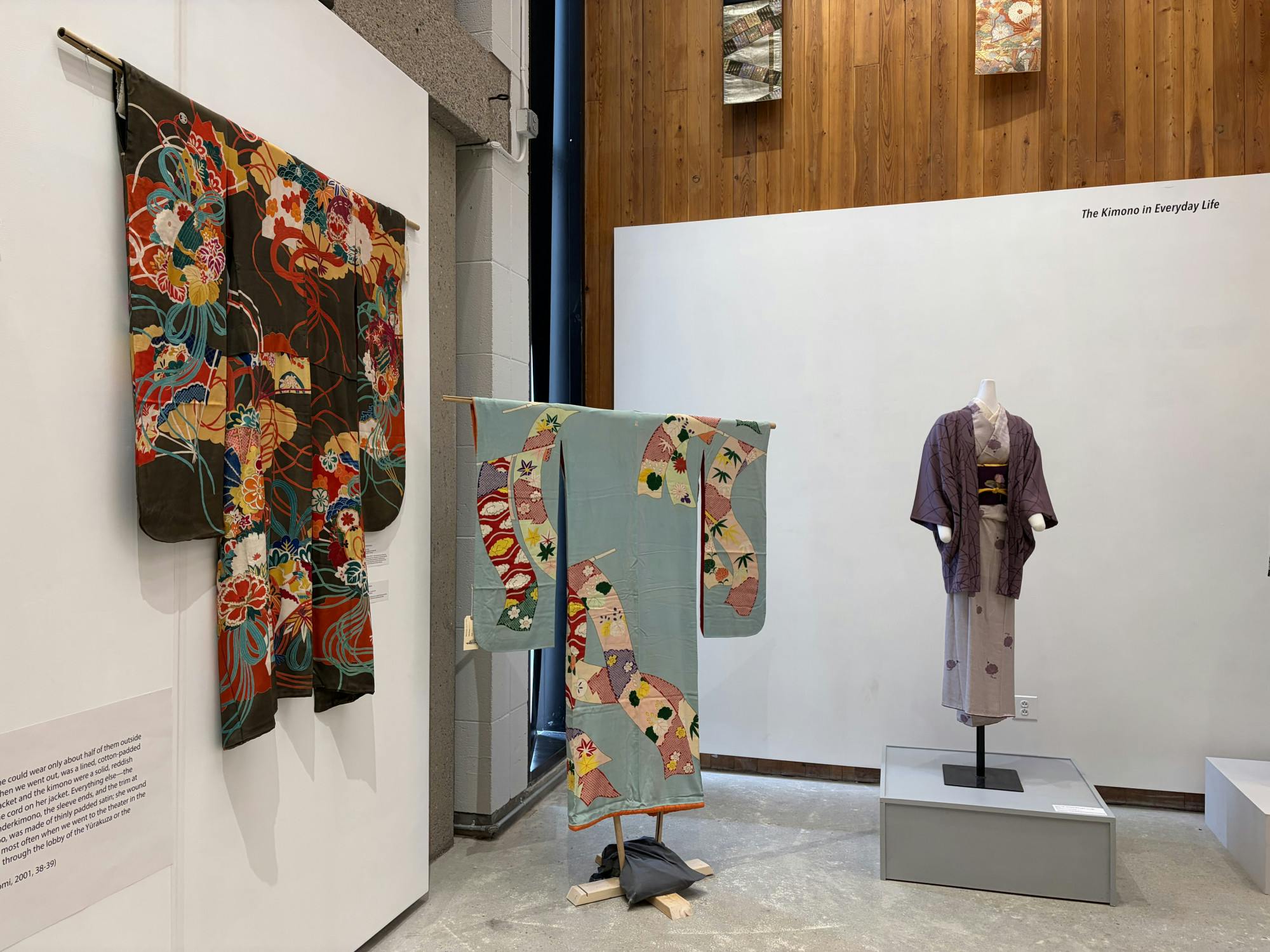
Then comes the Taishō period (1912-1926), marked by brighter, bolder designs. The red Taishō kimono “proposed a new interpretation of romanticism, expressed through the original individual interpretations of the traditional culture,” reads the gallery label.
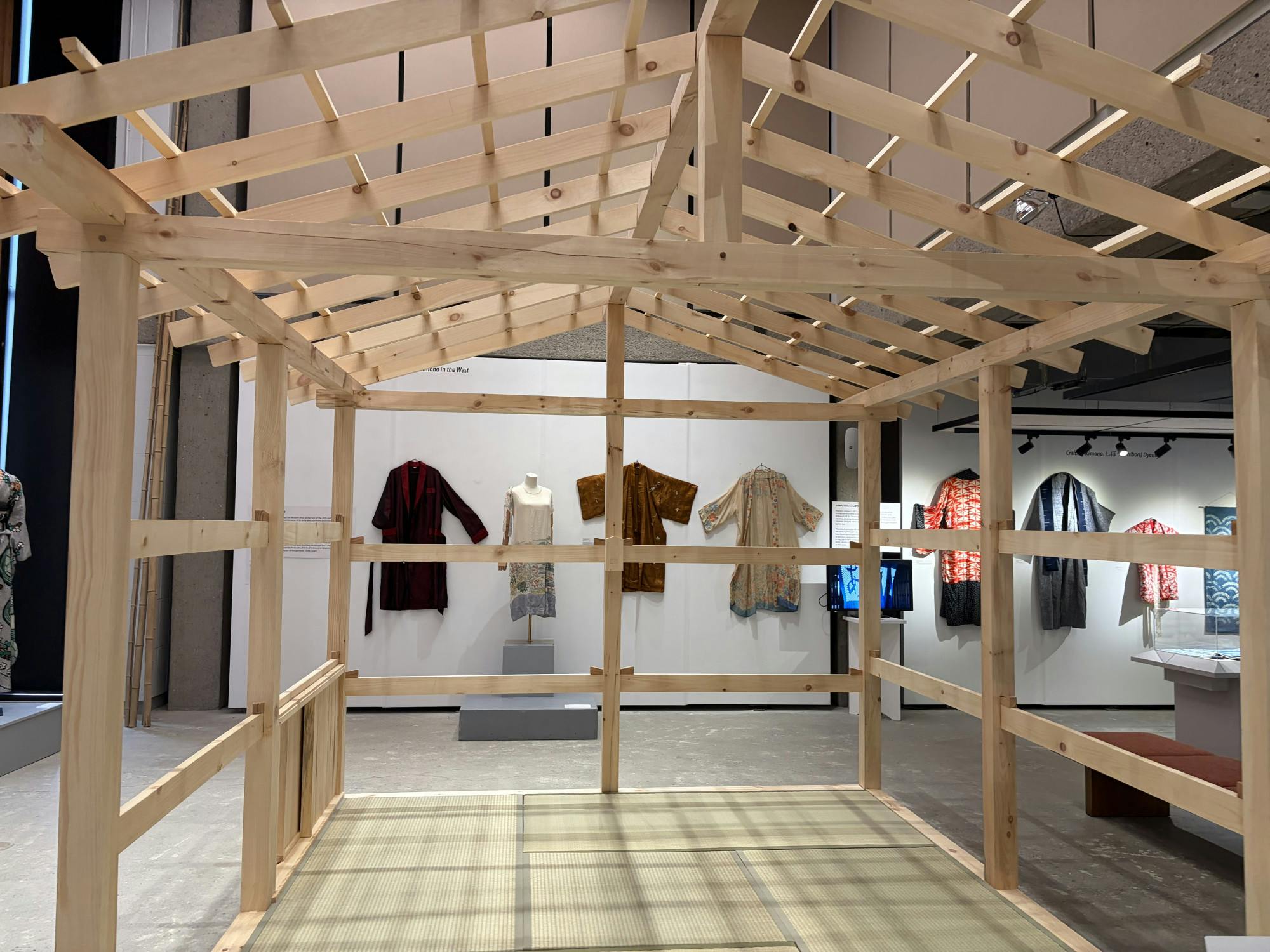
In the center of the gallery sits the chashitsu, or Japanese teahouse, which was built by 12 students this past J-Term. Taught by Vermont-based boatbuilder Douglas Brooks, the course followed an apprentice pedagogy, with numerous lectures taught in silence so students could learn solely from observing Brooks.
“I thought that it really contributed to an environment that was conducive to learning and being immersed in the experience”, Met Ly ʼ28 said, speaking on Brooks’ silent instruction.
The teahouse also features the nijiriguchi, a small sliding door for guests to enter on their hands and knees. As the gallery label illustrates, “...it is believed that crawling into the space equalizes everyone despite their social rank.”
“There's a concern around cultural appropriation, but he's [Brooks] very wary of that. I feel like he's taking a lot of care and consideration to both the class and the ceremony to make sure that we're not just culturally appropriating the Japanese way of life. It's very intentional in a lot of ways. The ceremony really emphasized the fact that Shintoism is a very inclusive faith system,” Ly said, describing the tea ceremony that took place over J-Term.
“It was really fun and it was a very satisfying way to conclude the one month as well to sort of have a big celebration for that and it felt like a really nice wrap up to the whole experience,” Ly said.
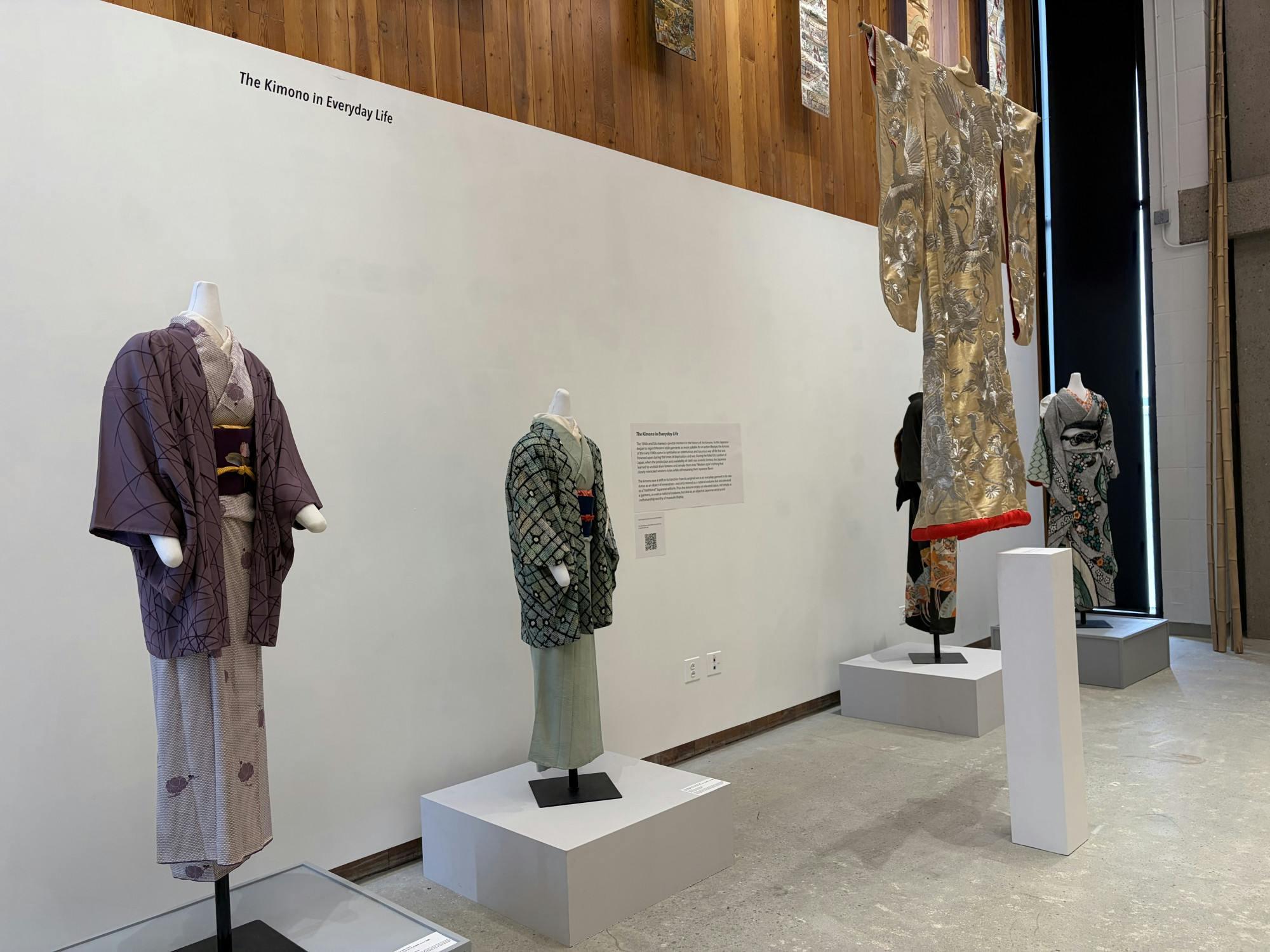
In the 1940s and 50s, the Kimono shifted from a staple of everyday life to a garment that represented an elevated status. This was largely due to the scarcity of cloth during the Allied Occupation of Japan, which caused the kimono to be remade into a more “Western style.” In the center stands the intricately golden uchikake 打掛, a wedding garment made with embroidered silk.
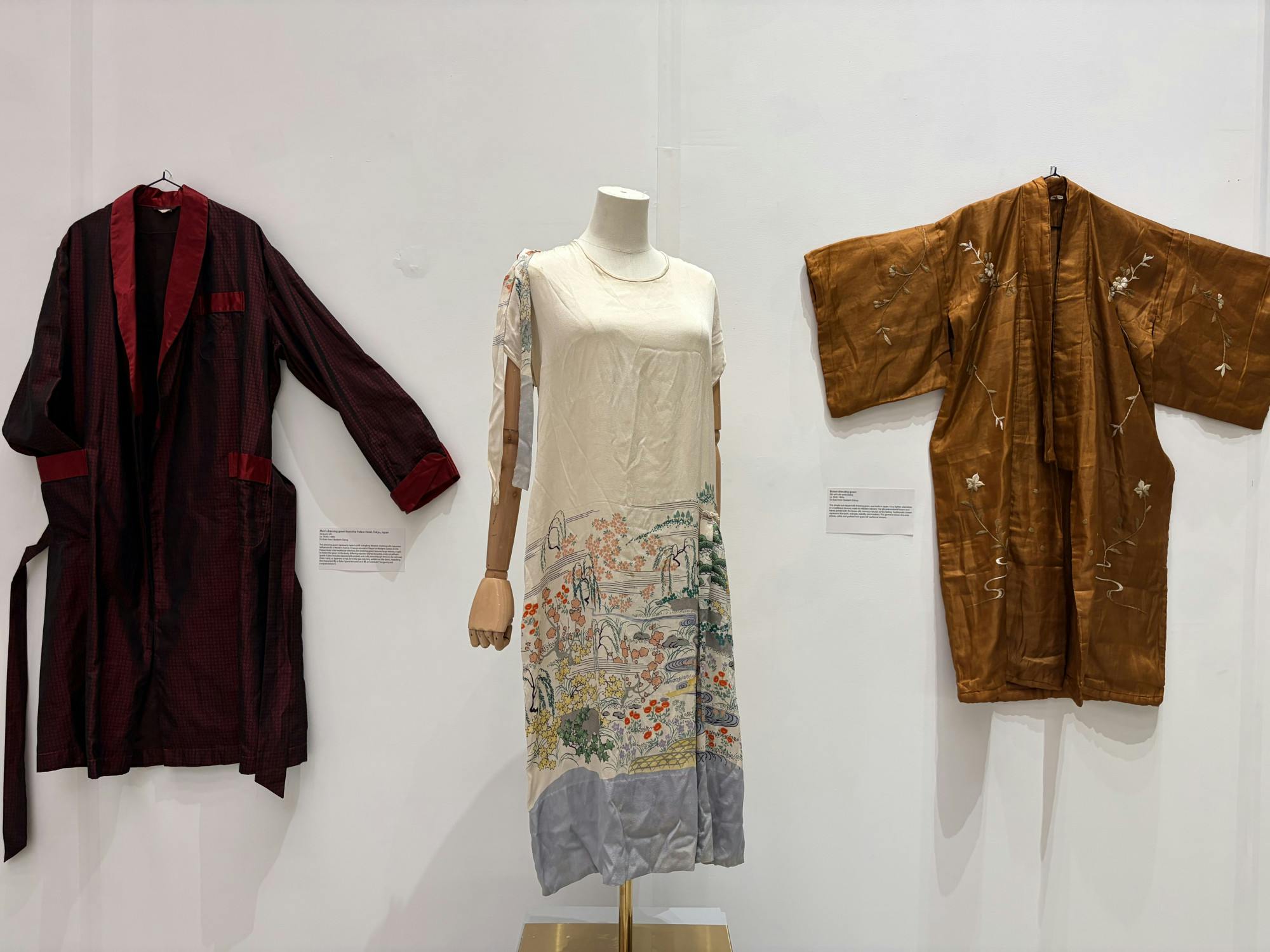
At the turn of the 20th century, the Western world became fixated with Japanese clothing, transforming the kimono into a staple of Western loungewear and an item so valuable that people sought to collect it. The three garments depicted above help illustrate the large shift in the kimono’s shape and cultural meaning.
“For Professor Summer Lee Jack, History of Western Dress, I did my final paper on the Japanese Edo period and the koso, which is the more primitive form of the kimono we know today. I wrote a paper on that just because I was interested by myself. After my professor read it, she asked me to join her on this exhibit,” Josie Coan ʼ29 said about her initial involvement in the exhibit.
For locating the red bathrobe (left), Coan described her process as a research assistant for the exhibit.
“I was able to find a similar piece on Etsy that gave me roughly the year — you can never be too sure, It's usually a 10—20 year range. I was able to find where the hotel was and around what year it's from.”
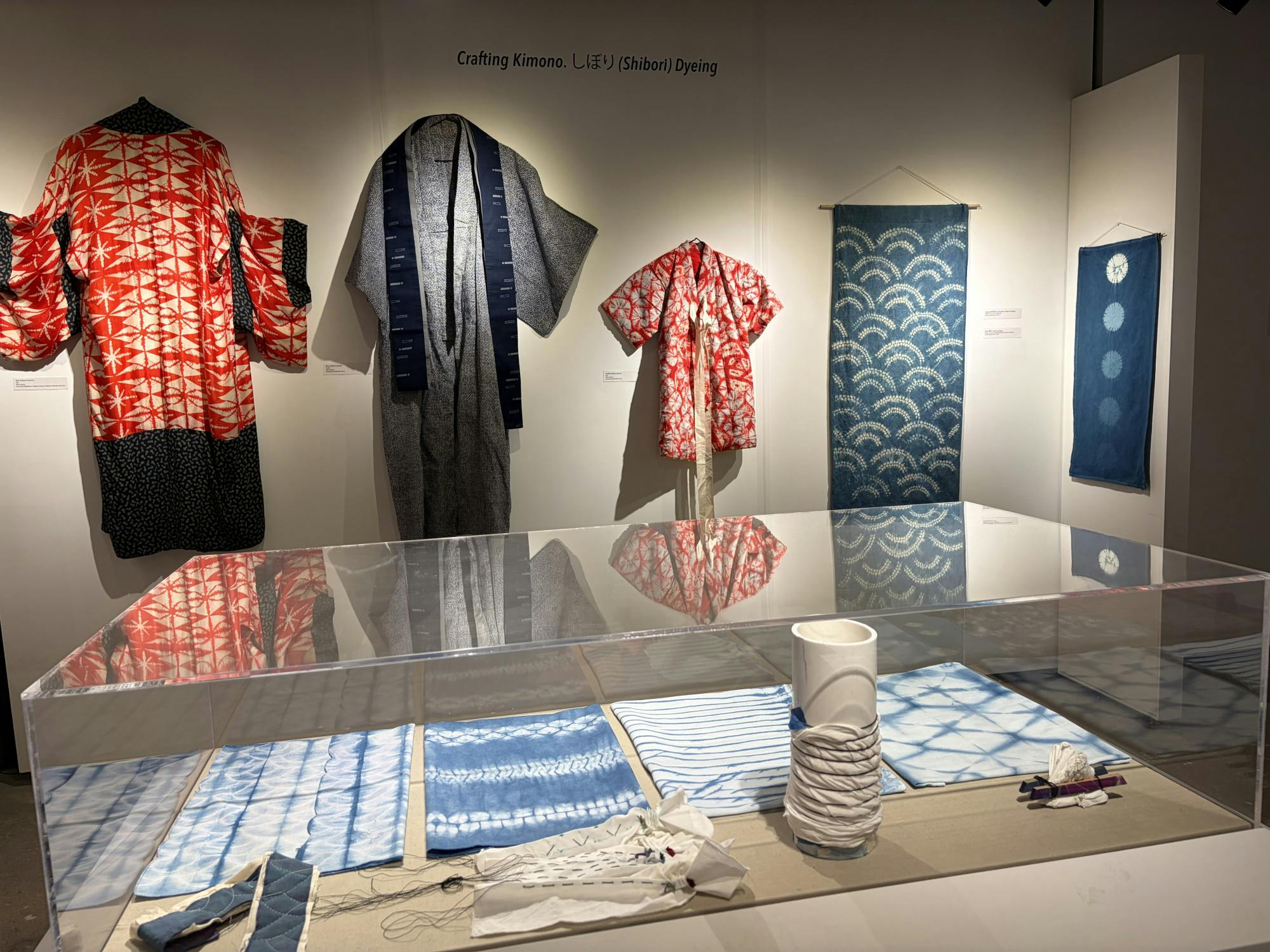
The exhibit also features insight into the crafting of the kimono through the shibori dyeing process. As the gallery label describes, “Shibori includes twisting, pleating, wrapping, stitching, knotting, and clamping cloth to create intricate patterns where the cloth ‘resists’ being penetrated by the dye.”
Guests can see and feel the different techniques used in the interactive “Shibori Petting Zoo” and learn how to fold an origami kimono at another interactive station in the exhibit.
Editor’s Note: Met Ly ʼ28 is a News Editor for The Campus.
Ellie Trinkle '26 (she/her) is the Senior Arts and Culture Editor.
She previously served as a News Editor and Staff Writer. She is a Film & Creative writing double major from Brooklyn who loves all things art. You can typically find her obsessively making Spotify playlists, wearing heaps of jewelry, or running frantically around campus.


