
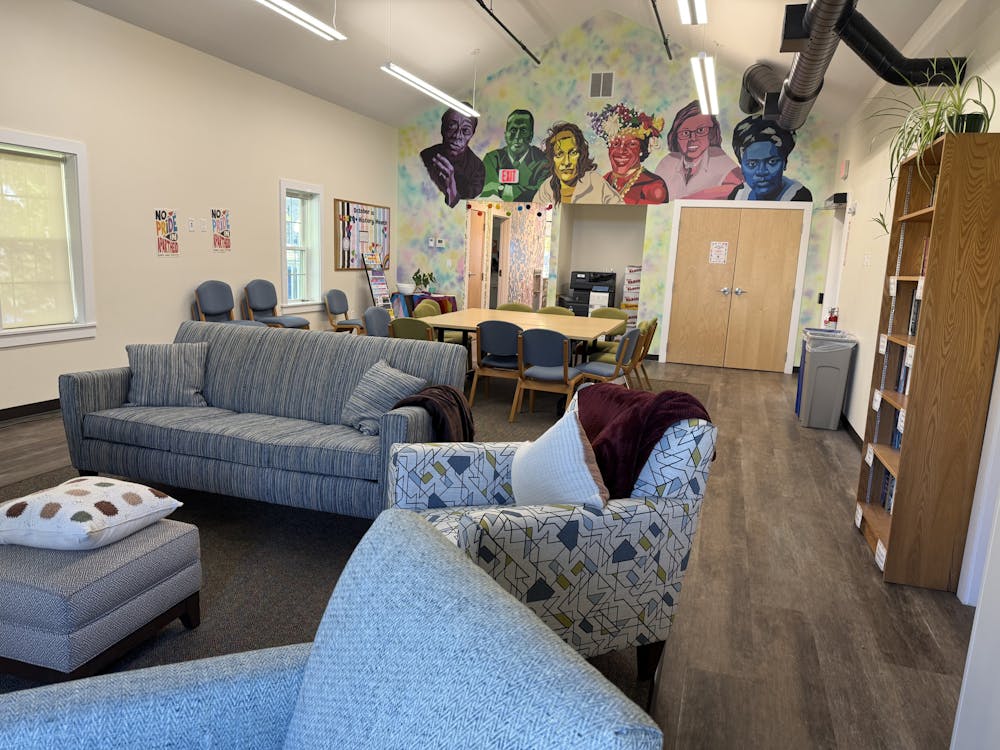
On Oct. 8, around a dozen people gathered for dinner catered by Taste of India at the Prism Center for Queer and Trans Life for a discussion on harm reduction and substance use pertaining to the LGBTQIA+ community.
The event was a collaboration moderated by Anna Hand, health educator for Health and Wellness Education (HWE) at the college, Fable Hawthorne, youth outreach coordinator at the Turning Point Center of Addison County, and Janae Due, director of the Prism Center.
Established in 2024, the Prism Center is a new addition to Middlebury. It is a safe space for queer and trans students, providing outreach, education, consultation, resources, programming and advocacy services.
The event was conceived of by Due, who wanted to “bring the community together for a conversation about substance use and LGBTQIA+ identity […] in a no-shame environment,” they said. They also said the timing earlier in the semester was important, as “students would gain some skills to be safe while using substances or support friends that may need care.”
Dallas Enemark ’28, an intern at the center, viewed the event as a way to find community.
“It doesn’t always feel like there are a lot of low to no use students on this campus,” Enemark said. “So it’s important that we are able to talk about how we feel about that and what we might be able to do about it.”
Participants were greeted with flyers created by HWE outlining harm reduction strategies for different substances and ways to support a friend who is abusing substances, along with a comprehensive list of both on-campus and off-campus resources.
Due described Hand as a “wheelhouse on campus” when it comes to these conversations. The partnership with HWE was “an obvious choice,” according to Due.
Hand brought the harm-reduction philosophy to the discussion by emphasizing compassion and practical safety over judgement or prohibition. Throughout the event, she emphasized that “the opposite of addiction is connection,” affirming the importance of community in mitigating harm.
Due thought of the partnership with Turning Point Center, a non-profit recovery center in Middlebury, as a clear choice as well.
Attendee Ramyn Zhang ’28.5 agreed, describing relating to a “touching and vulnerable” experience Hawthorne, Turning Point Center’s director, shared that then “left the biggest impression on [them].”
“Sometimes you might be doing all the right things and still feeling wrong and anxious, and that’s okay as long as you keep trying,” Zhang said.
Hand views partnerships with local organizations like Turning Point as vital, describing the organization as a staple in our community. She pointed out the fact that the college has already partnered with them for Narcan training, campus resource fairs, and similar events to the dinner hosted in the past.
“To make any type of health and wellness education work sustainably, it's key that we partner with community resources,” Hand said.
Participants also noted how the dinner format itself contributed to the success of the conversation.
“In providing dinner, it’s giving people [an] incentive to join events.” They also pointed out that it eases the atmosphere, making it “less serious and more of a chat…which is great,” Zhang said.
“Food always brings people together,” Attendee Kayden Silevicz ’28 said.
Due confirmed that the dinner format was intentional. They touched on the fact that food provides something to do while talking and listening.
“Sometimes it’s easier to delve into difficult topics when there’s a secondary thing to do, and for this event, it was eating together,” Due said.
As the event concluded, organizers viewed it as a success.
“Event turn-out feels like a win,” Hand said, noting that everyone who signed up showed up during a busy time of the school year, and everyone had the opportunity to share in a productive conversation.
Due expressed appreciation for hearing student’s perspective on the intersection between substance abuse and queerness.
“It helps me better understand what students may need and how to best support them with programming,” Due said.
“I'm always impressed with Middlebury College students' abilities and desires to dig into conversations, and after any event I host or attend…I'm excited and energized to keep the conversation going to build a culture change,” Hand said.
Met Ly '28 (he/him) is a News Editor.
Met is a UWC Davis Scholar majoring in International Politics and Economics with a Creative Writing minor. He is also a fellow at the Rohatyn Center for Global Affairs. He hails from Siem Reap, Cambodia and spent his gap year there as a digital marketing manager and events coordinator. Outside the newsroom, he line dances in his cowboy boots and jams out to the Arctic Monkeys.


