There are many rites of passage that come along with becoming a Middlebury student: an overstimulating orientation week, your first year roommate, the first winter day in single digit temperatures when you realize what you’re really in for. However, another less obvious rite of passage that I think of is your first walk into town on a beautiful Saturday and stumbling into the Middlebury Natural Foods Co-op (MNFC) for the first time.
The Co-op is a magical place. You’re first greeted by fresh and local produce, then quickly mystified by the paper bag-Sharpie situation at the bulk foods section. Ultimately, you are left in awe of the expertly sourced natural food products with cute packaging and a promise of health. Yes, you could buy Ritz crackers at Shaw’s across the street for a lower price, but there is a certain whimsy in saving a few special items, like treating yourself to local berries and cheese, for your weekly grocery shop for the Co-op.
This was my experience at the Co-op for the first three and a half years I spent as a student at Middlebury College. During my junior year, I bought a membership mostly out of curiosity but not really knowing what that meant. That all changed last spring when I had the opportunity to be the first Middlebury student appointed to the Co-op Board of Directors. A year-long position opened up and they were hoping to widen the Board’s representation of the community, which meant bringing in a student for the first time. My name was brought up from my previous classes in the food studies department and my time interning at The Knoll, and I suddenly found myself sitting at the monthly board meetings learning more about the Co-op than I ever anticipated.
Last week I attended my sixth monthly board meeting and coincidentally was approached about writing a Campus article about my experience. Truthfully, it has taken me six months of two-hour board meetings to begin to understand my role on the Board, the basics of policy governance and the significance of participating in a democratic, member-owned cooperative especially in our political context. I hope that this op-ed can act like the defrost button in your car, clearing the fog off of your understanding of the Co-op.
A good place to start would be: Why natural foods? The Co-op’s history began 50 years ago as a pre-order buying club that sourced local, wholesome foods that were not available elsewhere around Middlebury. Members of the buying club had to buy food in bulk and package it themselves. Since then, the Co-op has undergone a few expansions and scrapped the buying club model but still holds the original values of ecologically sound practices of producing, sourcing and consuming food.
Another mystifying area worth clearing up is: Why buy a membership? What does it actually mean to be a member of the Co-op? I think of buying a $20 Co-op membership as owning a grocery store with your friends. The Co-op may seem on the surface like a small Whole Foods, but its magic is that it is cooperatively owned (Surprise! It’s all in the name!). That means that when you buy a Co-op membership, you become a member-owner. You get to shape the priorities and the direction of the store and you get benefits as it succeeds. The important thing to understand here is that your money and business do not go towards a far-off, probably slightly evil, billionaire CEO. It goes right back into the Co-op, providing benefits for your local community and ultimately coming back to you in the form of patronage dividends checks once a year. That is certainly not the case for commercial grocers like Shaw’s and Hannaford.
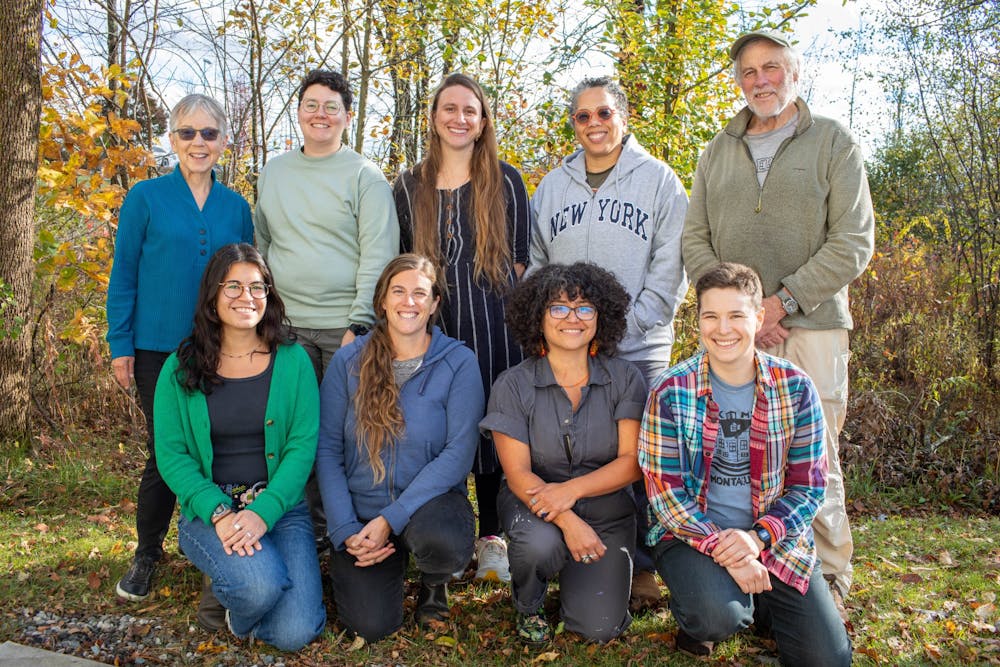
A question I’ve been getting often as my peers notice my face plastered on the ‘Co-op Board of directors sign’ at the store’s entrance: What do you even do on the Co-op Board? An essential piece of a democratic, member owned business is that there are no top level executives making decisions about what the Co-op should sell, programs it should invest in for the community or the ethos that determines the growth of the business. These decisions are made by the member-owners through the Board of Directors and the general manager. Essentially, the member-owners elect the members of the Board. The Board works to develop, monitor and revise policies and limitations based on the vision of the member-owners for the general manager, who manages the staff in the store and is the direct link to ‘on the ground’ actions.
The ins and outs of policy governance and fiduciary responsibilities are seemingly endless — a pool much deeper than I can wade into during my one year appointment to the Board. However, the importance of a business like the Co-op is also endless. During a time when nothing in the world feels like it’s trending in a hopeful direction, being part of a cooperative grocery store is an incredible and subversive way to engage as a consumer in an inherently capitalistic societal framework. Beyond the aisles themselves, the magic of the Co-op is that when the business succeeds, no one person wins because everybody wins. Every dollar is an investment into the store, the community, local foods or back into your own pocket.