
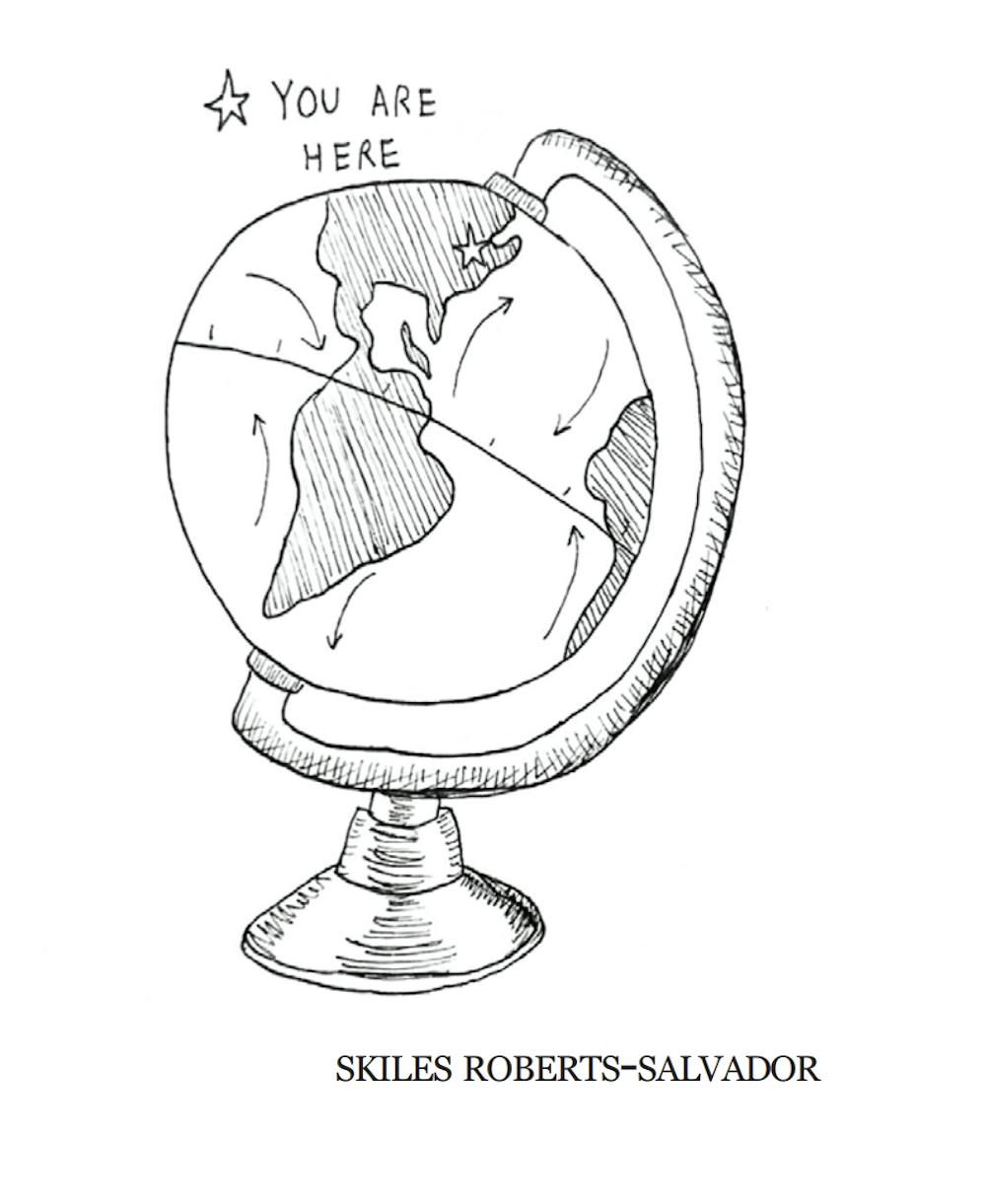
International and Global Studies (IGS) is one of Middlebury’s most popular majors. It offers students the opportunity to critically analyze global trends, to specialize in a region or theme of study and to develop foreign language skills before using them while abroad. It should be the Middlebury exemplar for taking our Vermont-based interdisciplinary education global.
Yet, if you ask nearly any IGS major, they will tell you that despite their academic drive and genuine pursuit of an interdisciplinary experience, they have faced repeated institutional barriers and lacked support when registering for courses, declaring a thesis and finding an advisor.
As IGS majors, we believe that the value of a global studies education at Middlebury is in developing a global consciousness, studying a foreign language and building a cross-discipline array of skills. We wish that our major had the institutional support to fully engage students with these values.
The major’s confusion begins with selecting an advisor. Students are directed to pick from a track-specific list of professors who work in or with the IGS department. It is unclear how these advisor lists are formulated — in our experience, several professors do not even know which lists they are on.
The academic flexibility and decentralization the IGS major offers is oftentimes its appeal, but it comes at the price of a centralized student community. Outside of the two required courses, there are few opportunities provided and no spaces designed to foster connection between majors. By the time you arrive in a senior seminar course, it’s possible you still won’t know the majority of the students in the room.
This is particularly surprising because Middlebury has an entire program for studying global issues — the Rohatyn Center for Global Affairs — that regularly hosts speakers and works to cultivate opportunities for student leadership and career development. Unfortunately, there is no organizational link between the IGS major and the Rohatyn Center, leaving majors disconnected from this wealth of resources.
Perhaps the cornerstone of IGS’s structural shortcomings is the ambiguity and lack of support throughout the thesis declaration and research process. IGS is one of the few majors without its own methodology course or methodology requirement for writing a thesis. The IGS website provides various suggestions for how to prepare for a thesis, such as taking another department’s methodology course or conducting related research with a professor.
I (Evan) read on the IGS website that to write a history-adjacent thesis, I should register for HIST600, the department’s pre-thesis course, which I was then not allowed to register for because I’m not a history major. This guidance has since been deleted from the IGS website and filled with no replacement.
Individual advisors work diligently to support their advisees, but they cannot and should not be expected to provide course-equivalent methodological guidance while also actively advising a thesis. Not having an IGS methods course — or guaranteed equivalent — both fails students and unduly burdens professors.
I (Curran) met with a Center for Careers and Internships (CCI) advisor the spring of my first year looking for academic guidance, and the CCI emphatically told me I should do an interdisciplinary major rather than a double or joint major. They touted the benefits of International Politics and Economics and IGS, citing the built-in language and abroad requirements along with the ability to take course offerings across departments.
I followed their advice and took the Introduction to International and Global Studies course, which sold me on the major. It combined political science and history in a way that I felt enhanced my learning and would correspond well with language study. If I had known about the undue burden placed on professors and the limits to what students are provided in the way of research preparation, I still may have pursued an IGS major, but I would have done so with more foresight.
We hope that future IGS majors will have a required methods course, bridging the gap between the introductory course and senior seminars and research work; we hope that they will be given more clarity and afforded more flexibility when selecting an advisor; we hope that Middlebury will invest in its IGS professors, including funding more than one permanent professorship; and we hope that a communal space will be fostered, such as in the Robert A. Jones House (RAJ), for IGS students to meet and collaborate with one another.
To be clear: We believe in the IGS major. We value taking classes across disciplines and studying abroad. But this experience could be improved if students are truly supported.
If Middlebury continues to flout the concerns of IGS students and faculty — while advertising the major on its website and in the CCI — it should look inside its institutional soul and re-assess just how “immersive” and “globally engaged” its educational offerings really are.
Evan Weiss '25 (she/her) is a News Editor.
Evan is an IGS major and math minor from Philadelphia, PA. When she's not editing for The Campus, she's either working as a peer writing tutor, running on the TAM, or eating chocolate chips from Proc.
Curran Amster '26 (she/her) is an Editorial Board Director.
Curran Amster is an International and Global Studies major at Middlebury College, concentrating in Spanish with a minor in Religion. She is a Rohatyn Global Fellow at Middlebury’s Rohatyn Center for Global Affairs and is currently working on her senior year thesis. Outside of academics, and her work for the Campus, Curran is also a musician and a songwriter and loves performing with her bandmates, dancing with Middlebury’s RIDDIM World Dance Troupe, and singing with the Mischords A cappella group.

