
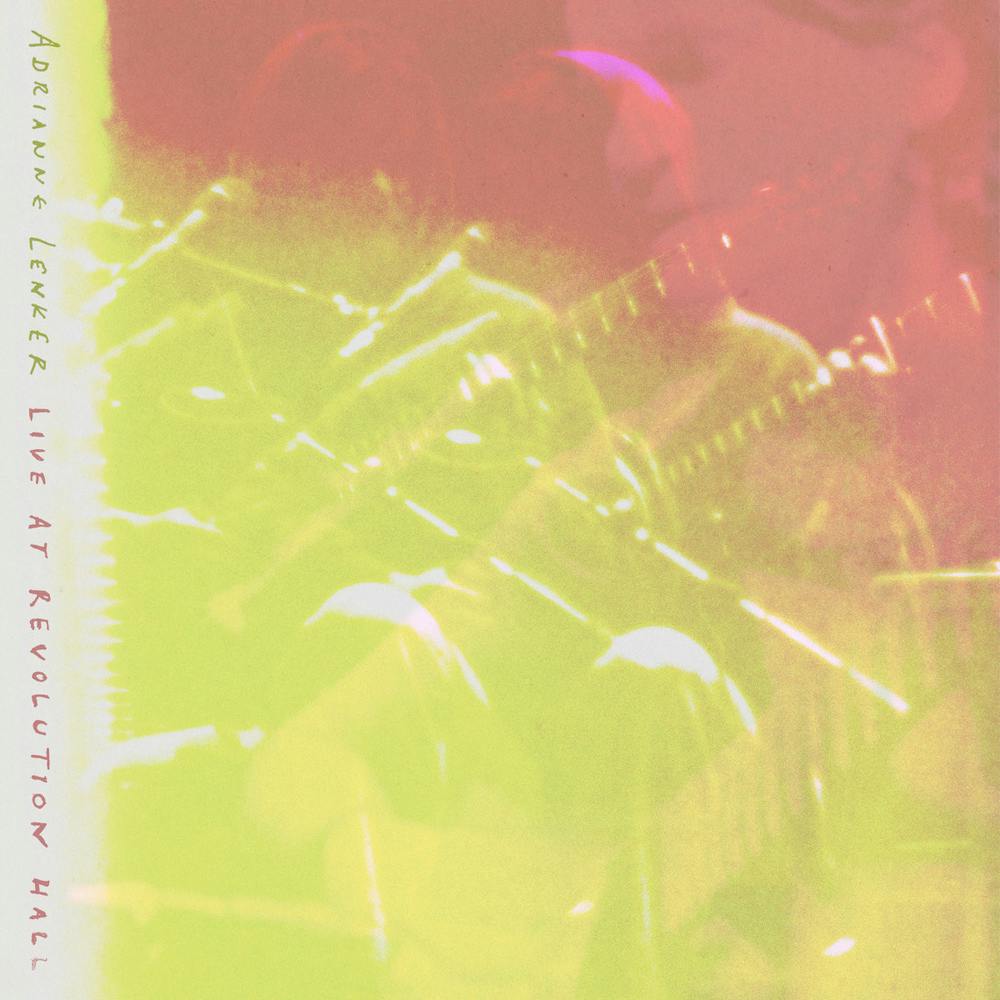
Ten days before the release of Adrianne Lenker’s most recent live album, “Live at Revolution Hall,” this past Thursday, the artist’s label 4AD put out a release promoting the upcoming album. This page included a tracklist of all 43 songs and conversations composing the album’s runtime, as well as quotes from outlets such as The Sunday Times and The Times pronouncing Lenker to be an heir to Bob Dylan. What caught my attention, however, was the message written by sound engineer Andrew Sarlo (Lenker’s focus has never been on acclaim or comparisons, so this impulse felt right). The epigraph describes this project as a “loving memento from one friend to another,” demanding to be consumed with the same engagement one would devote to a film.
Indeed throughout its two hour runtime, the album comes across as the auditory equivalent to an old home movie. “Live at Revolution Hall” was recorded on cassette tapes across three dates of Lenker’s most recent tour, and contains a multitude of warm moments within a grainy atmosphere. “Born for Loving You” transitions into a brief cover of Dolly Parton’s “I Will Always Love You,” an impromptu chorus of whistles breaks out from the audience, and Lenker brings out her brother Noah for a jaw harp solo on “Spud Infinity.” Moreover, Revolution Hall itself is a repurposed high school auditorium, and the intimacy of the venue comes across with every cough, sneeze and whistle.
In an interview with Pitchfork magazine, Lenker describes learning the guitar from her father when she was just six years old, influenced by a love for music present throughout her family. Under the guidance of her father, she opted not to go to high school, citing time within recording studios as her education. Lenker described a certain urgency behind her creative process, needing a place to put her “curiosity and fascination with existence.”
There are five new songs featured on this album. “fangs,” which is seemingly recorded during a sound check, reminisces about the joys and pains of a previous relationship, while “no limit - live” sees Lenker wonder “How do I find you now / When you echo like a dream / Over the machine of this town?”. Each word is chosen with intention, piecing together fond memories, longing or appreciation for specific people in her life. In “oldest - live,” Lenker describes scenes of packed cars and torrential rain as she tries to reconnect with a friend she once knew, while “i do love you - live” is an appeal to the immediacy of love in response to the doubts of another. My personal favorite of this group was “ripples & happy birthday alice,” which was replete with Lenker’s velvety tones and poetic devotion.
The song also featured exchanges from a birthday party held for a member of Lenker’s team, and throughout the live album there were several moments which offered fleeting glimpses into Lenker’s life while touring. These included the artist spending time with her dog Oso, negotiating signatures on merchandise with fans and conversing with friends. These interactions show a more human side to an individual whose artistry has mythologized her for many fans. It is here where Dylan and Lenker diverge; where the former is cloaked in mystery, the latter talks in silly voices to her team and laughs at her audience’s exuberance.
On the topic of influences, it is clear that Lenker draws from a deep well. In the same Pitchfork interview, the singer-songwriter cited Elliot Smith, Iris DeMint, Nina Simone, Fleetwood Mac and John Prine as some of the most formative bands or artists for her own work. “Live at Revolution Hall” illuminates other influences with a cover of Leonard Cohen’s “Lady Midnight” and a recitation of Robert Burn’s poem “Now Westlin’ Winds.” However, the artist’s exigence stems from more than those who inspire her; in her Pitchfork interview, Lenker describes the “bugs, furniture, and little dark corners” of her Minnesota upbringing as equally pivotal.
Throughout my listening experience, the word “community” kept coming to mind. There was a smaller community of those around Lenker during this tour, including manager Tim Wironen, background vocalist and pianist Nick Hakim, violinist and guitarist Josefin Runsteen, and several venue employees, together working to maintain integrity to a specific artistic vision. This project was also made with fans in mind, featuring fan messages to the singer and audience singing drowning out Lenker’s vocals on a couple of songs including masterpieces such as “anything” and “not a lot, just forever.”
However, Lenker’s community can even be thought of in a broader sense. In “donut seam - live,” the singer opines, “This whole world is dying / Don't it seem like a good time for swimming / Before all the water disappears?”
It is perhaps this perspective that makes her artistry so compelling. She encapsulates a particular cynicism and sadness — both personal and worldly — and yet consistently fills this void with the details and people that she holds dear.
Gus Morrill '27 (he/him) is an Arts & Culture Editor.
He is a Comparative Literature Major with a focus in Spanish and Arabic. Outside of The Campus he is also involved with Matriculate, the Blackbird Literary Arts Journal, Club Jiu-Jitsu, and Middlebury Discount Comedy. In his free time you can find him knitting, listening to music, or watching his favorite soccer teams lose.


