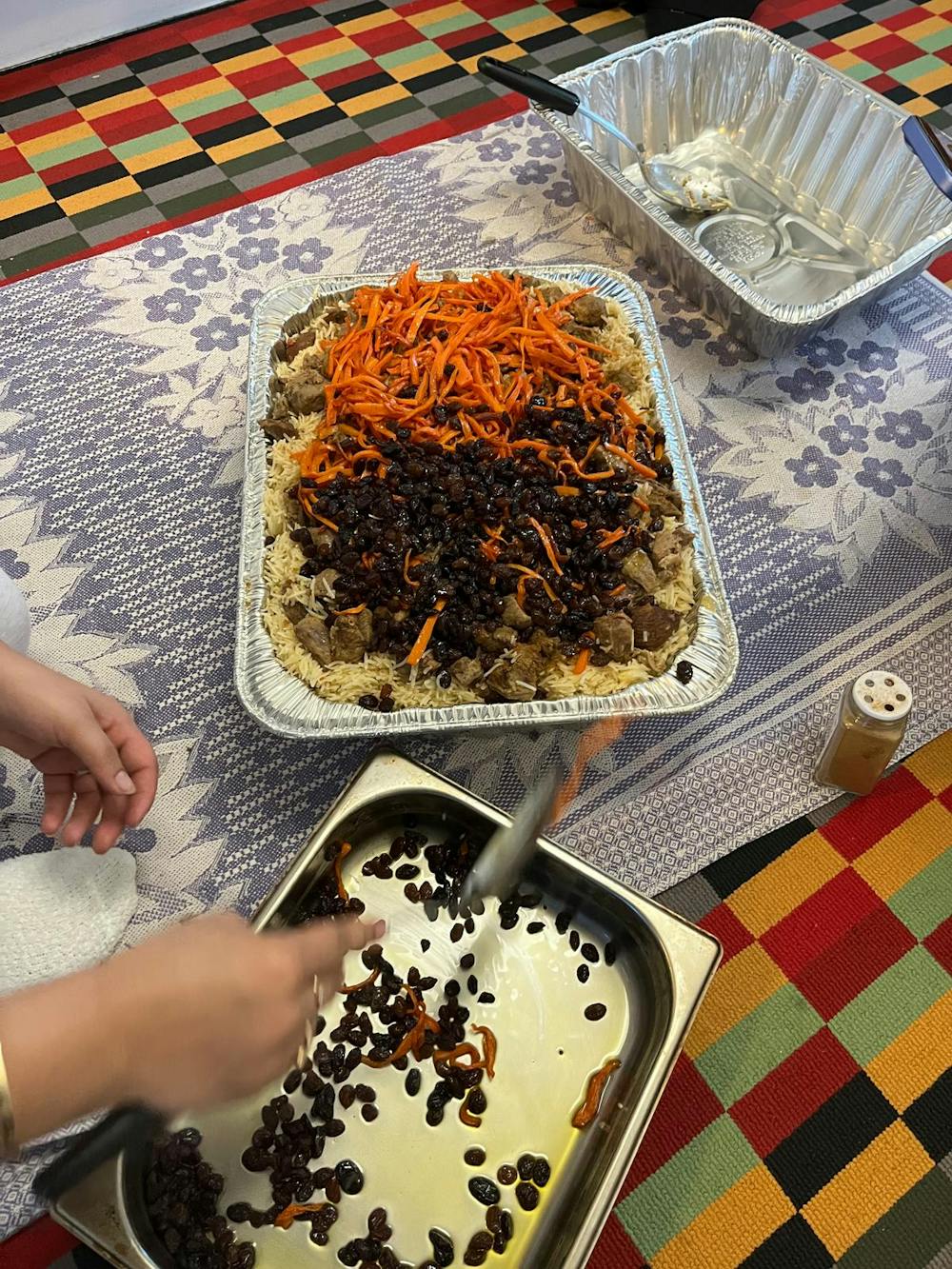
With the start of Ramadan — a holy month in Islam that celebrates the gift of the Qur’an to the Prophet Muhammed — on Feb. 28, many Middlebury students and community members have begun to fast from sunrise to sunset each day, breaking their abstinence from food each day in the evening. Around 60 Muslim students have visited local Muslim families in town who have hosted iftar dinners, bringing people together to break their fast with a shared meal.
During this month, an emphasis is placed on giving, charity and forging community bonds. In this spirit, the Muslim Students Association (MSA) recently traveled to the University of Vermont (UVM) to have a shared iftar dinner, uniting the two Vermont colleges for the holiday.
Moeini explained that many of these Ramadan celebrations are driven by students who volunteer their time in addition to keeping up with classes and fasting. Typically, MSA holds their own iftar dinners on the weekends and relies on the dining halls for dinner the rest of the week, according to Associate Muslim Chaplain and MSA advisor Zahra Moeini Meybodi.
“This is both to help sustain their budget, but also recognizes that students are busy midweek and can’t attend big gatherings every night,” Moeini wrote in an email to The Campus.
Atiyk Ahmeed ’25, a member of MSA who has attended some recent meetings during Ramadan, mentioned that the dinners have added to their Ramadan experience at Middlebury. “I like the fact we have the dinners, it helps make the fasting experience easier and builds community,” Ahmeed wrote in a message to The Campus.
Moeini also shared her perspective on how the fasting of Ramadan shows the values of Islam during the holy month.
“Muslims go on a thirty-one-day-long sprint of attending to their inner worlds to realign themselves with the moral values and ethics the Qur’an and teachings of the Prophet Muhammad profess, such as avoiding anger, gossip, ill thoughts and behavior, and material attachments,” she wrote.
Even for those who are unable to fast because of pregnancy, illness or other barriers, their devotion is what matters.
“I have to always remind myself that Ramadan, at its core, is about establishing not simply ritual prayer, hunger or abstinence, but an emptying that creates space for a more sincere pouring in of a friendship with the Divine,” Moeini explained.
Fasting for Ramadan can at times conflict with Middlebury’s dining hall hours. As sunset occurs later in the day the closer Middlebury gets to spring — especially with daylight savings having advanced the clocks by one hour on March 9 — it can be difficult for some students to get food to break their fasts; Proctor Dining Hall closes at 8 p.m. and Atwater and Ross Dining Halls close at 8:30 p.m.
Ahmeed said that while the students have organized around iftar dinners, the college could be more supportive of Muslim students celebrating Ramadan by reinstating alternative food options that it provided in past years.
“I think Middlebury can definitely do better to accommodate students fasting, such as with more food options at dining halls,” he wrote, “In previous years, we had Grille food as an option for post-dining hall time for Suhor (the meal later at night) and free to-go boxes, both of which were taken away that I think could be reinstated to make fasting a more seamless experience.”
Moeini said that the community typically addresses those challenges when they arise, adding that Middlebury’s dining halls have been good at providing halal food and enacting supportive policies for students with religious observances.
While many find fasting during the day for a whole month exhausting and taxing for their bodies, Moeini suggested that this may actually cause individuals to spend less energy on talking or general ill behavior, allowing the ethical changes emphasized by this holiday to occur more fully. However, because many individuals are also waking up early and going to sleep late in order to pray, it can be difficult to devote the necessary energy to school work.
“I hope professors can provide students with more flexibility in making up for assignments, taking exams, and or provide them with alternative learning opportunities when and if able to,” Moeini wrote.
Editor’s Note: Editor in Chief Ryan McElroy ’25 contributed reporting to this article.