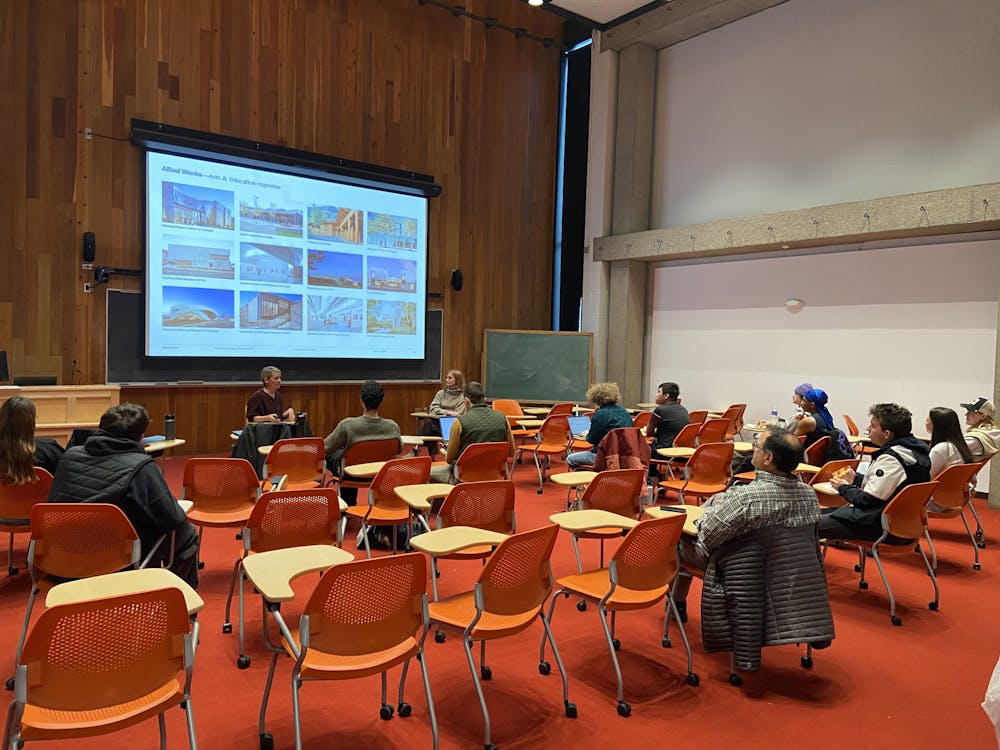
As Middlebury moves forward in the process of designing its new art museum, the architects responsible for its construction have begun to solicit input from students and faculty. On Tuesday, March 4, architects Chelsea Grassinger and Hannah Bacon of Allied Works — who are spearheading the museum’s design — visited campus for a town-hall-style meeting to hear from students. The event marked their second visit to campus, having previously hosted a student listening session after a presentation on Jan. 16.
Last Tuesday’s event began with the architects and Middlebury faculty engaging in one-on-one conversation with students over pizza. Grassinger and Bacon asked student attendees for their opinions on the current placement of the Middlebury College Museum of Art within the Mahaney Arts Center (MAC) and their interest in the new museum, which will be located where Battell Hall currently stands. The event then transitioned into a presentation by both architects regarding the details and project goals of the museum.
Battell Hall is scheduled to be torn down the summer of 2026, with construction of the museum to occur in 2027 and 2028. The design for the new museum will not be completed until the end of March 2026, leaving plenty of time for open discussion before the plans are finalized.
“We really rely on the people and place and program to conceive our designs,” Bacon said during the presentation.
Grassinger and Bacon focused their presentation on the design process, focusing on soliciting student feedback. Grassinger described a space that would be open, exciting and homey. Bacon spoke of a potential student space called “The Hearth,” conceptualized to be centered around a fireplace where students can gather.
“We’d love for it to be warm and comfortable, and somewhere where there’s a big sale table, and open mic night happening. Or maybe it’s where a café goes,” Bacon said.
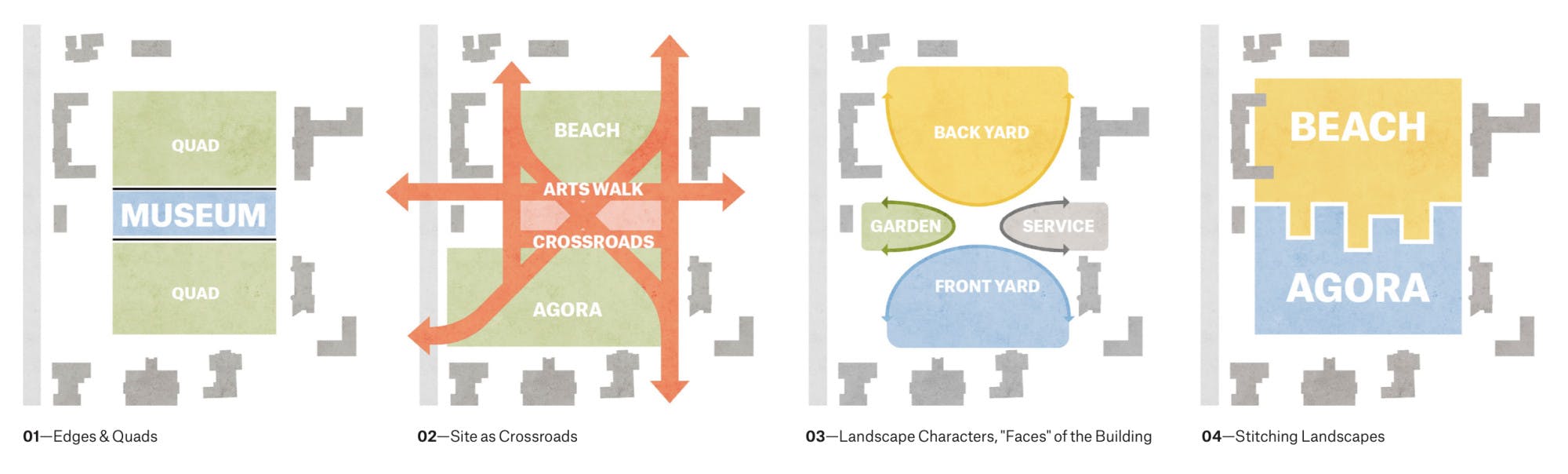
Grassinger and Bacon intend to weave the museum into the landscape. They mentioned conversations with students who often pass Battell on walks across campus and hope the new building can be maintained as a natural crossroads.
They then opened the discussion to students in the audience to share their comments and concerns. Many concentrated on how the space will be integrated into the greater Middlebury community, considering its central location on campus. Juan Salazar ’27, an Architectural Studies major and co-president of the student organization Architecture Table, referenced how the view of Battell Beach — something that a new art museum may obstruct — is a beloved part of campus.
“I think we have the opportunity, going back to that central space, to introduce cuts into it to sort of see through or beyond. I mean, we really love the sectional nature of the site and we’re really embracing the opportunity for overlooks,” Grassinger said in response.
Still, Bacon confirmed that the new museum will have to be taller than Battell Hall due to Battell’s unsustainably low ceilings. The current plan is to build the museum to be three stories tall.
Other students raised questions about the environmental sustainability of the project. Concerned by Bacon expressing her desire for the museum to be a “beacon of light,” Architectural Studies major Kurt Le ’26 asked how the architects intended to address the space’s potential light pollution. Others asked about their usage of sustainable energy — would there be solar panels installed?
The architects shared that Allied Works is working with the Dean of Sustainability and Environmental Affairs Jack Byrne and the Sustainability Solutions Lab (SSL) and is committed to receiving the LEED Gold certification, which signifies a building’s high sustainability performance. As the project is still in the early stages of design, Grassinger confirmed that solutions to potential environmental problems are still being workshopped, and the team has every intention to listen to voices in the Middlebury community.
“[The SSL is] helping us with research and dialogue and drafting a sustainability charter that will be a roadmap for that specific piece of the project,” Grassinger explained.
Le added that although Allied Works is taking student input, their focus seems to be on connecting with alumni and faculty. Le also mentioned that he would prefer not to have a museum, instead wishing the college would place more focus on access to student mental health services or dormitories.
On top of sharing these priorities, Le shared both his mixed thoughts on the design direction in which the museum is going.
“As an architecture student, I feel like the new conception for the art museum provides a lot of access to outside community interest for our college campus. While the design provides a lot of outwards spatial location for students to host activities and art events, I do think that reconsidering a more modern take to architecture is more harsh to Middlebury’s environment,” Le said. “The new sign places a lot of emphasis on modern, abstract shapes.”
Armed with student input, the architects behind the new museum are proceeding at full steam ahead, with plans to finalize the museum design by next spring and to tear down Battell Hall in 2026 to make room for the latest addition to Middlebury’s changing landscape.
Rachelle Talbert '28 (she/her) is a News Editor.
Rachelle previously served as a copy editor. She is an English major with an intended minor in Art History. Outside of writing, she volunteers with Page One Literacy and experiments with visual and fiber arts.