As Middlebury settles into the rhythm of campus life for another year, an academic center is beginning a new chapter for one of its programs. The Center for Teaching, Learning and Research (CTLR) is making significant changes to their language tutoring for the 2026-27 school year. In the past, students had the option of one-on-one appointments through the CTLR website to meet with language tutors alongside weekly drop-in sessions. Beginning this year, the CTLR no longer offers one-on-one appointments. After this semester, the CTLR will cancel the drop-in sessions as well.
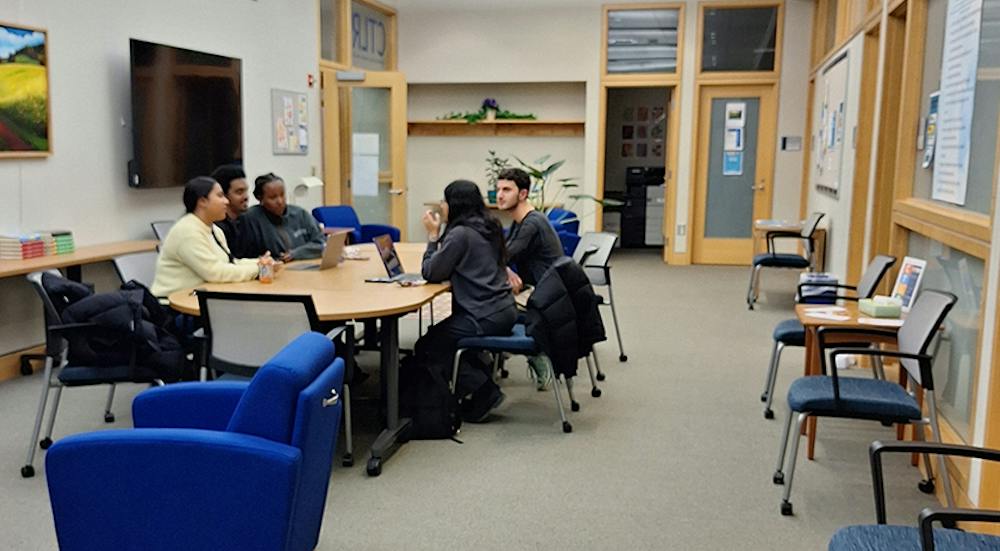
This fall, most languages will solely have two-hour weekly drop-in sessions in the evenings in the Davis Family Library. In the sessions, two tutors for each language are present to answer any questions that students may have. After this transition period, the language departments and the CTLR will create a new plan for peer language tutoring.
Director of the CTLR Sarah Stroup, who entered the role on July 1, spoke on the reasoning behind the changes to the schedule.
“The data that we looked at for student engagement in CTLR for offered language tutoring shows that fewer students were coming to this space — and that’s a couple of years of that trend in the data…a really substantial decline in students’ use of the language tutors [at the CTLR],” Stroup said.
For the fall semester, the CTLR hired around 14 tutors. Tenzin Ingsey ’28, who is in her second year of working as a Japanese tutor, prefers the new changes.
“I prefer this schedule a lot better because previously we had to share ten available hours that students could choose from to schedule one-on-one meetings with us…but sometimes, we actually weren’t free because it changes every week. I think having a specific time really helps,” Ingsey said. “It’s also easier for students to just come in for tutoring instead of going to the website and manually registering [for one-on-one appointments].”
Not all tutors think the new changes are for the best. Sanabil Wajid ’29 who works with students learning Arabic, worries that students who prefer to receive one-on-one academic help may not be able to get the attention they require at drop-in sessions, where there will be a higher number of students present.
“For students, it might be difficult having only two tutors [in a drop in session]...It’s also kind of uncomfortable timing for tutoring, especially during a weekday from eight to 10 p.m.,” Wajid noted.
Drop-in sessions, though, are a temporary solution. The CTLR will not host language tutoring drop-in sessions in the winter and spring semesters. After the fall semester, the language departments will decide on a new peer tutoring model alongside the dean of the faculty, Roberto Sagarena, and the incoming associate Dean for Humanities and Languages, Nicolas Poppe..
There has been interest from language departments in other tutoring models such as language table facilitators. In those sessions, a student leader would guide a group conversation for students to practice new grammar and vocabulary for their language. Another possibility is that the tutoring programs for each language would be kept within the specific language department without outside assistance. The Chinese department, for example, handles their peer tutoring without any CTLR oversight. For students studying the language, tutoring can be found through their professors within the department.
“The responsibility for deciding what the peer tutoring model looks like will sit with the expert faculty who teach languages on this campus…I can make zero promises about what the future model will be,” said Stroup. “What I can promise is that CTLR has resources to support language tutors, and that budget line will continue to be dedicated to language education. But the administration of language tutoring will not happen through CTLR.”
The CTLR language tutoring schedule is available on their website. The fall semester drop-in language tutoring sessions take place from six p.m. to 10 p.m. in the Writing Center in Davis Library.