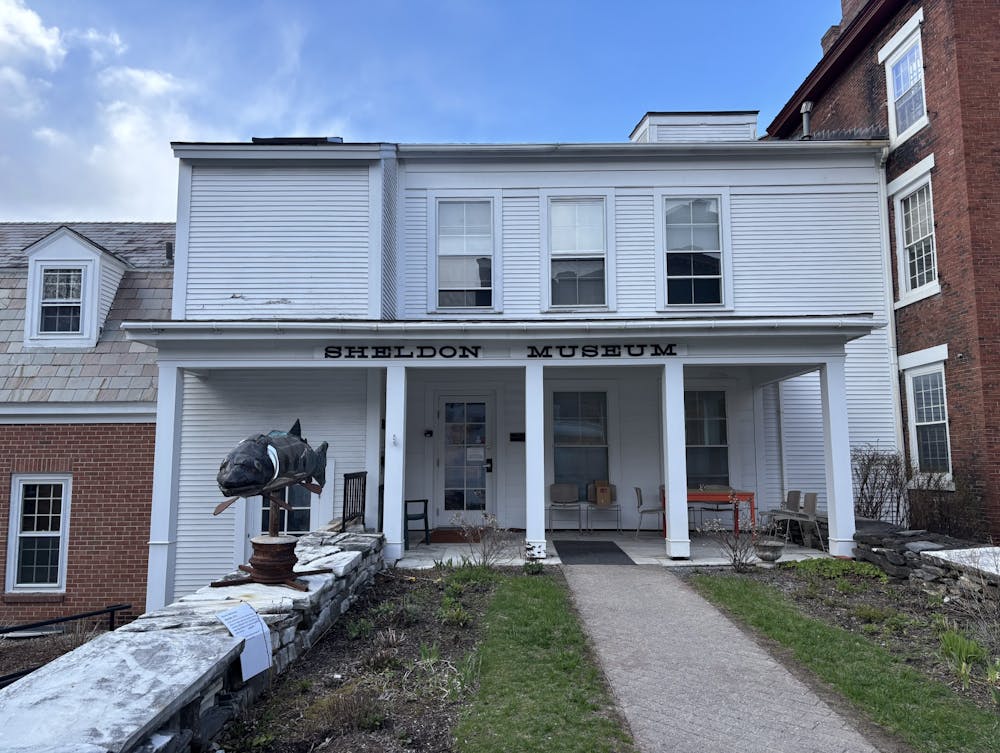
On April 25, the Henry Sheldon Museum will host the final session of the Historic Addison County Traveling Book Club, featuring “Deep North,”, an edited collection of stories by Brad Kessler about Somali resettlement in Vermont.
The book club, a series that has moved through four local institutions this spring, was created by Olivia Olsen, the public programs and volunteer manager at the Lake Champlain Maritime Museum in Vergennes. Each session pairs a book with the institution hosting it. Previous stops featured Benedict Arnold’s “Navy” at Lake Champlain Maritime Museum, “Heaven and Earth Grocery Store” at the Rokeby Museum, and “What You Are Looking For Is” in the Library at the Bixby Memorial Free Library.
For the Sheldon Museum’s upcoming session, Allison Cardon — a Mellon Fellow of Public History at the museum — selected “Deep North” intentionally to complement the museum's upcoming immigration exhibit, slated to open in 2027.
Vermont has a more robust Somali community than many people realize according to Cardon, and she hopes the event highlights that connection.
“I wanted to do something about immigration and tell stories that don’t really get told or don’t get enough play,” Cardon said. “Not only the refugee story, which is a particular kind of immigration, but also Somalia. I think that’s a really important place in the world right now with an important series of histories and conflicts.”
Brian Chesler, who documented the oral histories at the core of the book, will also join the session via Zoom.
“Anyone who shows up will be able to ask him any questions they have about the book itself or the histories within it,” Cardon said.
The immigration exhibit grew out of a transformative Mellon Foundation grant secured by Executive Director Coco Moseley, which launched a three-year initiative to develop two new exhibits at the Sheldon — one on Vermont's LGBTQ history and one on the state's immigration history.
Cara Mosier, associate director of the Henry Sheldon Museum, described the book club as part of a broader shift in the museum’s community engagement.
“The Sheldon Museum has been part of the Middlebury community for a long time, but for years we were often seen as a quiet place people might pass by without really engaging,” Mosier said. “Events like the traveling book club are helping to change that. Instead of waiting for people to come to us, we’re getting out into the community and creating opportunities to connect in a more relaxed, meaningful way.”
Mosier also spoke about the museum’s role as a meeting point between the college and the broader Middlebury community.
“At the Sheldon, we see ourselves as a natural bridge between students and long-time community members,” Mosier said. “A shared love of history, art, and learning makes those connections easy and meaningful.”
This sentiment similarly resonates with students. Lena Chow ’29 said she was excited to hear about an opportunity like this.
“This sounds really interesting. I’ll definitely be on the lookout for more events the museum is doing,” Chow said.
Cardon described the book club as an attempt to create the kind of communal space that can be hard to find outside of a university setting.
“One of the things that’s really important to me is recognizing and honoring that there are very few places where we get to spend intentional time thinking with others,” Cardon said. “The classroom is totally one of those places, but those places are kind of hard to find without the scaffolding of an institution like a university.”
The April 25th session will be the last of this particular series, but Cardon is open to future programming. Students with ideas for a book club can reach out to her at publichistory@henrysheldonmuseum.org. The museum also offers work-study positions and internships for students interested in a longer-term connection with the Sheldon.
Additional programming is planned in anticipation of the immigration exhibit. An embroidery workshop is set for May, and a cooking workshop is scheduled for September, which may take place on the Middlebury campus.