
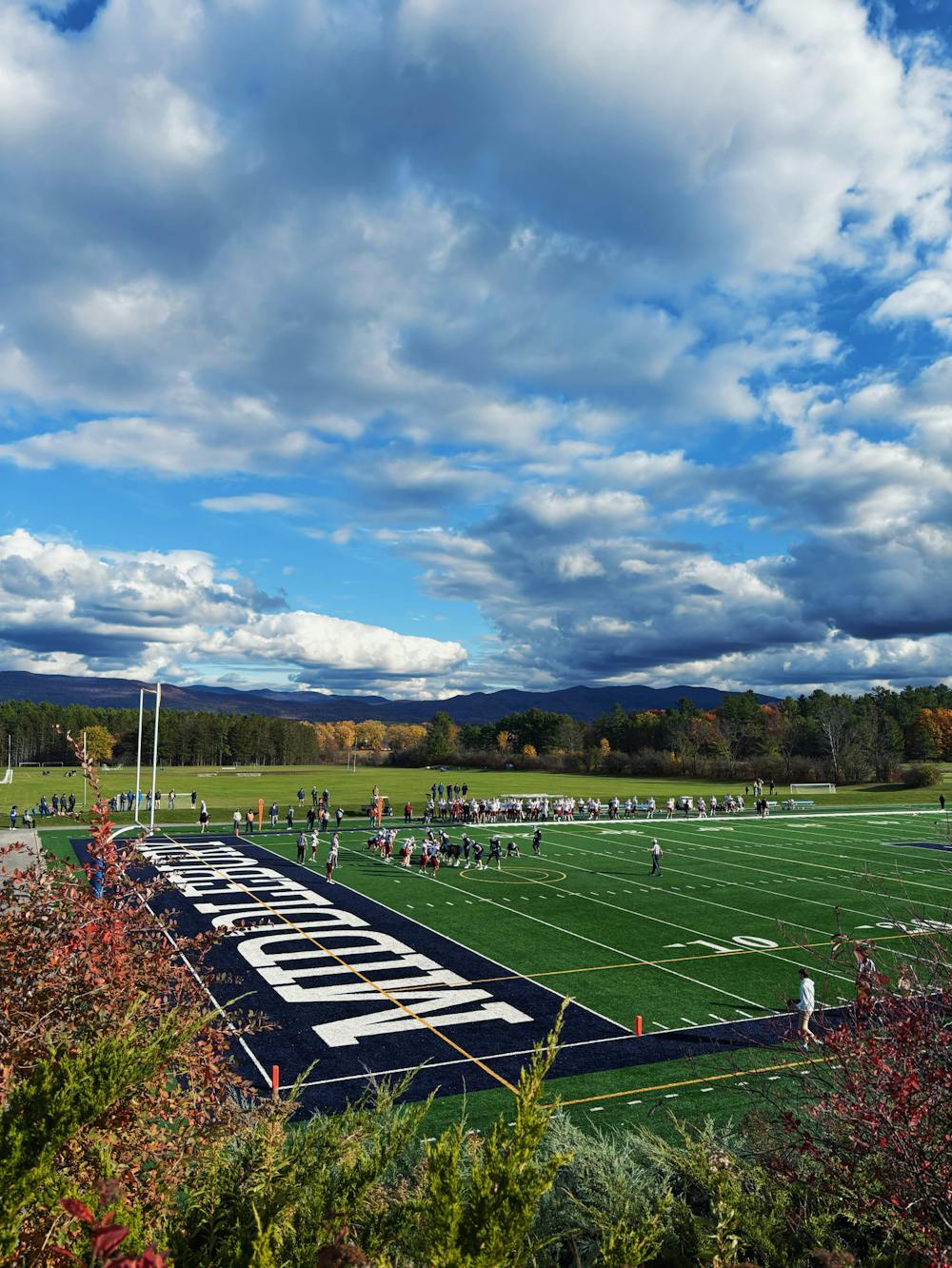
Athletic scholarships are prohibited in the New England Small College Athletic Conference (NESCAC). The conference justifies this policy by emphasizing its “long tradition of success both in meeting high standards of athletic performance and academic excellence.” The ideal NESCAC student is not defined solely as an athlete, but as a scholar first — one who attends a liberal arts institution to grow intellectually, socially, and in their extracurriculars, while continuing to compete at a high level with academics as their top priority. Financial aid packages are awarded strictly through institutional financial aid offices and only after a student has been admitted, independent of athletic ability.
One of the major distinctions between Division I and Division III athletics lies in the recruiting process. At the Division III level, no coach can promise or guarantee admission. As a result, recruiting language takes on a different form. This is why Instagram commitment posts from Division III athletes often state that they are “committed to the admissions process.” Unlike Division I recruits, these athletes cannot truly commit to a school in the traditional sense; if admissions approval does not follow, the symbolic commitment dissolves.
Meanwhile, Division I athletics has undergone a dramatic transformation. The introduction of Name, Image, and Likeness (NIL) deals and, in some cases, direct compensation for athletes reflects a broader shift toward recognizing athletic labor as something worthy of financial reward. College sports are increasingly treated as a commercial enterprise, with athletes finally receiving a share of the value they generate.
The question, then, is whether this shift will eventually trickle down to Division III — and more specifically, to the NESCAC. Will athletic aid ever be awarded at this level?
In practice, the Division III recruiting process mirrors that of Division I. Competition is fierce, and earning a roster spot at a high-performing Division III program requires immense dedication. In many sports, the line between Division I and Division III competition is becoming increasingly blurred. Watching a high-level Division III game versus a lower-tier Division I matchup often reveals little difference in speed, skill, or intensity.
Take Tufts University, a fellow NESCAC school, which defeated Dartmouth — a Division I Ivy League program — in men’s lacrosse 15–9 in 2021. Or consider Middlebury’s own field hockey program: eight NCAA championships in the past ten seasons, nine titles overall in 24 tournament appearances, and seven consecutive national championships from 2018 through 2024. Middlebury became the first program to win four straight national titles in 2021 and continued that streak for three more years. There is no question that this program is a national powerhouse. It is not unreasonable to speculate that against a lower-tier Division I opponent, the outcome would be competitive — if not decisive.
These examples illustrate a broader reality: Division I and Division III athletics are slowly but surely converging.
To even reach the collegiate level, high school athletes must devote extraordinary amounts of time and money to their sport. Costs include equipment, travel teams, flights, hotel stays, club dues, private trainers, gym memberships, recruiting camps, and showcase fees. Over the past five years, families’ spending on youth sports has increased by 46%. Beyond financial strain, student-athletes often sacrifice academic opportunities and personal time to remain competitive in the recruiting process.
Once on campus, the demands do not ease. Training at the Division III level — particularly in the NESCAC — closely mirrors that of Division I programs. Athletes participate in fitness testing, early-morning workouts, film sessions, scouting meetings, and intensive practice schedules. When examined closely, the differences between Division I and Division III training demands are often marginal.
What makes the NESCAC distinct, however, is that athletes are expected to excel not only on the field but also in the classroom. While Division I athletes may receive tailored academic schedules designed to maximize athletic performance, NESCAC athletes balance rigorous academic workloads alongside elite competition. At schools like Middlebury, students are training at a national-championship level while preparing for careers as doctors, analysts, educators, and leaders across fields.
This reality raises a difficult question: Do these athletes deserve to be compensated?
Athletic participation at this level is neither mentally nor physically inexpensive. As compensation models evolve in Division I, it is reasonable to ask whether those changes will eventually reach small colleges and Division III schools like Middlebury. Should Division III athletes — particularly in conferences as competitive as the NESCAC — receive athletic aid in recognition of the intensity, time commitment, and financial burden associated with participation? Or would athletic scholarships undermine the conference’s foundational commitment to prioritizing students first and athletes second?
The answer is not clear. But as the boundaries between divisions continue to erode, the question will only become harder to ignore.
