
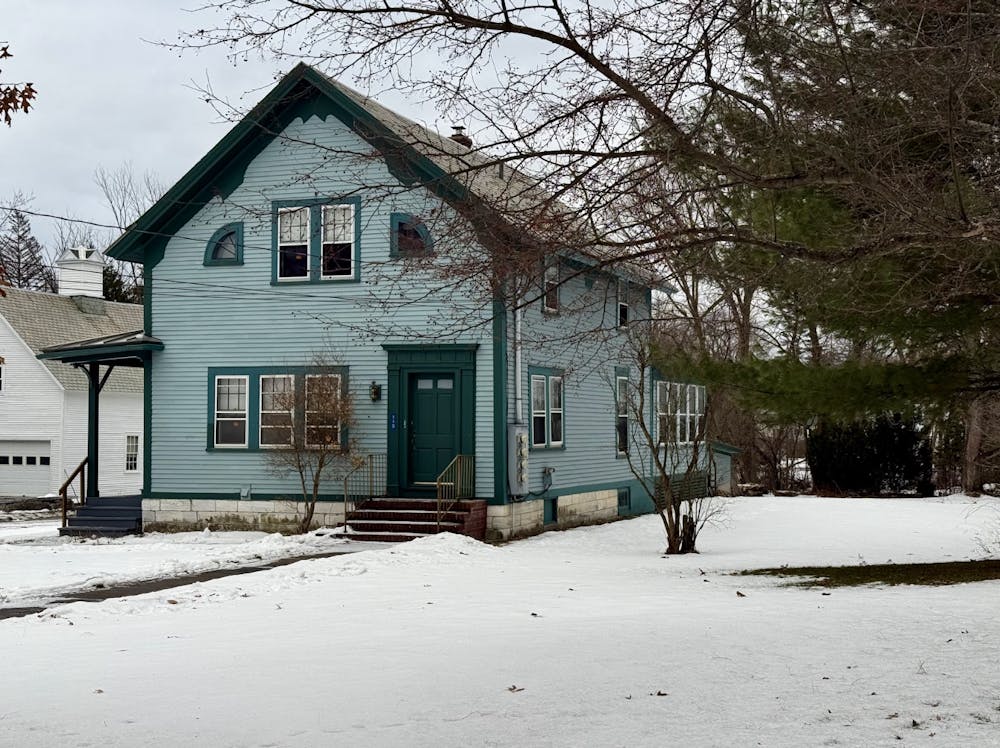
Middlebury’s winter term, or J-Term, brings a wide range of visiting instructors to campus each January, from career academics and graduate students to professionals working in the field. While the month offers a unique opportunity to teach an intensive course in Vermont, visiting faculty — particularly those without prior ties to the college — face significant challenges in finding temporary, affordable housing and meeting other costs.
On top of their salaries, typically $4,500 for the winter term, accepted winter faculty receive a $1,000 stipend for housing, but they must secure it themselves in a region already grappling with a housing crisis. Short-term rentals, Airbnbs and hotels cost far more than what the stipend covers; Middlebury’s average rent for a studio apartment exceeds $1,700 per month, and most Airbnbs in the area accommodating a single person range from $2,500 to over $9,000 for a month’s stay.
“For those of us who are younger in our careers, the money makes a bit more of a difference than perhaps people who are retired or more established,” Alessandria Schumacher ’17 said, who teaches the course “Environmental Health Decisions.”
Alexa Duchenseau, who teaches the course "Endangered Food,” paid $4,000 to rent an Airbnb in Salisbury last J-Term. Duchenseau managed to locate an apartment in Bristol this year for $1,600 — though less than half of what she paid for housing last year, the price still exceeds the $1,000 housing stipend.
Beyond high prices, limited availability also plays a role in the visiting instructors' struggle. The college provides the faculty with some housing resources, connecting prospective instructors to websites like FurnishedFinder and Sabbatical Homes, platforms dedicated to traveling professionals and academics in need of a longer-term stay. But when Duchenseau browsed the pages after the college offered her a J-Term position over the summer, all options on both websites were unavailable.
As visiting faculty only stay for a month, the short timeframe makes it difficult to cut a traditional lease or rental agreement. The college did not directly share any information about college-owned rentals with visiting faculty, although the Middlebury handbook states that some college-owned properties are technically available to faculty on a short-term basis.
Some J-Term visiting instructors are able to avoid these challenges because they are either regularly employed by the college in other capacities, residents of the surrounding region, or alumni with prior connections to the area. Schumacher was able to find housing in the residence of a friend’s parents. Connor Williams ’08.5, who teaches “Catastrophic Memories,” commutes from across Lake Champlain.
Duchenseau and Schumacher pay rent for both their Middlebury accommodations and their regular apartments while teaching during J-Term. Between gas expenses and rent for not one but two properties, the stipend barely covers instructors’ expenses, if at all.
The opportunity to teach during J-Term is enough of a motivator for visiting faculty, despite the difficulties of finding a place to stay. Duchenseau is a current fifth-year Anthropology PhD candidate at Yale University, and she said that teaching at Middlebury gives her a leg up on other aspiring professors.
“People are really searching for opportunities to independently teach courses,” she said.
Williams, despite having an accomplished academic career, returns to Middlebury out of love for the area and for the opportunity to continue contributing to the Middlebury education.
“What I’ve done in my career is due to literal lessons I learned from many faculty who are still at Middlebury,” Williams said. “To become a part-time colleague of theirs is just an incredible privilege.”
As students and faculty enjoy a month of unique courses and fun winter activities, most visiting professors seem to view their housing struggles as a worthy sacrifice, but costs and housing remain a burden and barrier.
Kai Arrowood '29 (he/him) is a News Editor.
Kai previously served as a staff writer. He is a prospective English and Sociology joint major. Aside from The Campus, Kai is a copy editor for Middlebury Geographic and an avid participant in National Novel Writing Month.


