
Diversity, Equity, and Inclusion (DEI) has undergone a dramatic transformation in public discourse over the past decade. What began in the 2010s as a neutral descriptor for diversity and affirmative action programs which emerged in the decades following the Civil Rights Act of 1964 has recently evolved into a politically charged buzzword. Today, it has morphed into perhaps the most divisive three-letter acronym in America.
The increasingly critical media coverage of DEI may have helped set the stage for President Trump’s 2025 executive order ending “radical and wasteful DEI programs within the federal government” —– a dramatic reversal from the egalitarian impulse behind the original Civil Rights Act. As the Trump administration and legislators across the country demonstrate clear hostility toward DEI in government and higher education, understanding patterns and narratives in media coverage is crucial for developing strategies to communicate the value of creating diverse, equitable and inclusive environments that benefit everyone.
This semester, the six of us worked together in Professor of Political Science Erik Bleich’s Media Portrayals of Minorities Project (MPoMP) Lab, which undertakes text-as-data analyses of coverage of marginalized communities. We analyzed the 1,855 articles that mentioned “Diversity, Equity, Inclusion” or “DEI” published between January 1, 2016 and December 31, 2024 in The New York Times, The Washington Post, The Wall Street Journal and USA Today. Our results show how media coverage transformed DEI from a policy descriptor to a tagline for the right to attack the left, how American discourse has increasingly narrowed the identities associated with DEI, and how people in the real world suffered consequences, being labeled “DEI hires” as a result of this shift. We published the results of this research in a three-part series on the lab’s website.
DEI only gained consistent media attention following George Floyd’s murder in May 2020, when coverage of these initiatives surged as part of a broader focus on racial justice. Initially, this coverage was largely positive, with DEI efforts described as “long overdue” and as a “powerful antidote” to divisive concepts like “cancel culture” and “wokeness.”
However, by late 2021, mounting skepticism appeared. Critics increasingly described DEI initiatives as “quick fixes” lacking substance, while others raised concerns about academic censorship and “self-censorship” in university settings. The politicization of DEI accelerated dramatically in early 2023, as evidenced by the sharp increase in articles mentioning both “DEI” and “woke” — a term already thoroughly stigmatized by the political right.
The transformation of DEI from progressive policy to culture war buzzword follows a familiar pattern that we’ve seen with other social justice terms like “intersectionality,” “critical race theory” and “woke.” All have undergone profound shifts in meaning as culture war rhetoric has come to dominate public discourse.
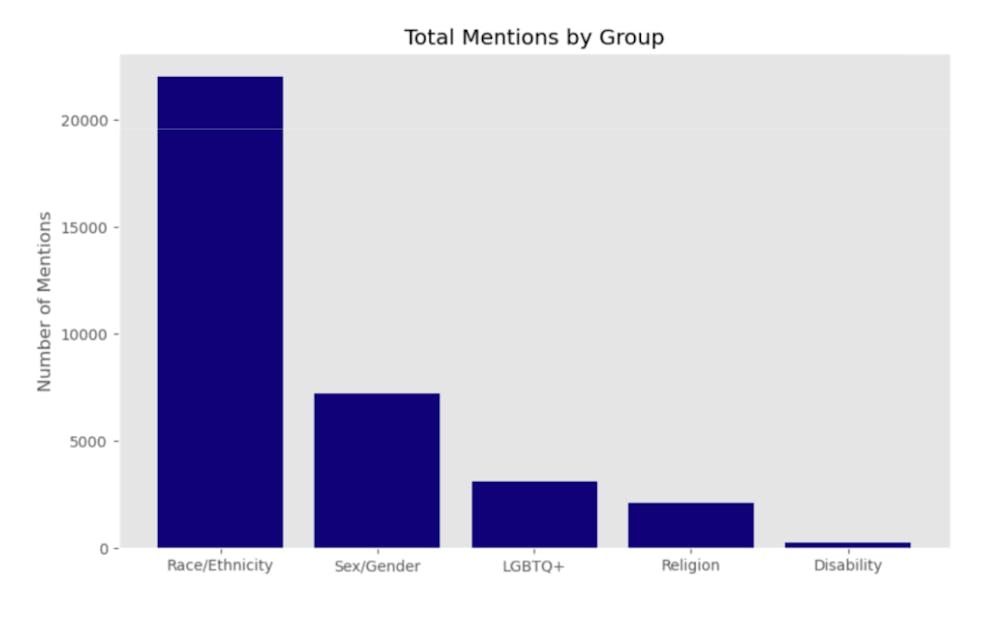
DEI, by definition, addresses discrimination across numerous dimensions (race, gender, religion, disability, age, etc.), but media coverage has focused predominantly on a narrow set of identity categories. Our analysis across major publications revealed that race or ethnicity (84%), sex or gender (67%), and LGBTQ+ topics (35%) dominated DEI-related coverage, while religion (25%) and disability (5.3%) received significantly less attention.
Even within the most-covered category of race/ethnicity content was highly imbalanced. Black or African American individuals were mentioned in over half of all articles (56%), while Latino or Hispanic (18%), Asian (13%) and Indigenous (11%) groups received far less attention. Interestingly, “White” appeared almost as frequently as “Black” in DEI coverage (51%), though in dramatically different contexts.
Before mid-2021, articles discussing Black Americans often portrayed DEI programs as not doing enough to address workplace discrimination and create opportunities. By 2023, however, the narrative shifted, increasingly portraying Black Americans as “unqualified DEI hires.” In contrast, articles mentioning White Americans frequently described them as feeling cheated by DEI programs that were doing too much for Black workers or posing challenges specifically for White ones.
Who are the people who have ultimately paid the price for this politicization?
At the Virginia Military Institute in 2021, Major General Cedric Wins, the institute’s first Black superintendent, was appointed to address the institution’s documented problems with racism and sexism. His DEI initiatives, including removing a Confederate statue and establishing a diversity committee, sparked significant backlash from alumni. Despite his qualifications, Wins was labeled a “woke hire” and ultimately lost his position.
A similar story played out at Texas A&M University. Kathleen McElroy was offered a tenured position as journalism program director in June 2023. When conservative alumni disapproved of her previous DEI work, her contract was repeatedly downgraded until she ultimately rejected the offer. While Texas A&M later reached a $1 million settlement with McElroy, apologizing and acknowledging “hiring process mistakes,” the damage had already been done.
In both cases, a highly qualified person of color was pushed out to appease conservative alumni and financial stakeholders, with their racial identity making them vulnerable to being labeled as “DEI” or “woke” hires regardless of merit. These highly publicized media scandals reinforce existing prejudices that DEI is merely performative and prioritizes identity over merit. Such a characterization ultimately distorts public perception and diverts attention from how DEI initiatives could effectively establish institutional equity.
The Media Portrayals of Minorities Project Lab this semester includes Andy Cao ’25, Ting Cui ’25.5, Eva Janairo ’28, YiJun Kim ’26, Daniza Tazabekova ’26 and Abby Ward ’25.

