
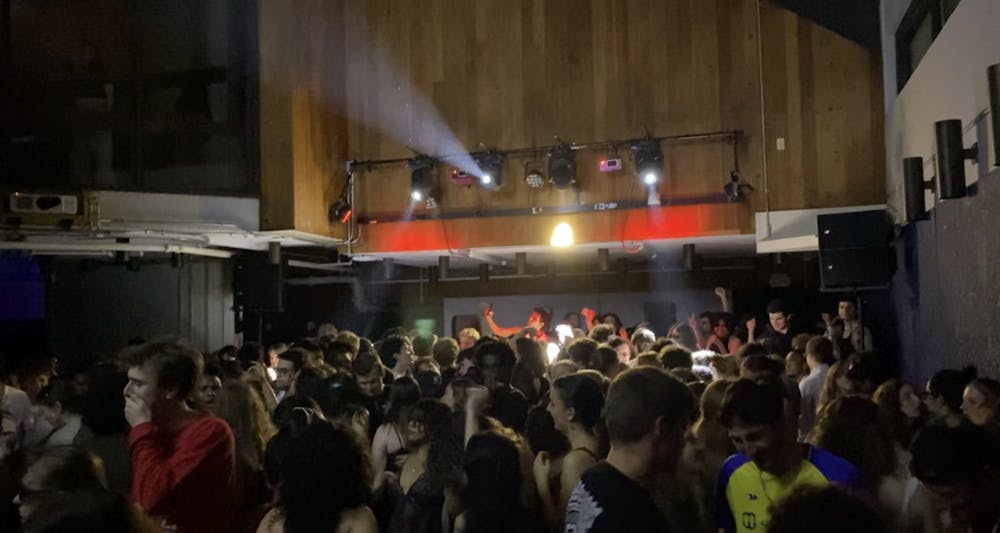
Booming beats, colorful flashing lights and crowds of Middlebury College students packed the Freeman International Center (FIC) Bunker in the late hours of April 17. This second edition of ‘Laylit’ at Middlebury — the annual party sponsored by the Arabic Department in collaboration with the student organizations WRMC radio station; Pan-African, Latino, Asian, and Native American Intercultural Academic Interest House (PALANA) and West Asian and North African Students (WANAS) — featured prominent DJs performing “Live EDM from the Arab World,” and a night to remember for all the attendees.
‘Laylit’ was DJ’d by Wake Island, a Montreal based duo formed by Nadim Maghzal and MNSA (Philippe Manasseh). The duo's high-quality music and lighting production transformed the Bunker into a club-like environment, with students flowing in from 10 p.m. to as late as 2 a.m.
The duo co-founded Laylit in New York City in 2018 to celebrate the diversity of Middle-Eastern and North African (MENA) music in the party scene. They have been bringing their party series to various hubs along the East Coast of the U.S. and Canada since its founding.
First-time attendee Audrey Snowbeck ’28.5 commented on the liveliness of the party scene.
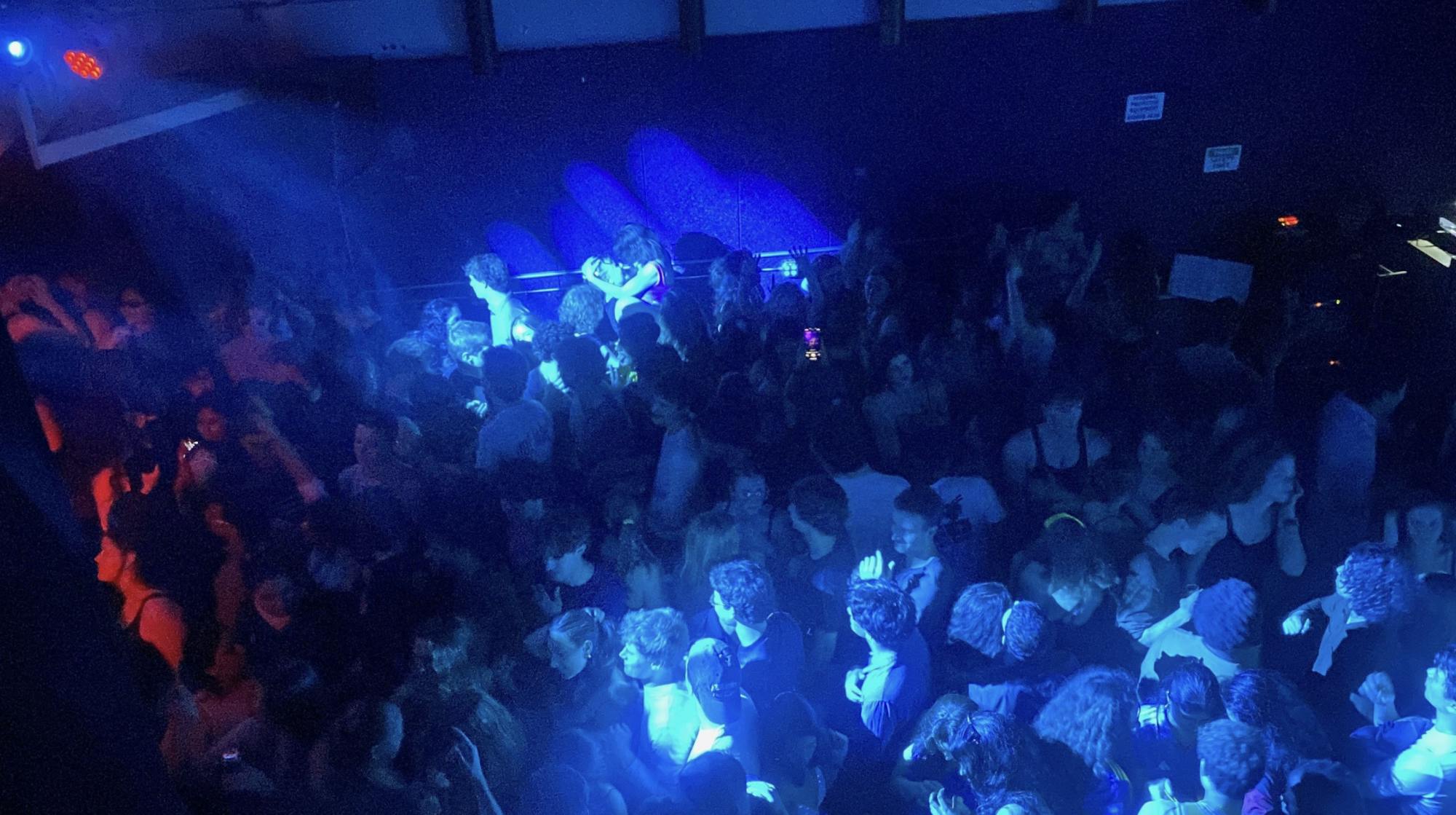
“It was very fun, and very crowded, and very hot,” Snowbeck said. “It was so packed with people, which was awesome because sometimes I go to a social house and it’ll be half empty, which is kind of hit or miss.”
The music at the “Arabic rave,” as Henry Putnam ’28 noted, reached a wide range of both new and returning audience members and featured a variety of tracks not often played at parties across campus.
“I would have never had the opportunity to listen to music like that, and had no idea that I would like it nearly as much as I did,” Putnam said.
Though he expected the school-wide event to be on the more subdued side, Putnam, by contrast, found Laylit to be an extremely fun experience. Laylit’s unique mediums of music were a welcome shift away from the typical dance playlists often heard on a weekend night out.
“I walked away with a number of new Arabic songs that I had no idea that existed,” Putnam said. “It’s just a great time to, you know, learn about music, how there’s more nuances and caveats to different cultures across the world than just what we’re exposed to just because of Western media.”
Bo Young ’28, a second-time attendee, similarly noted the importance of hosting an event like Laylit on campus to renew preconceptions about Arabic music that audience members often hold, particularly in the global west and at Middlebury.
“I think there is still a stigma of what Arabic music means, and it always has to have a religious message or… ‘It’s always gonna be like a political message,’”Young said.
Mainstream media representation of the Arab world is often skewed, as only specific aspects of the region are highlighted. This, Snowbeck expressed, is an important reason as to why experiences on campus, such as Laylit, are beneficial for the student body.
“Any image that’s maybe a counter to, like, a state-sponsored one is important,” Snowbeck said.
Furthermore, rather than gaining new understandings through our screens, namely, news platforms and social media, Laylit provided a space for the universal experience of music and dance to do the talking, and allowed for students to experience culture viscerally.
“[The audience] equated hype music with Arabic music, which, I think, is an association that’s coming from experience rather than stereotypes, or like past, perceived knowledge…which I think is really important when we talk about making music accessible, and making experiences with music that’s not from your own culture [accessible],” Young said.
It is important to note that Laylit’s “Arabic rave” experience is selectively curated for the Middlebury demographic. The songs selected and mixed by the DJs, which included hints of well-known, well-played Western songs, provided an accessible way for students to gain greater exposure to Arabic music.
“There's something super consumable about like, an EDM bass, with, like, ‘Ahla Leila, Ahla Nas’ on top,” Young said, quoting the song “Ma Tnsani (Yalla Habibi)” by Vanco and AYA. “They mix in a lot of English songs too.”
The DJs played songs in Arabic, English and other languages such as Spanish and French, while combining them with overlays of musical textures unique to the Arab World. Laylit 2.0 once again demonstrated this year that music, no matter the genre, language, or region it originated from, can serve as a language that needs no translation, bringing communities like Middlebury together through the joy and excitement of song and dance.
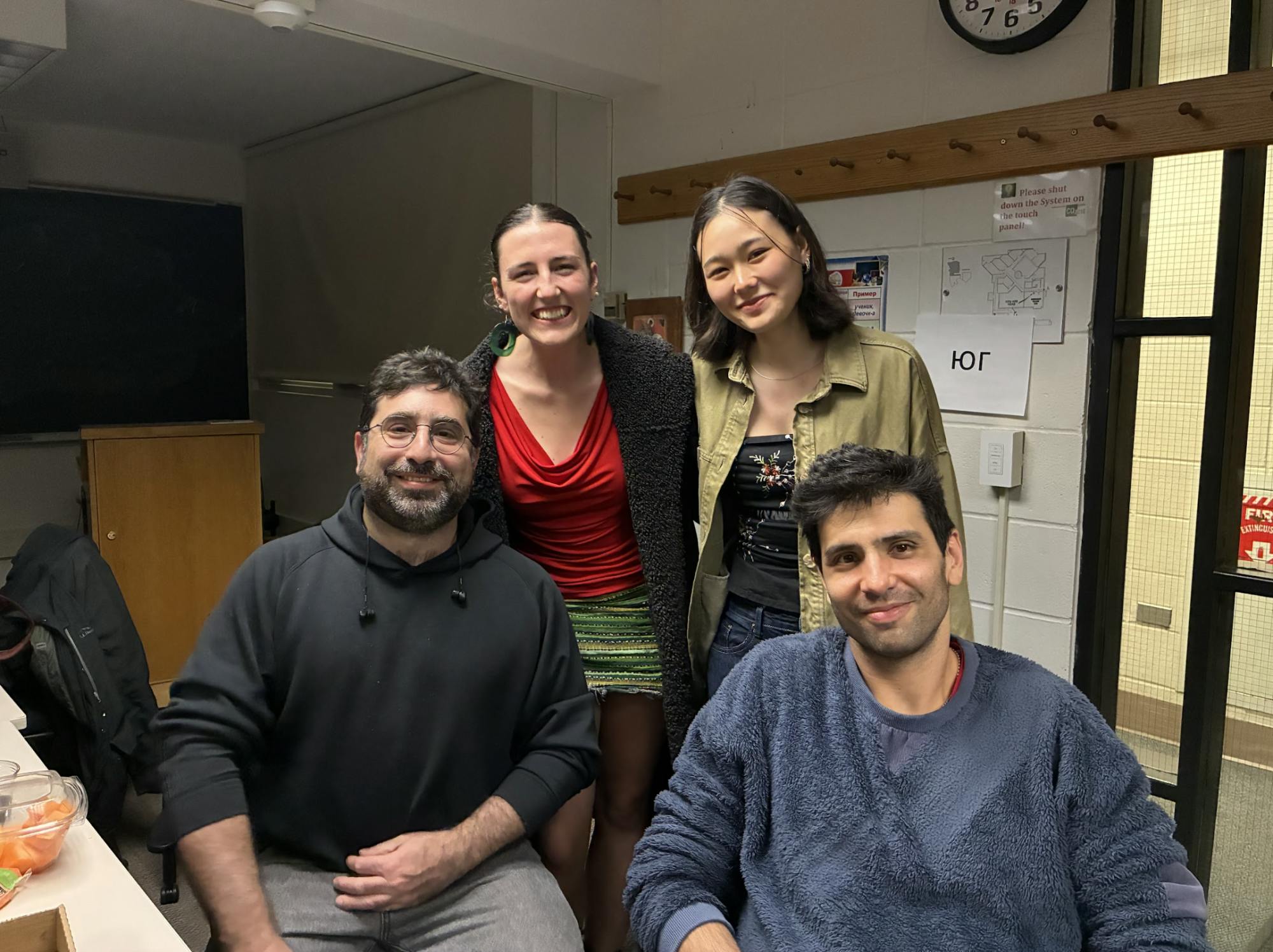
In attendance at Laylit was co-organizer Dima Ayoub, associate professor of Arabic, and Lana Povitz, associate professor of history.
“I went to the event to support Dima, but also I love the DJs and the music, and I love everything that the Arabic department does. All of this outweighs my embarrassment about partying with students,” Povitz said in an interview with The Campus.
Editor's note: Contributing writer Maddy Russell ’26 contributed reporting to this article.


