
On March 2, Secretary of State Marco Rubio posted a video message on X, formerly known as Twitter, encouraging Americans in the Middle East to monitor updates following the initiation of “Operation Epic Fury.” The travel advisory for Jordan, which typically rests at level two — “exercise increased caution” — was bumped up to level three, “reconsider travel.”
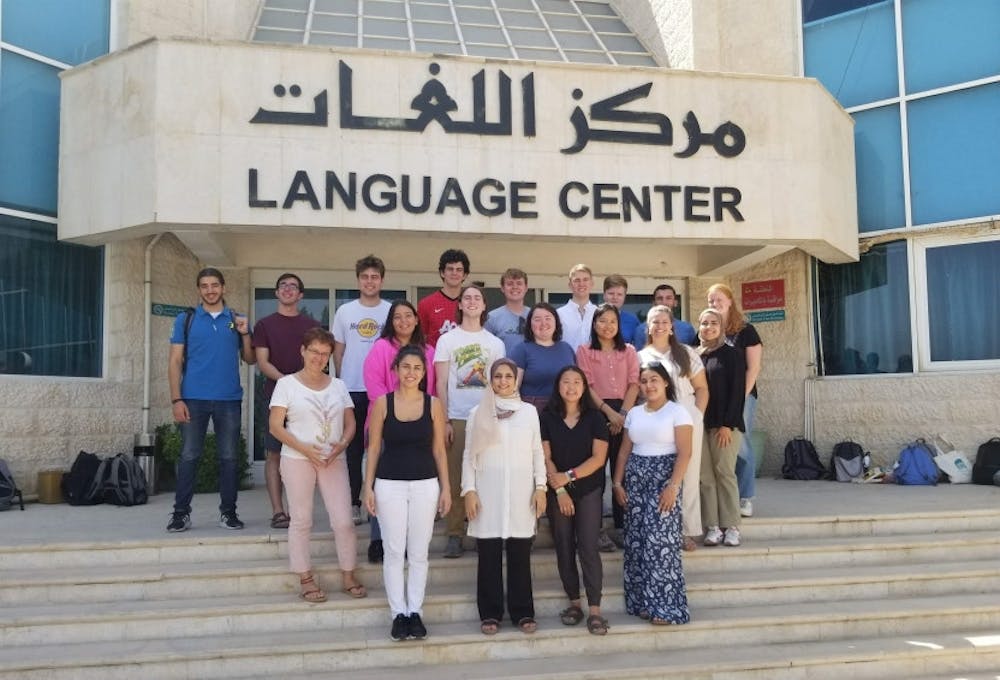
The following morning, Middlebury’s Schools Abroad office notified students in Amman, Jordan, that the program would be relocated to Rabat, Morocco.
“It was confusing because [Marco Rubio’s communication] wasn’t official, so we had to go a little back and forth on that,” Bill Mayers, assistant director of international programs, said in an interview with The Campus.
By March 3, Rubio’s message had spread widely across social media. Despite the lack of formal State Department communication, the college’s study abroad office decided to relocate students out of caution. By Thursday night, all seven students in the Jordan program were en route to Morocco, where Schools Abroad secured housing.
Of those seven, only one is currently matriculated at Middlebury. Students will continue two content-based courses with their Jordanian professors over Zoom, while the residential coordinator in Morocco will take over the colloquial Arabic class, and Morocco’s program director will teach the standard Arabic class. Both the program director and the residential director at the school in Jordan remain in Amman.
Although Jordan’s civilian areas have not come under significant fire, Iran has struck some of Jordan’s military infrastructure, and Jordan is listed as one of the U.S. partners that is currently being targeted by Iran. The U.S. embassy in Iran has since encouraged all “non-emergency” U.S. citizens to leave the country as soon as possible.
The Middlebury school in Jordan is the only school abroad that specializes in Levantine Arabic, a dialect spoken by over 60 million people in Syria, Jordan, Palestine, Lebanon and Southern Turkey. Although students will continue taking online classes with Jordanian professors in Levantine Arabic, they will no longer live in homestays that speak the dialect.
“I was more drawn to the Levantine Arabic, because it’s a lot more compatible to other dialects,” Alistair Nalle ’26.5 said, who studied in Jordan last spring and worked with the Amman Center for Human Rights Studies last summer.
The Middlebury School Abroad in Jordan was founded in 2011. As of the fall 2025 semester, the school had been in operation for 15 years. The Jordan program was opened after the closure of Middlebury’s school abroad in Alexandria, Egypt, which was shuttered after the Arab Spring in 2011.
After the Oct. 7 attacks and the start of the Gaza War, the Middlebury Schools Abroad administration began discussions about potential backup plans in case the conflict escalated.
“We were then viewing Morocco as a backup if things heated up for Jordan,” Mayers said. “[The school in Morocco] assured me that they would be ready to welcome students from Jordan if that was needed.”
Nalle found the experience in Jordan incredibly welcoming.
“I think the Western media tends to illustrate that part of the world as a giant sand dune with constant issues,” Nalle said. “But it’s a lot safer than people think.”
Jordan — and Middlebury’s program in Amman — has historically been a stable location for study abroad. The country maintains strong ties with the United States and a culture of hospitality toward international students.
For Liam Morris ’26, studying abroad in Jordan challenged most people’s perceptions of the region.
“All we learned about the Middle East was 9/11 and radical terrorism,” Morris said. “I feel like I had a gut intuition that that was wrong.”
Although Jordan’s population is predominantly Sunni Muslim, many students are placed with Christian host families. Morris lived with a multigenerational Muslim family, where he helped children with English homework and spent hours in daily conversation.
“Arabs are among the most hospitable people in the world, especially [my host family], and just wake up to make my life better,” Morris said. “I really felt like I was part of their family after, and I didn’t really expect that.”
The relocation to Morocco is expected to be temporary. Administrators plan to decide by early summer whether to reopen the Jordan program in the fall. If conditions remain unstable, Morocco will serve as an alternative site.
“We envision Jordan reopening, but the future is a bit murky right now,” Mayers said.
10 students have been admitted to the program for the fall semester. If Jordan does not reopen, they will have the option to study in Morocco instead.
“Students weren’t happy about having to leave, but there’s no way the college could have kept people there in good conscience,” Mayers said.
Kai Arrowood '29 (he/him) is a News Editor.
Kai previously served as a staff writer. He is a prospective English and Sociology joint major. Aside from The Campus, Kai is a copy editor for Middlebury Geographic and an avid participant in National Novel Writing Month.


