I came to Middlebury as a figure skater with five years on Team USA, trying to figure out how to balance training in college and exploring other interests. As an Aaron Sorkin devotee, I'd romanticized the fast-paced world of journalism through “Sports Night” and “The Newsroom.” I loved writing. I wanted to try telling other athletes' stories. Little did I know that the sports section would launch me to the Olympics — just not as a competitor.
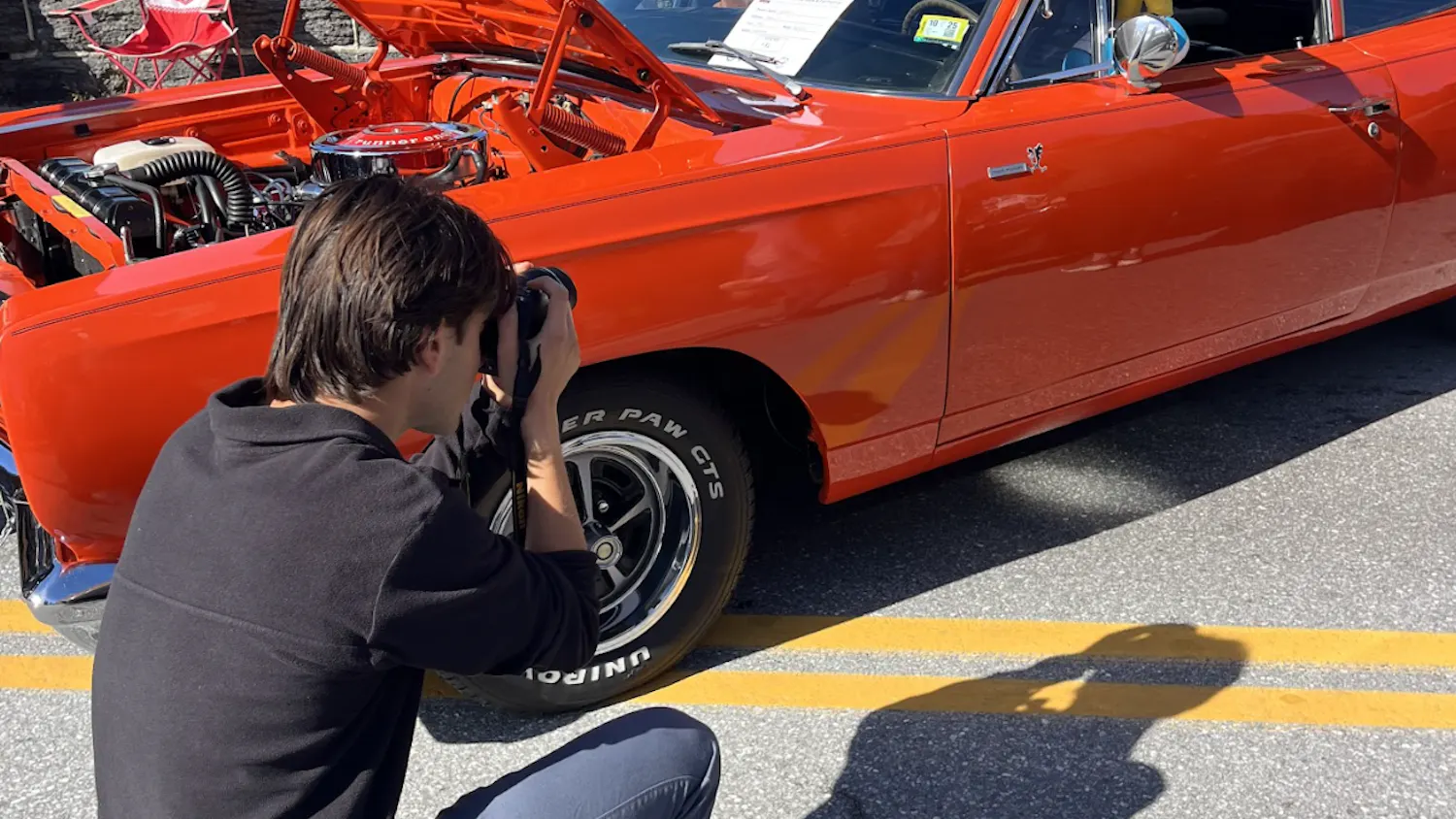
My first story for The Campus was about the sailing team, which I didn't know existed until an editor assigned it to me during my sophomore year. I showed up to my first interview with a notebook and the peculiar confidence of someone who has spent their entire life being very good at exactly one thing. The sailors were patient as they explained the vocabulary of a sport that is subject to the whims of the wind.
I had discovered that I loved learning about sports I would never be good at, sports that required no talent from me but devoted attention. Five hundred seventy words on Lake Champlain practices and vocabulary I barely understood. Page 12. I was absurdly proud.
Two weeks later, I was back at it, covering Middlebury’s first official Highland Games, affectionately called the “Middland Games” (kilts optional). It was there that I watched former Middlebury offensive lineman Thomas Perry ’25 casually throw a telephone pole in an event called the caber toss. I learned about the monumental effort of organizing the event, asked stupid questions and awkwardly interviewed spectators. I kept showing up.
Being a figure skater who writes about other sports meant spending my whole life as an expert in one niche, only to suddenly have to become an expert in several new ones in a day’s time. Every Winter Olympics, I explain triples versus quads, why edge quality matters and the difference between singles and “couples” skating (more officially called pairs and ice dance) with ease. Then I’m asked to cover Kelly Ferrero ’23.5 reaching 1,000 digs, and I’m asking what a dig is, why 1,000 matters, and what makes a great libero versus an okay one. When I set out to report, I had to exchange confidence for vulnerability and curiosity.
By junior year, I became a sports editor and worked my way through skiing, squash and soccer. In my senior year, I was the Senior Sports Editor. The role got bigger with weekly story ideas and assignments, planning coverage, recruiting writers and more editing. Rebuilding and growing the section became one of the most rewarding parts of my Middlebury experience. Monday nights in The Campus office became a ritual where the sports editors would meet to live edit and gab about our favorite Middlebury and non-Middlebury teams. We built a little team of our own — people who cared about telling the stories of Middlebury athletes.
Some stories stayed with me more than others. Writing about the passing of Luke Hotte ’77, assistant men’s and women’s track and field coach, meant interviewing people about the throws coach who'd shaped their lives. Sitting in a press conference for Thomas “The Tank” Perry ’25, asking the first question in a room full of male reporters, I felt simultaneously terrified and empowered. (Thank you to the football friends who gave me a crash course in offensive line intricacies beforehand.) I blew past my deadlines that night as I worked to perfect the story, but my Editor-in-Chief and best friend, Madeleine Kaptein ’25.5, still managed to fit the story on the front page.
The “Amateur Versus Athlete” column let me ride a horse for the first time — in the name of journalism, naturally. Hockey stories were always my favorite because I shared the ice with both teams, practicing in the same rink where I'd just watched the women's team take an overtime win against Amherst for Thursday's issue.
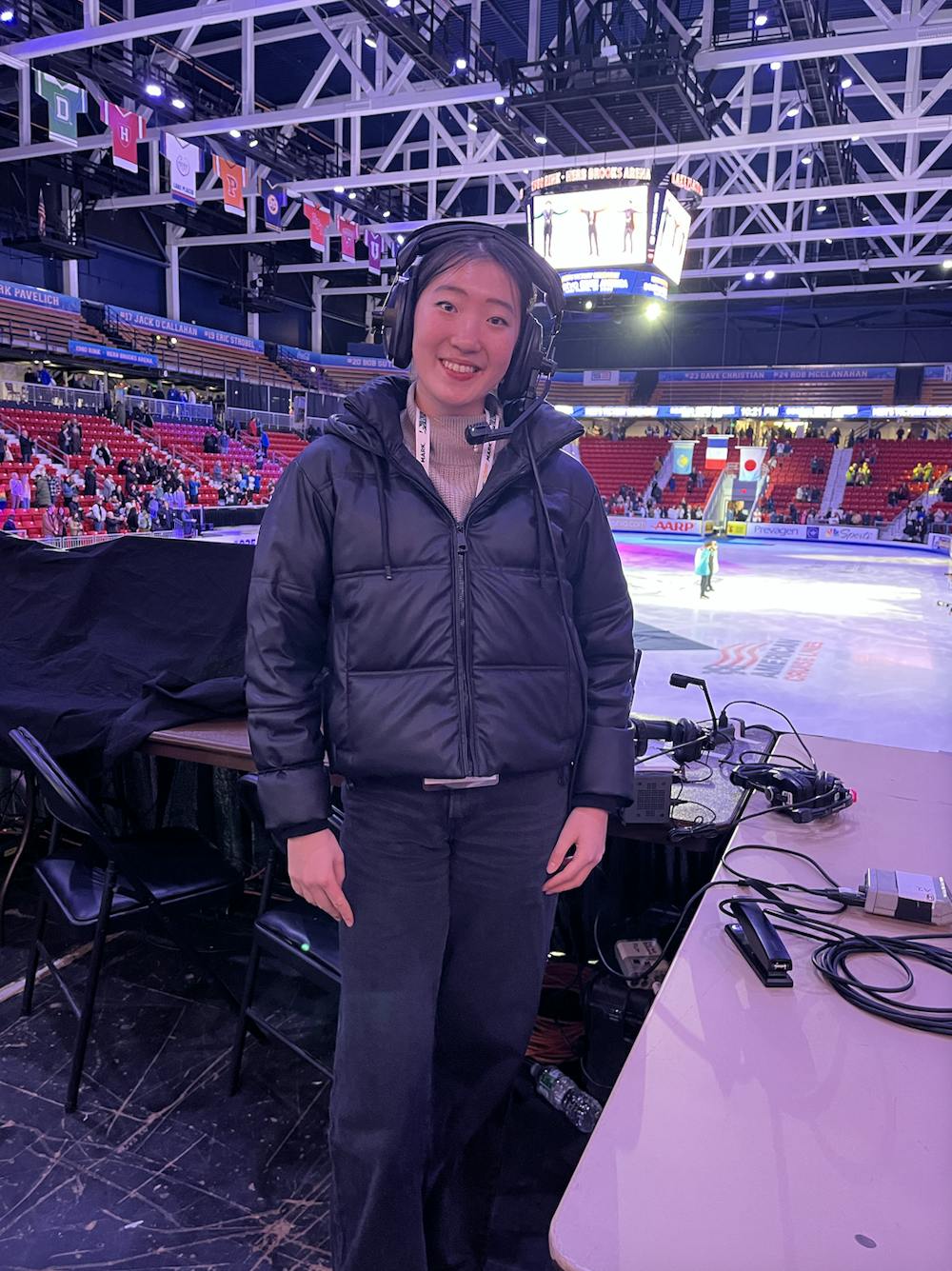
I never imagined my journey with The Campus would lead to covering figure skating at the Olympics with NBC, but my flight is booked for Milan the day after graduation.
My time with the paper taught me how to walk into spaces where I'm not the expert, how to ask good questions, how to learn a sport's internal logic fast and how to find the untold stories that matter. I have learned how to honor other people's athletic obsessions the way others have honored mine. And I learned that the best part of journalism, whether you're covering club sports or the Olympics, is getting to walk into a world you don't yet understand and stay long enough to learn why people care.
Ting Cui '25.5 (she/her) is the Business Director.
Ting previously worked as Senior Sports Editor and Staff Writer and continues to contribute as a Sports Editor. A political science major with a history minor, she interned at the National Press Club in Washington, D.C. as a policy analyst and op-ed writer. She also competed as a figure skater for Team USA and enjoys hot pilates, thrifting, and consuming copious amounts of coffee.