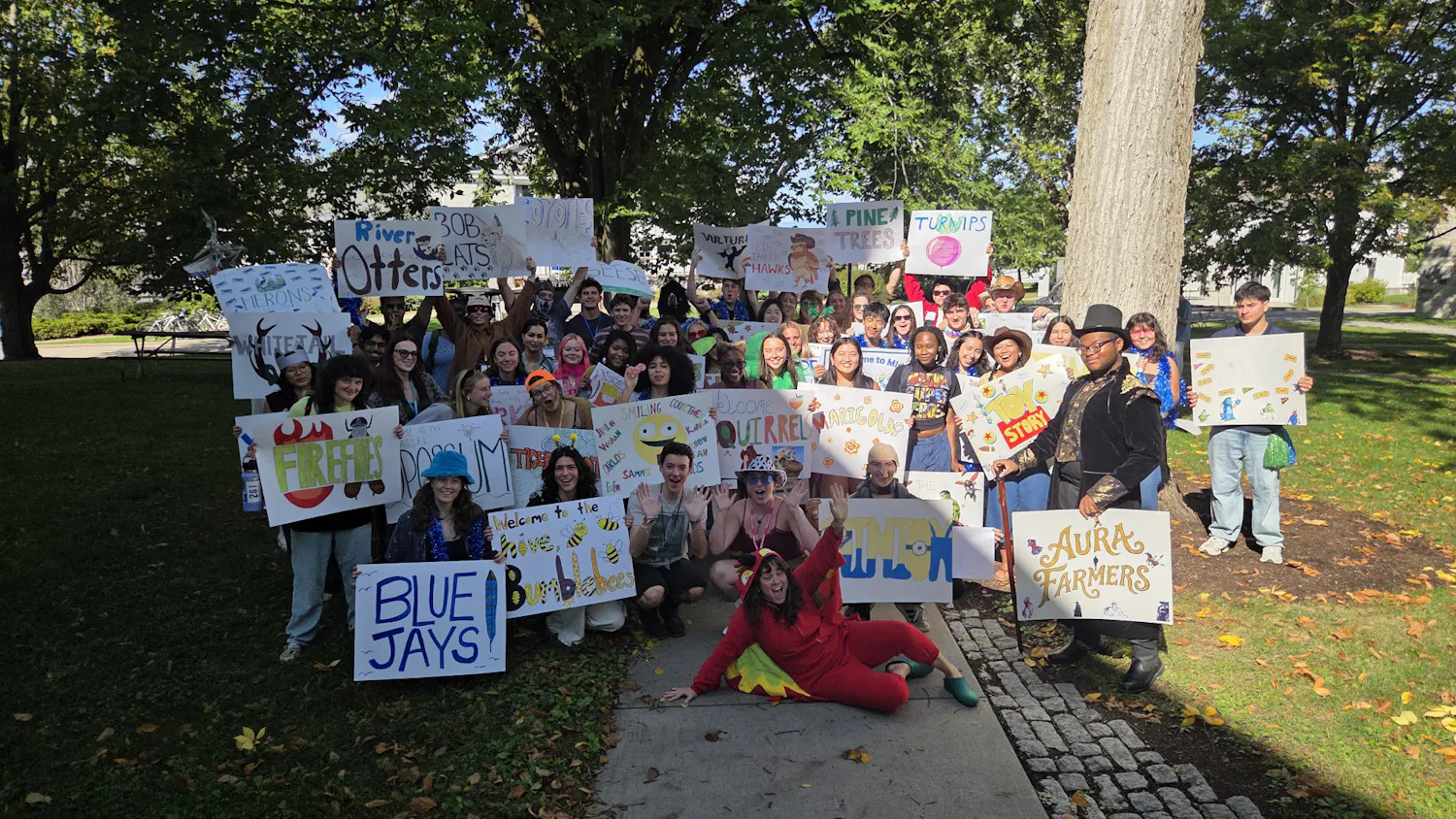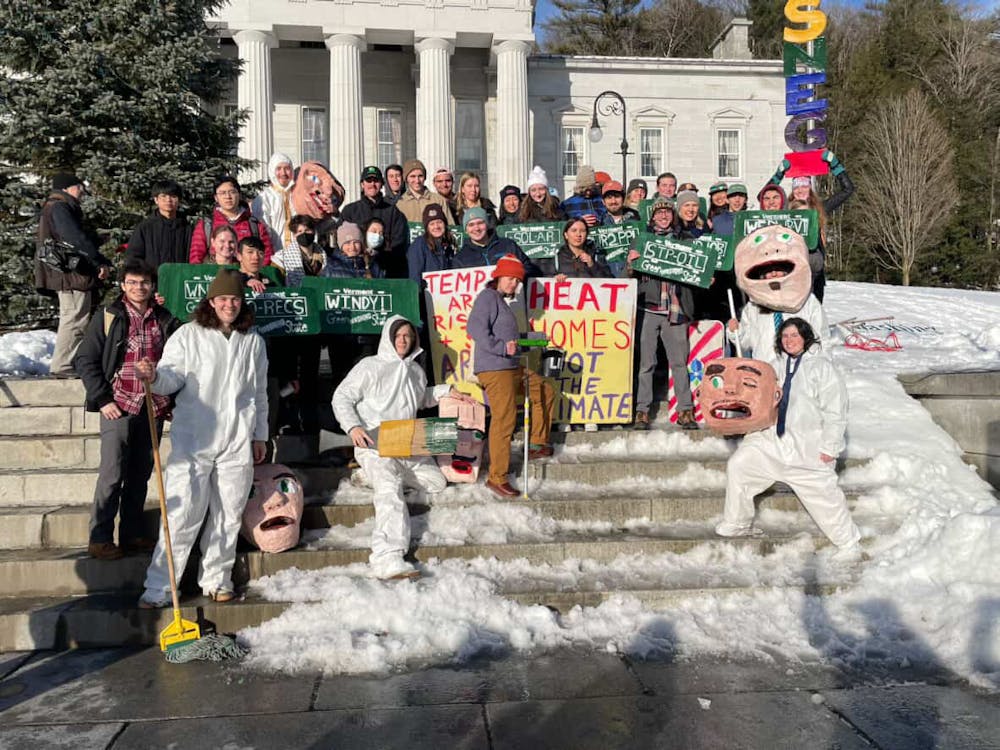
What started in the winter of 2005 as a J-Term class taught by Jon Isham, professor of economics and environmental studies, has progressed into a flourishing student environmental group that is approaching 20 years of sustainable conversation and climate activism. Having begun with environmental conversations in the Chateau basement, Sunday Night Environmental Group (SNEG) now holds weekly meetings where students gather to talk about climate news and various relevant campaigns that they can get involved with.
In honor of SNEG’s 20th anniversary is the “What Works Now” conference, taking place Nov. 13–15 on campus. Inspired by the 2005 “What Works” conference held at Middlebury in 2005, it will feature panels, art installations, keynote speaker and accomplished climate activist Jamie Henn ’07 in conversation with college President Ian Baucom, and smaller breakout sessions with alumni. A Thursday night meeting will be open to returning members of SNEG.
“We were focused on institutional memory,” Ella Powers ’27, treasurer of SNEG and co-organizer of the conference, said. “We wanted to use this as an opportunity to bring alumni back to campus and hear their stories and advice about human activism and how their time at Middlebury and SNEG has shaped their career.”
SNEG operates as a “non-hierarchical” collective led by co-presidents Lily Jensen ’28 and Claire Emanuel ’27, the other conference organizer. Around 30 students regularly attend SNEG’s weekly meetings, while larger events can draw up to 60. Members span from first years to Super Senior Febs, forming what Emanuel called “a tight-knit community.”
“Everyone has a say and we always vote on our decisions,” Emanuel said.
“The main goals of SNEG are to promote sustainability here on campus but also in the broader Middlebury and Vermont community,” Powers said. “We normally do breakout groups … People can choose what they are interested in. Right now some of our campaigns are portable solar, global energy networks and the conference for the 20th anniversary.”
Students propose ideas during a “pitch night” about three weeks into the semester. The group then votes on which campaigns they want to focus their energy on.
“It helps us find direction for the rest of the semester,” Powers said.
SNEG has played a central role in student-led climate organizing at the college. The group collaborated with 350 Vermont, Migrant Justice and other local organizations to stage protests such as “No Kings” that encourage community involvement. SNEG also helped lead the college’s fossil fuel divestment campaign, Energy2028, which began in 2012 and culminated in the college’s divestment announcement in 2019.
“We always talk about that campaign and use it as a marker for how to plan things now,” Powers said. “It’s a success story that shows us exactly what we’re capable of.”
Bill McKibben, environmentalist, author and Schumann Distinguished Scholar at Middlebury, has witnessed SNEG’s growth since its inception.
“Keeping the focus on the environment through cycles of public interest is no small feat,” McKibben said. “SNEG has gone from strength to strength, and I’ve always admired their persistence.”
As the group changed and grew over the years, so did the college’s environmental studies program.
“I think it's gotten ever deeper as we’ve come to understand more fully just how the ‘environment’ is linked with human vulnerability and human development,” McKibben said. “New opportunities for study keep opening up.”
Emanuel and Powers have been working on the programming for this week’s conference for over a year.
“I am feeling proud and excited,” Emanuel said. “A lot of work has gone into this conference to celebrate SNEG.”
“Environment is in our name but back to the very beginnings it was a social justice and climate organizing group,” Powers said. “We really try to embrace the intersectionality within the group.”