In May and June, two Middlebury professors and seven graduating seniors or recent alumni were selected for U.S. Fulbright Program awards. The U.S. Fulbright Program is an international academic exchange program that awards U.S. citizens with grants to teach, conduct research or carry out professional projects abroad.
Fulbright applicants faced uncertainty in the spring over their impending award decisions after programs for several countries reduced their capacities for this year in anticipation of the Trump administration eliminating U.S. government funding. Before award notifications went out, the U.S. State Department canceled the Fulbright scholarships of almost 200 American professors and researchers, about a fifth of the scholars the Fulbright board had approved over the winter. The cancellations appeared to target research projects focused on climate change, gender and race.
Student and professor applicants from Middlebury, which has historically been a top producer of Fulbrights, experienced “highly unusual” delays in receiving their answers, according to associate dean for fellowships and research Lisa Gates. While semifinalists have typically heard back by mid-March or early April, notifications this year were postponed until May for many. One Middlebury applicant did not hear back until June.
Graduating student applicants usually accept a degree of uncertainty in their plans when applying for Fulbright, Gates said, but the abnormal delays this year amplified this effect and potentially prevented certain students from being able to accept the grant.
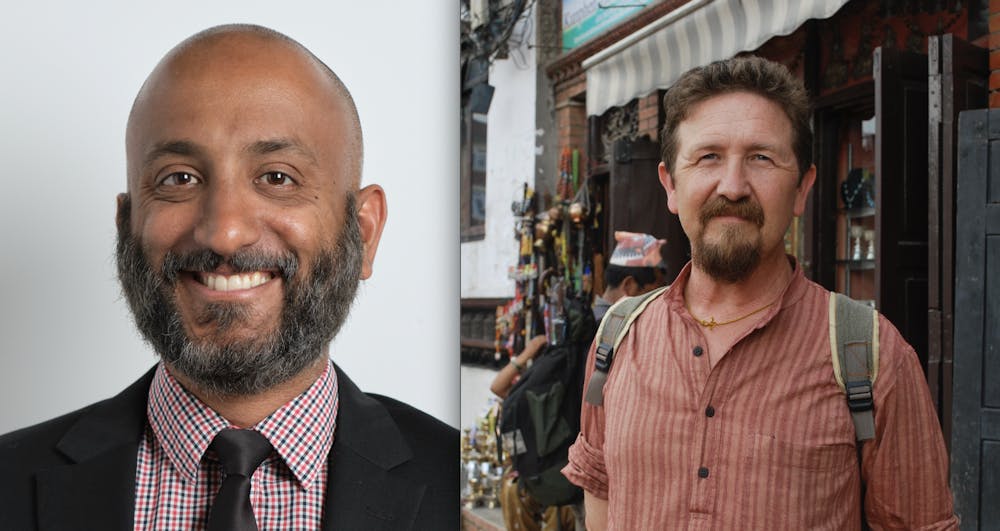
Professor of Religion William Waldron spent this past summer on one of two trips to Nepal as a part of his Fulbright scholarship, and Associate Professor of Political Science Ajay Verghese will take two research trips to India for his research beginning next summer. Waldron recalled the expediency needed from his team to get the project underway in under a month from the notification date in early May. Verghese had to push his first trip until next summer since he wasn’t going to be allowed to start research until August of this year.
Both professors expressed surprise that the Fulbright funding came through at all. Regardless, they are enthusiastic about the opportunity to work on their projects.
Waldron’s research in Nepal is the culmination of an 18-year relationship with the Kathmandu Valley region, which began with his first Fulbright scholarship in 2007-2008. It was during that year he met Dr. Naresh Shakya (his then-student), with whom Waldron has maintained a long-term connection over his near-annual trips. Through conversations with Shakya about the loss of artistic traditions in the capital region, Waldron developed an interest in efforts to foster tradition. In particular, Waldron is fascinated by the symbolism of the Five Buddha Families, specifically how contemporary Nepali Buddhists interact with these symbols in their lives.
“It just seemed like a natural project,” Waldron said.
His project requires a multi-pronged effort on the ground in Nepal. For example, part of the project is being carried out in the National Archives by Dr. Shakya’s team of researchers specifically trained in reading the classical hybrid language of the records that use Newar vocabulary in Sanskrit text.
When reflecting on his initial surprise over getting selected for a second Fulbright grant in his career, Waldron said he believes the collaborative aspect of this project to be an important part of why it was chosen.
“I've known [Shakya] for a long time, and every time I go there… I have some connection with him and give talks [at his school],” Waldron said “If the whole idea of Fulbright is to invest in long term relationships with people, that's exactly what's happening with me, right?”
Verghese, also a second-time Fulbright Scholar after completing his first project in 2017-2018, will spend summer 2026 and 2027 in India to conduct in-depth research on two smaller projects that emerged from a broader one: family gurus and “secular Hindus.” His interest in both topics was sparked by conversations during previous trips to India.
Family gurus are a kind of spiritual teacher, also referred to as “yogis” or “godmen”, that work with families and are often associated with political parties. Verghese said that since this is not a generally well-known topic among American scholars, he plans to spend a month or two shadowing one of these gurus to find out more about their lives and duties. He anticipates some difficulty in finding a guru willing to let a foreign scholar follow them around.
“I’ve talked to colleagues in India, and they said, ‘good luck’, because a lot of those guys might be very reluctant,” Verghese said. “So I think that one will take a lot more work, but also the payoff could be a lot.”
The second project was born out of Verghese’s interactions with younger, affluent people in Delhi who described themselves as “secular Hindus.” He plans on approaching this through interviews and focus groups.
“[They] described themselves as… still Hindu, but in a much more western style, secularized way,” Verghese said. “There wasn’t that much research about them, so I said, ‘Okay, I want to understand this community and this group.’”
Although the long-term future of the Fulbright program is unclear, Verghese expressed a hope that Fulbright’s bilateral nature — exchange between the U.S. and other countries — mitigates the possibility of the program’s funding being revoked.
“There is, I think, more of a built-in mechanism for compromise, and so the U.S. can[not] just unilaterally cut it off without having any ramifications,” he said.
Editor’s Note: News Editor Norah Khan ’27 contributed reporting to this article.
Noor Khan '28 (she/her) is a News Editor.
Noor is a History and Political Science double major. She was an editorial intern at the Los Altos Town Crier for the summer of 2025.