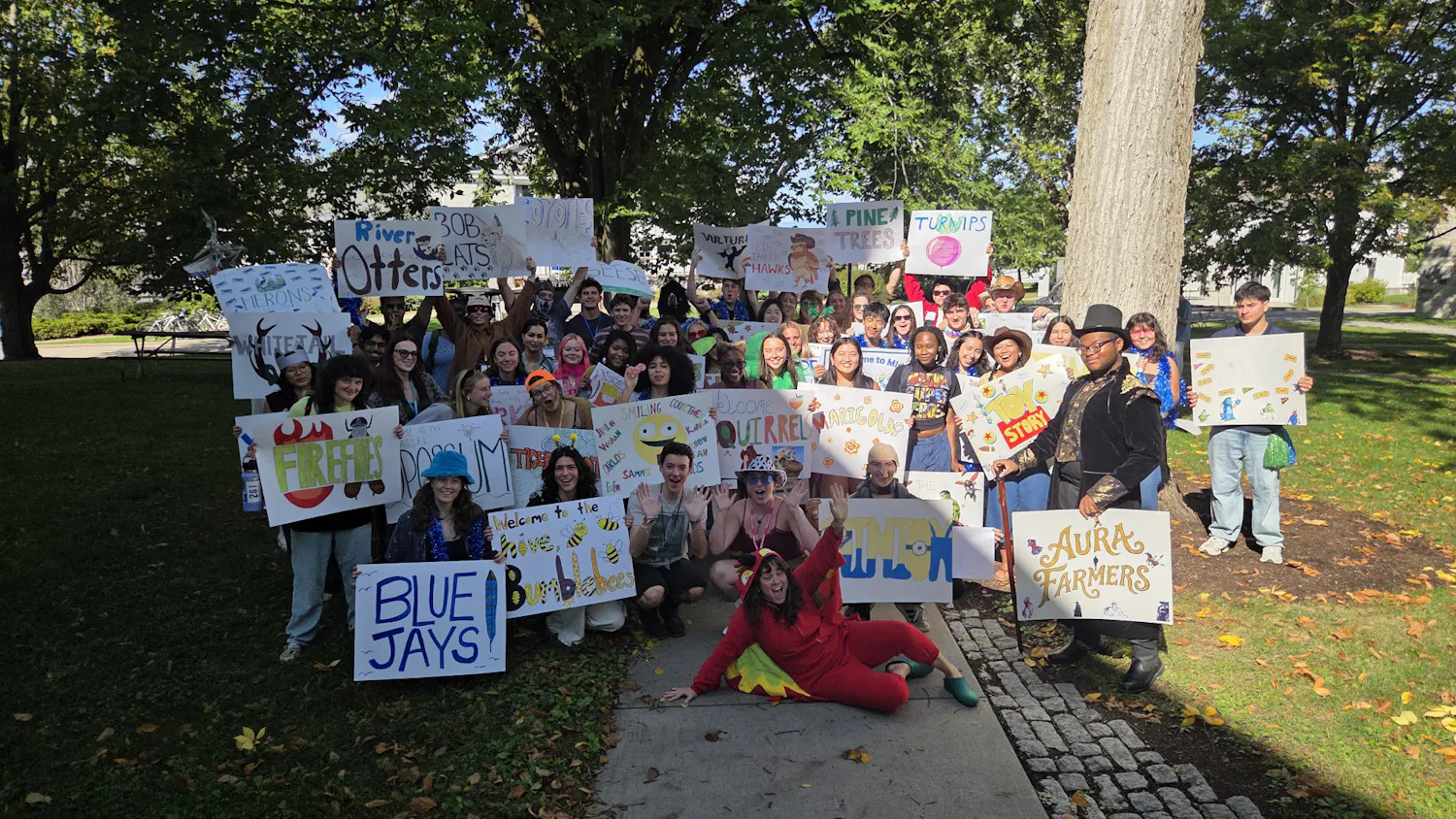
On Oct. 9, hundreds of Vermont college students were registered to vote as part of an effort through the Race to Replace campaign. Teams of environmental advocates across the state organized in this “dorm storm” to help promote clean energy resources.
The Race to Replace campaign was created by a group of Middlebury students in spring of 2010 after the Vermont Senate voted 26-4 against relicensing Vermont Yankee, a controversial nuclear power plant in Southern Vermont which produces about a third of the energy used in the state. Vermont Yankee faced widespread discontent among residents after lawmakers found out about radioactive tritium leaks as well as inconsistencies in testimonies by officials running the plant, and the College-based movement encourages the Vermont legislature and residents to replace Vermont Yankee with cleaner and more sustainable sources of energy.
“The way that we choose to replace these plants that are coming up for relicensing or shutdown, especially coal plants, will determine an enormous amount of the energy and climate future in the United States for the next 40 years, so the time is now to get engaged,” said Pier LaFarge ’10.5, a founding member of the movement.
Other initiators of the movement explained the recent activity led by the Race to Replace, as they celebrated 10/10/10, Global Work Day, with 350.org, the environmental organization led by Scholar-in-Residence in Environmental Studies Bill McKibben.
“We decided the best way for us to ‘get to work’ would be to register young voters at Middlebury and across the state,” said Ben Wessel ’11.5, another key leader of the Race to Replace effort. “Since the governor’s election this year is so close, and since it has such huge ramifications for clean energy development in the state, we thought registering new voters who pledge to vote for clean energy candidates was the best way for us to make a concrete difference in tackling climate change.”
The team pointed out that all students at Middlebury or at any school in Vermont are considered Vermont residents by state law, and are therefore able to participate in all Vermont elections. Wessel and Olivia Noble ’13, another key member of the Race to Replace team, emphasized how Vermont’s small size makes it possible for motivated students to make a substantial difference in Vermont’s energy future.
“We’ve actually switched a lot of students’ voter [registrations] to Vermont from states that don’t have significant races this year,” Noble wrote in an e-mail.
The Race to Replace campaign is also working alongside the College Democrats and the College Republicans in order to encourage students to register to vote.
“Middlebury students have incredible resources at our advantage that we can use to help advance the clean energy cause among the Vermont populace,” said Wessel. “Not only do we have some financial resources available at the College, but the respect that the Middlebury brand carries can help get press and get people to pay attention. Political organizing in such a small state is particularly rewarding because each individual voice is taken seriously.”
Noble agreed, pointing to how Middlebury students have already had an impact on the community through interaction over the last summer.
“We’ve really made it a priority this summer and throughout the campaign to tie our efforts in with those of the people already here,” she said. “Race to Replace had a lot of conversations with Vermont residents this summer, making sure that the policies we were pushing were initiative[s] that Vermonters cared about. From that, we’ve been able to find common ground and work together with Vermont residents to achieve our goals.”
LaFarge also spoke in depth about potential energy replacements should Vermont Yankee be permanently decommissioned, emphasizing “wind, biomass, microhydro and solar energy” technologies. According to LaFarge, there are also massive economic benefits to reap for the state should these emerging industries be established in place of the current nuclear plant.
Race to Replace will continue to be visibly active on campus over the next few weeks and will be registering more students at the College to vote, as the Vermont gubernatorial elections approach. It has been working with the Vermont League of Conservation Voters, which endorses the gubernatorial candidate Peter Shumlin as the best choice for voters concerned about green issues and climate change.
“There are a lot of important state representative and state senate seats in Vermont that are coming up that could determine the balance of how future votes on something like relicensing Vermont Yankee could go,” said LaFarge. “So there a lot of smaller ballot races that are important, but the governor’s race is definitely the key — it’s also the closest of all the races.”
Students organize for coal independence
Comments