626 items found for your search. If no results were found please broaden your search.
(10/03/19 10:03am)
The Fall Faculty Forum is an academic event hosted every year during Fall Family Weekend. Featuring faculty research and innovation, the forum consists of different panels centered around themes of exploration where professors can present their projects to students, parents and members of the community.
"New Modes of Communication" forum
EMMA AUER
At first glance, Japanese classical literature, data science, analysis of the hit TV show “Breaking Bad” and computer-aided language learning platforms don’t seem to have much in common. What brought these disciplines together for the Fall Faculty Forum, however, were the innovative ways Middlebury professors are teaching and researching them. Christopher Star, Professor and Chair of the Classics department, moderated a forum entitled “New Modes of Communication,” which drew together presentations by Assistant Professor of Japanese Studies Otilia Milutin, Assistant Professor of Mathematics Alex Lyford, Professor of Film & Media Culture and Jason Mittell and Gabriel Guillén, Associate Professor of Language Studies at the Middlebury Institute of International Studies.
Each professor detailed their fascinating research and the implications of their work in the classroom. Milutin, for one, described her method of teaching Japanese classics through contemporary forms of Japanese media, like manga and anime, that typically draw her students to the department. In class, she often asks her students to determine the accuracy of recent depictions of classical Japanese literature by comparing them to their original counterparts. As she declared, “The past does not stay in the past,” a statement which has led her to develop a course and publish two articles about contemporary retellings of classical pieces. Her work, she said, has been embraced by her colleagues.
Other professors are challenging the pedagogical norms of their respective fields as well.
Over the past few semesters, Lyford has introduced groundbreaking techniques to his courses at Middlebury by teaching data science in the form of a college writing course. Though the task of developing this course was daunting, his students can benefit from the opportunity to delve deeply into the discussion, writing and peer review inherent to college writing courses. According to him, this sets them apart from other data scientists, and their assignments — apps, for example — generally tell better stories about data than their peers who are not taking the class for college writing credit.
While Lyford explores the promise of writing as a form of communication, the next presenter discussed the merits of diverging from writing into an entirely new form of communication.
Mittell hopes to change the way people study film and media by developing a new form of film analysis: videographic criticism. In these audio-visual publications, critics are able to present their conclusions using actual scenes from films and TV shows, instead of having to recount this evidence in long paragraphs. He presented his fascinating video essay of “Breaking Bad,” a 12 minute piece that delved into the racial elements of Walter White, the protagonist of the show. Mittell also discussed the peer-reviewed videographic journal he founded, called [in]Transition, the first of its kind. Mittell is dedicated to bringing videographic criticism into his classes, and hopes to see it flourish as a critical form.
The digital world is also of interest to Guillèn, who presented his research of language learning sites. Through his extensive investigation, Guillèn seeks to find out if online language learning platforms, like Duolingo or Rosetta Stone, actually work. His study revealed that most apps and platforms lack one of the three essential components of language: form, use and meaning. Guillèn argued that students need lexical breadth and depth to move towards speaking ability. According to Guillèn’s data, the classroom remains the most effective place to learn a new language.
The research and pedagogy of these professors — just four of many who presented on Friday — reveal the thriving scholarship at the college. They also prove that there is room for exploration and experimentation in their fields.
"Searching for Answers" panel
EDYTH MOLDOW
As children we were natural “wonderers”: exploring, experimenting and letting our inquiries guide our growing understanding of the world around us. Sometimes, however, this child-like curiosity seems to waver — put on a low-heat simmer in the stovetop of our day-to-day lives. The Fall Faculty Forum panel, “Searching for Answers,” challenged this simmering quest for new knowledge, and instead turns up the heat to inspire intellectual pursuit.
Professor Michael Olinick of the Department of Mathematics weaved together a captivating presentation titled “Suicide, Accident or Political Assassination? The Enigma of Alan Turing’s Death.” He opened the lecture by quoting Marvin Minsky, who argues that “Turing is the key figure of our century.” Not only did Turing famously crack the German’s enigma code at the height of World War II, arguably shortening the war by two years and saving millions of lives, but he also founded computer science, artificial intelligence and mathematical biology. In 1952, Turing was “convicted of gross indecency,” and was given the option to go to prison or undergo treatment to “cure” him of his homosexuality. He was chemically castrated as part of this conversion therapy. The details of his subsequent death remain a mystery that falls in the hands of scholars such as Olinick, who unceasingly research each and every detail, stringing together the facts in hopes of one day reaching the truth.
Following the conspiracy-lover’s delight was “Of Trenches and Tombs: Experiential Learning in Field Archeology, Cyprus, Summer 2019,” presented by Professor Pieter Broucke of the History of Art and Architecture department and Meagan Tan ’21, an Architectural Studies major. Professor Broucke introduced the location of study, an island off the southwest coast of Cyprus that resides in the eastern Mediterranean ocean. The island is named “Yeronisos,” which, broucke revealed, translates to “holy island” in Greek.
“Holy island” indeed. Broucke pieced together, figuratively and literally, remnants of an ancient Greek civilization dating back to the “time of Cleopatra.” By diligently measuring corner blocks, he worked to “reconstruct the counters of the island,” discovering their function as the roof of a temple dedicated to Apollo. Tan flourished under the advising of Professor Broucke by embarking on a summer voyage to Yeronisos where she excavated shards of pottery, explored tombs and took part in field study courses alongside her peers. Intellectual curiosity can take you far and, if you’re really lucky, far enough to be under the ethereal glow of a Mediterranean sunset.
[pullquote speaker="Oratory Now! student coaches" photo="" align="center" background="on" border="all" shadow="on"]Self-consciousness must be replaced by audience consciousness[/pullquote]
Rounding out the history-heavy forum was Assistant Professor of Theatre Dana Yeaton’s presentation “Have We Found the Secret to Better Speaking?” Yeaton professed that his “passion for oratory” led him to go through innovation funding from the college to create Oratory Now! This student-driven group has become a “training program for our students who then train students in public speaking.” He then posed a question to the audience: “So…have we discovered the secret to better speaking?” His solution: Let’s find out!
As an experiment, in came Oratory Now! coaches Matthew Fliegauf ’22, GiGi Hogan ’22 and Kate Hilscher ’20.5, who proceeded to lead the audience in a 15 minute exercise. They acknowledged that we are “afraid to look silly” when speaking in public, but that our “self-consciousness must be replaced by audience consciousness.” We must first connect with our bodies, and then with our audience. The coaches commented on why they coach, suggesting that one “can always keep improving.”
And improve we shall when influenced by scholarly events such as these. As the forum drew to a close, all three presenters commented on the purpose of a faculty forum and what they personally gained from presenting. Professor Olinick sees the forum as a way to “generate ideas” in a liberal arts context, which Professor Broucke believes is “exploration in nature,” and that exploration “binds [the liberal arts education] together.” Professor Yeaton shared that for him, the faculty forum is a “genesis of teaching something else” where he “becomes a student” again, describing this process as “freeing” and “fulfilling.”
(10/03/19 9:57am)
The last thing you’ll ever catch me saying when asked quickly about my year abroad is that it “changed me.” I’ve changed, of course, but saying so has become a joke, expressible only in ironic fashion like instagram’s “hot girl summer” fad. People are seemingly unable to valorize their abroad experiences without feeling the need to trivialize them, as if abroad didn’t actually change them. I believe this self or societally-imposed trivialization often comes from a place of frustration and insecurity. I can imagine that someone who didn’t go abroad, whether by choice or otherwise, might be tired of hearing how their friends just adored gazing at the Sistine Chapel, or are like, totally like, in love with red wine now. And how those who actually discovered something within themselves, or want to be proud of their beauty, are afraid to say so.
[pullquote speaker="" photo="" align="center" background="on" border="all" shadow="on"]I can imagine that someone who didn’t go abroad might be tired of hearing how their friends just adored gazing at the Sistine Chapel.[/pullquote]
Unfortunately, when done gracelessly, talking about an abroad experience can very quickly devolve into an occasion for one to vaunt their newfound worldliness. Though it’s okay to reminisce fondly about some truly marvelous experiences, to do so in order to make someone else feel “less than,” or “deprived of,” is inconsiderate. Thus, reverting to a cliché like “abroad changed me” might be our generation’s way of cutting off those discourses before they begin. Because of this trend, people who have been abroad often feel apprehensive about discussing our experiences with those outside of our intimate circles.
I find this unfortunate, not only because people feel silenced, but because the one-way nature of the trivialization implies that people who didn’t go abroad have nothing to share.
I do sincerely believe I have changed since leaving last year. But the change wasn’t necessarily predicated on me physically being in Paris. So it frustrates me that people aren’t asked thoughtfully about their time at home, as if their years don’t merit unpacking either.
The fact is, being asked about one’s time abroad has become analogous to the worn-out question, “How are you?” It is asked to be polite, not to be responded to.
“I’m good,” we all lie and continue.
Frankly, I went through a lot last year, much of which was difficult and awkward and unpleasant. But when someone perfunctorily asks me about how abroad was, we both know this isn’t the answer that is expected of me. It’s easier for both of us if I say that the sunsets near Sacre-Coeur made my heart warm, or that I miss eating pain au chocolat in the morning. That way I don’t have to actually explain how things weren’t at all like they looked on Instagram. And they, upon hearing my inauthentic response, don’t have to reflect on their own experiences.
It’s hard for us to make time for authentic and enriching conversations. And it’s even harder to open ourselves up to the kind of reflection that allows for a year abroad — or at home — to be more than “incredible” or “boring.”
For me personally, when I could tell that I was being asked about my year in earnest, I shared some really profound conversations, about who I was and who I’ve become. It was about the me within me and all of the things I learned when I happened to be in Paris — the kinds of things that so many of my classmates had also grappled with while they happened to be at Middlebury.
I’m not necessarily arguing that people need to take interest in other people’s abroad experiences. Nor do I think that we should all start living by a creed of brutal honesty by responding to a quick, “How are you?” with a long monologue on how life’s been beating us down. We are social animals who have learned how to navigate social cues and sometimes we just need to check those boxes and keep on living. But if I might suggest one thing to my classmates (and anyone reading this), it would be to consider what we all might be missing out on when we trivialize or satirize our experiences. Whether it be about abroad or “hot girl summer”, or simply how we’re doing, we might surprise ourselves with our responses by thinking about them sincerely. We might just learn something new about who we were, who we are, and where we want to be going.
(09/26/19 10:05am)
Curious students on the heels of the global climate strike movement turned out in droves to the three-day Clifford Symposium this past week.
There, they grappled with the future of the global ocean and were introduced to exploratory and conservationist efforts. The symposium brought together researchers, activists, filmmakers and students to offer a multidisciplinary perspective on one of the world’s most precious resources.
“I wanted to strike a balance between sounding the alarm and asking people to share research that would incite a sense of wonder and hope,” said Associate Professor of English and American Literatures Daniel Brayton, one of the symposium’s organizers who also teaches in the Environmental Science Department.
Keynote speaker Dr. Kara Lavender Law, of the Sea Education Association (SEA), struck that balance in her talk, “Reflections of an Oceans Plastic Scientist” on Thursday night in Wilson Hall. Law, a leading scientist in the study of marine plastic debris, spoke about her educational path and discussed the harm that plastics, especially microplastics (pieces less than five millimeters long), can have on marine life.
Law and colleagues recently estimated that between 1950–2016, there were 8.3 billion metric tons of plastic produced globally. “I can’t even tell you a reasonable number of Empire State Buildings or elephants or football stadiums to give you an idea of how much material that is,” she said.
Scientists don’t know exactly how much of that plastic debris is now in the ocean, what form it takes or how it will impact human health. However, they widely agree that plastics are hazardous to marine animals, who are likely to ingest or become entangled in the material. Some bio-families will even grow on floating microplastics.
To Law, solving the ocean plastic pollution will require a multidisciplinary overhaul of the current system. She suggested the audience start locally, by asking themselves: “What happens to my trash?” Although the question may seem obvious, acting on it can be hard.
“The conveniences of [using plastic] don’t impact us on a daily basis and we’re privileged enough to live in this beautiful clean, green environment regardless of the waste we’re producing and the impact on our earth,” Alex Cobb ’20 said.
[pullquote speaker="Daniel Brayton" photo="" align="center" background="on" border="all" shadow="on"]We tend to think of the environment as green. We think of green space, of grassy meadows and forest, and yet 71% of the Earth’s surface is covered by water.[/pullquote]
Outside Wilson Hall, a group of local women from Sewing For Change, a “community effort to end the use of single-use bags,” were working to reduce our collective waste. Since January of 2019, they have sewn 500 bags from reused materials. Bethany Barry Menkart, a group member, said they hope to reach 1,000 bags by the end of the year with the help of students.
On Friday afternoon, attendees crowded the Rohatyn A. Jones conference room to hear about whale watching in New Zealand at a talk comparing previous and present global whale population numbers. Jennifer Crandall ’20.5 and Caitlin Dicara ’20 presented alongside visiting Associate Professor of Maritime History and Literature Richard King of SEA.
The students opened by discussing their experience conducting six weeks of fieldwork on a tall ship off the coast of New Zealand. Crandall described being woken up at 3 a.m. one day amidst rough seas. The waves were over 13 feet high and it was pouring rain and windy. In that moment, Crandall recalled, “the ocean became more alive to me because I saw how powerful it was.”
Over the course of the semester, Crandall, Dicara and their 14 classmates transcribed the log book of Commodore Morris, which detailed where and when the sailor had seen and killed whales in the 1850s. Using data from the log and their own journey, they created a Geographic Information System map and studied shifts in whale populations.
King presented an overview of the history of right whales (or black whales), whose coastal living and bountiful oil made them the “right” whales to hunt. His discussion, like Law’s, struck the balance between underscoring the perils of the present and offering hope for the future. King explained, for example, that from 1927–1963 not a single right whale was sighted off the coast of New Zealand, in large part due to over-whaling. Now, with the population on the rebound, there are around 70 sightings per year.
Throughout the symposium, audiences and speakers alike grappled with the idea of how to get oceanic issues on peoples’ radars. As Dicara explained, “it’s really hard to get people to care who are inland of the ocean.”
“We tend to think of the environment as green,” Brayton said. “We think of green space, of grassy meadows and forest, and yet 71% of the Earth’s surface is covered by water.”
The symposium’s message was clear: If we want to understand environmental issues and advocate for a healthier world, we can start by looking to the ocean.
(09/26/19 10:02am)
Doug Butler warmly welcomed visitors to his property last Saturday, Sept. 22 but the canine members of his greeting committee were the ones who stole the show.
Dog barks and yelps echoed around Butler’s property — located three miles northeast of Middlebury center — while county residents and college students chatted, played music, grilled burgers and enjoyed the grand opening of the new Cobble Hill Kennel. Butler, a native Vermonter, worked for years alongside Middlebury students Ben Barrett ’20.5 and Jules Struzyna ’19.5 to establish a kennel for recreational dog sledding. Now open, the Cobble Hill Kennel will offer wintertime sled tours, as well as dry-land sledding in the fall.
The grand opening was an opportunity for visitors to see the kennel before they decided to spend money there, Struzyna said.
“It’s also a beautiful time of year to meet dogs, hang out, sell locally sourced burgers and celebrate the opening of our business,” they added.
Attendees, many of whom found the event through Cobble Hill’s social media posts, mingled around picnic tables and puppies at the event.
“I saw pictures of the puppies on Facebook, and I texted my friend, ‘We gotta go’,” Lucy Emptage ’22 said. “I like to get off campus just to see the surrounding town and landscape. It’s beautiful out here. But also, my favorite part of the event is the four-week-old puppies.”
While the puppies played in their pens, they greeted each passerby with barks. For every neck scratch, they gave enthusiastic, wet kisses to the adoring audience; some jumped on their hind legs to give guests full-body hugs, paws on shoulders and noses in necks. Butler’s dogs, all husky and pointer mixes, are used for sledding in groups of four to 16, pulling 20 pound sleds. In the right conditions, a pack can pull a rider up to 25 miles per hour.
“We don’t have to do much training for the dogs. It’s all in their genes,” Barrett said. “You just hook them to a sled and they pull on their own. They love doing it. When we get the sleds out and start hooking them up, they go wild.”
Both Barrett and Struzyna talked about the conception that dog sledding is exploitative.
“The [sport] can get a lot of flak from certain animal activist groups,” Struzyna said. “But the thing is, many of those people have never spent a day in a kennel with a musher. They don’t understand how loved and well cared for all our dogs are, or how our dogs are athletes to Olympic standards. The people who mush love dogs more than anyone, and we wouldn’t be literally devoting our entire lives to it if we didn’t.”
Struzyna has been dogsledding since they were 16 years old. When Butler expressed interest in hiring people to work for him, someone from the Middlebury College community contacted Struzyna, knowing that they had dogsledding experience from their Febmester.
“I’ve been at [Butler’s] side ever since, pretty much,” Struzyna said.
Butler has been mushing since 1975 and raising dogs since he was young. He has represented the U.S. in dryland races and even went to Fairbanks, Alaska in March 2018 to race in the Open North American Championships.
On top of managing a kennel of 50 dogs, Butler is also a seasoned farmer.
“Most mushers are pretty rich,” Barrett said. “Doug is unique in that he’s a struggling farmer; [dogsledding] is just his passion, and he does it in his spare time.”
In order to convert Butler’s property into a dogsled tour venue, Butler, Barrett and Struznya were busy mowing lawns, cutting trees and putting together tables up until last week.
“I feel like opening day went really well,” Struzyna said. “There was a huge turnout. I think that people got to see a side of dogsledding that they never had before. This place has been essential to my four years here, and I’m glad I got to share it with everyone. It seemed like everyone had a really great time”
Butler, Barrett and Struzyna have worked to make the dog sled tours accessible and affordable to the Middlebury community in hopes that more people would be able to experience their world. All students receive a 50% discount on tours, which begin in the fall and last throughout winter.
“It’s such an amazing experience,” Barrett said. “When you’re out there in the snow and the dogs are pulling you, it’s completely silent. You can’t hear anything else except their panting. It’s gorgeous.”
(09/19/19 10:00am)
Middlebury isn’t known for sending athletes to major professional sports leagues like the NFL, NBA, or MLB. Such is the case for all Division III athletic programs. However, if anyone were to wager on a potential big-league Panther, one should consider placing their bets on baseball standout Colby Morris ’19.
The right-handed pitcher just completed a season with the Milwaukee Milkmen of the American Association of Independent Professional Baseball (AA). The Milkmen didn’t make the AA playoffs, but Morris’ legacy with Middlebury baseball remains outstanding.
His name is scattered throughout the program’s pitching records. Morris owns the most career wins in Middlebury history (18), is first in career innings pitched (256), career starts (39) and is second in career strikeouts (174). The right-hander earned the NESCAC Pitcher of the Year Award in 2018, as well as First-Team All Conference honors. His last season saw Morris win Second-Team honors.
These stats and accolades should be unsurprising; Morris had served as the team’s workhorse and go-to pitcher throughout his four-year tenure. His 2016 freshman campaign saw him pitch the most innings amongst all his teammates. The amount of responsibility shouldered by Morris early on in his collegiate career spoke to his coaches’ confidence in his ability to deliver.
His edge comes from his composure on the mound and a competitive pitching style. “I love pressure,” Morris said.
Morris’ most reliable pitch is the change-up. As he matured and grew stronger in college, his fastball gained more velocity, improving from 83–85 miles per hour as a first-year, to reaching 93 miles per hour after graduating.
Morris’ talent was noticed around the country. Hailing from the San Francisco area, Morris played in the local Golden State Collegiate Baseball League in the summer of 2016. The hiring of current Middlebury baseball coach Mike Leonard before the 2017 season allowed him to connect with other summer league coaches.
For Morris, Leonard is much more than a baseball resource.
“Coach Leonard and I are very close. He reminds me in a lot of ways of one of my older brothers,” Morris said. “We talk all the time, and I might even get on his nerves sometimes from all the questions I have but he has been extremely helpful to talk to this summer.”
The connections provided by Leonard surely paid off. The summer after his sophomore year, Morris signed a contract with the Seacoast Mavericks of the Futures Collegiate Baseball League (FCBL) based in Portsmouth, N.H. The FCBL requires that 15 out of 30 players on each team have connections to New England, and the San Francisco-based Morris, having attended college in Vermont, was able to participate.
Playing in summer leagues is a different animal when compared to the NESCAC.
“NESCAC has a lot of skilled and smart players who scrap together at bat, don’t hit for power and play small ball,” Morris said. “In pro ball, the hitters try to do more damage at the plate and care more about their own numbers since their jobs are on the line. They’re also far more talented in general and are more capable of hitting the ball out of the park.”
Morris also acknowledged that playing baseball wasn’t how Middlebury athletes typically spent their summers. Such an experience proved valuable for Morris.
“Summer ball allowed me to play without the commitment of school and I got to play against better talent, improving before getting back to Vermont each year,” he said.
The summer after Morris’ junior year was more hectic. Coming off a career season in which he won NESCAC Pitcher of the Year, Morris signed a temporary, 30-day contract with the Green Bay Bullfrogs of the Northwoods League in Wisconsin. The pitcher then spent time in Seattle to train extensively after the contract expired.
But in the midst of training, Morris was contacted by the Chatham Anglers of the Cape Cod Baseball League (CCBL), which was rare for DIII players such as himself. The Cape Cod League is amongst the most competitive summer collegiate leagues in the United States, since it showcases many MLB prospects. Some CCBL alumni include Hall of Famers Craig Biggio, Frank Thomas, Jeff Bagwell and Boston Red Sox legend Carlton Fisk.
Morris went on to sign with the Angels, contributing to their bullpen’s depth. Getting appearances in Cape Cod was difficult, because other pitchers had spent more time on the team and so had more opportunities to prove themselves. By season’s end, Morris made only one appearance for the Angels, throwing two innings and allowing one run.
“Cape Cod was one of the best experiences of my life,” Morris said.
To Morris’ disappointment, he didn’t get drafted by an MLB team, and signed a short-term contract with the Trois-Rivières Aigles in Quebec of the Canadian-American League just weeks after graduating.
After that contract expired, Morris signed with the Gary SouthShore Railcats of the AA league in Gary, Indiana. Talent-wise, the AA is similar to the upper levels of MLB minor league systems. Many of Morris’ teammates were on MLB minor league rosters, had played for MLB teams, or were just released by those teams. Unlike MLB farm systems, the AA is an independent league. Thus, teams prioritized winning rather than developing prospects.
Morris was released by the Railcats because his fastball velocity dropped to 88 miles per hour, despite throwing 3.2 scoreless innings in his last outing. The Railcats overused his arm, thanks to the AA’s “win-now” environment.
Once released, Morris walked over to the Railcats’ opponent that day, the Milwaukee Milkmen, and asked to perform a bullpen session. He was signed on the spot.
The Milkmen finished their last month and half of the season with Morris, and managed to return his fastball to 92 miles per hour. Morris was re-signed, and the recent graduate still has his future sights set high.
“I’m hoping and expecting to sign with an MLB team this offseason,” Morris said. “My long term goal is to make it to the major leagues, however, in the short term I just want to get into an MLB system to work my way up the ladder.”
Morris hopes to play winter ball in Australia as his next step.
“For the time being I’m just enjoying the ride and the adventure of living day by day,” Morris said.
(09/12/19 10:03am)
Katrina Spencer is a Literatures & Culture Librarian in the Davis Family Library.
In summary: A great listen for anyone interested in examining and undoing the impacts of toxic black masculinity.
This album is the most striking I’ve encountered from recent memory and I mean that in reference to its content and to its dissemination. First of all, Jay-Z is one of the most powerful celebrities in Hollywood and the history of rap music moguldom. Knowing the reach of his influence, he chose to publicly expose the ideologies that threatened his intimate relationships on the world stage. Moreover, he did so on his terms: dissatisfied with musical artists not receiving enough of the financial benefit from their productions, he created his own platform, Tidal, and releases music on it selectively, providing users access for a subscription fee. Now I can’t call Tidal a “success,” per se, but what I can call it is a bold, confident and defiant move. If hip-hop is anything, isn’t it bold, confident and defiant? Its swagger and braggadocio known in every corner of the world?
And let us not forget the music video “The Story of O.J” that accompanied the release of 4:44! It’s an animated music video of a black male protagonist caricature attempting to navigate the world of the rich while ignoring his oppressed racial identity. (The “O.J.” in the title of the song refers to Orenthal James “O.J.” Simpson, a famous football figure who was tried for the murder of his wife, Nicole Simpson, in 1994 and was later incarcerated on unrelated armed robbery and kidnapping charges in 2007.) Jay-Z, along with his wife, Beyoncé Knowles, who needn’t even be named, shake the musical world every time they release music. And I don’t mean just tremors and aftershocks: I mean earthquakes.
They both seem to be expressing a desire to be as transparent with their fans as possible without betraying their privacy. So, they tell us about the drama of their marriage, their hidden demons and their efforts to stabilize their union after the hard work of repair has been done. What has touched my heart about this album is that Jay-Z critically examines toxic black masculinity in a very open, honest and public way. He acknowledges that the ruthless attitudes he had when he was a youth who dealt drugs no longer serve the loving relationships of his middle age in which he finds himself a father and a husband. He intimates that his ego nearly caused him to lose his wife. And he underscores the importance of creating a legacy that will serve his offspring. This vernacular is not one we hear often in the hip-hop world. More often we hear of women being seen as disposable, written off as disloyal “bitches” and “hoes.” We hear of the use and abuse of recreational drugs. We hear of crazy nights in the club. But how often do you hear a hard-edged rapper state that he almost lost all that he valued and decided to change before it was too late? The mere novelty of this message had me playing this disc on repeat (though I know you all stream). Its content is a message to everyone who admires the power that accompanies celebrity: a cautionary tale that incites others to recalibrate their values and to align them in ways that help them to sustain relationships that are of worth.
I recommend this album to any young men who has been inundated with misogynistic messages and has struggled to understand how our society reconciles its relentless appetites for women as irresistible “ride or dies” and simultaneously refers to us as “bitches,” “hoes,” “thots” and “milfs.”
(05/09/19 10:40am)
In just a couple short weeks, as the semester winds down, some of us will pack up our dorm rooms for the final time, some will go home or jet off to various corners of the world for the summer months, while some won’t go very far at all. As your Local Editor team, we thought we would leave those of you who will be staying on campus or in Vermont this summer with some ideas of things to do when the hubbub of moving out and farewells dies down. So we brainstormed some of our personal favorite events, activities and adventures, as well as those recommended to us by our friends and peers. While this is by no means a comprehensive list of all that Vermont has to offer, we hope you will come across something new and exciting — or maybe even be reminded of some old favorite activities and haunts. We encourage you to use this summer to get off campus and learn more about the state we all live in, even if many of us do so only temporarily.
CLASSIC VT:
Check out Billings Farm in Woodstock, or Shelburne Farms off Route 7 to pet some adorable baby animals.
Don’t miss the lively music scene! Be sure to check out the indoor and outdoor concert schedules at Shelburne Farms, Higher Ground and ArtsRiot.
The Middlebury Farmers’ Market; a staple weekend activity right nearby.
Get caffeinated before starting your day at Royal Oak Coffee, Middlebury’s new café!
Check out our creemee roundup to find your favorite soft-serve joint.
Into historical landmarks and beautiful gardens? Check out Hildene, the former summer home of Abraham Lincoln’s son, in Manchester, VT.
Enjoy food trucks and live music on Fridays at Arts Riot!
Looking for a date night spot or a place to bring your parents when they visit? Try Revolution Kitchen.
Over 21? Check out some of VT’s Breweries including: Fiddlehead, Foley Brothers, Switchback, The Alchemist, Long Trail, and Citizen Cider. Or sample them all at the Vermont Brewers Festival in Burlington, where 50 of the state’s best breweries will gather for a weekend.
More into Wine? Visit the local Lincoln Peak Winery: If you’re 21, living in Middlebury and looking for a serene place to drink some wine, drive ten minutes north on Route 7 to Lincoln Peak Winery. You can taste five of their wines for just $5 (this is a steal) and you get to keep the wine glass you use! The winery sits beside a cute little pond, so you can lounge outside on their porch by the water with your glass of wine, or even take a picnic and spread out on the grass among the vines (and eat all the grapes you want). The winery also hosts live music out on their back lawn or porch most Sundays throughout the summer: the Honey Badgers will kick off the season on June 9. Once you get there, try the Ragtime Red 2017— you won’t regret it.
EVENTS & MORE:
Foodaroo 5 in the Historic Marble Works District:Food trucks, vendors, farms, culinary artisans and beverage producers from all across the Green Mountain State will gather at Marble Works, just a few minute walk from campus, for an evening full of delicious food, live music and dance performances. Come prepared with $5 in hand and a big appetite to indulge in local delicacies! The fifth annual festival, presented by Middlebury UndergrounD (MUD), is slated for Sunday, June 23 from 4:00 p.m. to 9:00 p.m.
Cheeseout like our editor did at the 11th Annual Cheesemakers Festival at Shelburne Farms: Sunday, August 11.
Feeling groovy? Listen to the next great musician at the Burlington Jazz Festival from May 31 to June 9.
Not into jazz? Hit up Woodchuck Music Festival (Ciderstock).
It’s not a summer in Vermont without walking with some cows. Head to Brattleboro for the Strolling of the Heifers on the second weekend of June!
Tumble down to Burlington for the annual Tumble Down Festival (feat. The Big Sip)
Or reach for the skies at the Quechee Hot Air Balloon Festival
But you don’t have to go far to have a good time. From July 7th, the town of Middlebury will host a week of free concerts and festivities for its annual Festival on the Green.
OUTDOOR ADVENTURES:
When the sun gets too hot to take, cool down at one of VT’s many glorious swimming spots including: Dog Team Road, Branbury State Park at Lake Dunmore, Falls of Lana, Bartlett (Bristol) Falls, Warren Falls and the Bolton Potholes.Have an hour? Bike to East Middlebury Gorge for a dip! The Middlebury River in East Middlebury is one of the most accessible swimming spots in the area. In July and August, locals flock to the rocks underneath the Route 125 bridge right before the steep ascent up Middlebury Gap. It’s a 7-mile bike ride from campus: follow Seminary St Extension to Foote St to Cady Rd, all of which have great views of the Western Spine of the Green Mountains. Take a right onto Route 116, which will bring you to East Middlebury. At the light, take a left and follow 125 up to the bridge. East Middlebury Gorge, like many local swimming holes is known for its clear, but very cold, water.
In Burlington for the day? Try biking across Lake Champlain on the causeway and bring a picnic for later.
Some beautiful hikes and walks: Mt. Mansfield, Lone Rock Point, Camel’s Hump, Silver Lake, Hamilton Falls and Otter Creek Park: Need a quick dose of nature? The Otter View Park is located a few hundred feet past Freeman Drive on Weybridge Street and is an ideal spot for getting a nature fix on a tight schedule. Follow the wooden footpath across the marsh to gorgeous views of Otter Creek, or simply admire Middlebury’s native wetlands from one of the park’s many benches. Park regulars include Zeus and Thor, two pugs who frequent the trail with their owner.
If you’re into some thrill seeking, venture up to Bolton for some rock climbing, cliff jump (safely please!) at Red Rocks in South Burlington, zipline at Sugarbush, or visit Get Air Trampoline park in Williston.
For a more relaxed way to spend some quality time outside, take a brunch cruise on Lake Champlain with Spirit of Ethan Allen: The next time you’re trying to find a low-stress activity for a hot summer day, head down to Lake Champlain for a scenic boat tour. Perfect for when relatives come to visit or just a slow sunny day, the tour offers an hour and a half of historic narration of Lake Champlain, stunning views and both indoor and outdoor seating. It sets sail every two hours from 10 a.m. to 4 p.m. all summer and only costs about $22. The company also offers a Sunset Cruise, Champagne on Champlain Brunch Cruise and Lunch on the Lake Cruise, among many other themed rides. These can get a little pricey (though not as bad as you’d expect) so we recommend the classic Scenic Narrated Cruise, and that you order a lemonade and drink it on a bench outside on the bow of the boat. Even on warm days, bring a jacket! It gets breezy.
(05/09/19 9:53am)
When the 266 graduates of the Monterey Institute for International Studies (MIIS) walk at commencement this year, they will be walking at the nation’s most sustainable graduation yet. The school will make history as the first institute of higher education to hold a 100% vegan graduation ceremony, featuring plant-based foods from around the globe — and not a meat or dairy product in sight.
MIIS already operates on a 50/50 policy, which mandates that at least half of the fare offered at school events must be vegan. But the new plan takes that policy a step further by excluding animal products from the ceremony altogether. The commencement menu will feature vegan cuisine including hummus and falafel, potato samosas, vegetarian sushi, cashew-based cheeses donated by Miyoko and platters of vegan desserts.
Jason Scorse, who chairs the institute’s International Environmental Policy program, is among those leading the initiative. He sees meat and dairy reduction at MIIS events as an invaluable practice of sustainability, one that works in tandem with Middlebury’s commitment to divestment from fossil fuels and its other environmental projects.
“I don’t think most people realize how absolutely devastating the meat and dairy industry is to the ecology of the planet, and also to human health,” he said in an interview with the Campus. “Major reductions of meat and dairy as key food industries in the future is really key for sustainability.”
Scorse hopes the menu’s international focus will expose graduates and their families to the wide variety of vegan food, and will encourage them to incorporate plant-based products into their everyday lives.
“I think a lot of people are actually going to find out that they really like the stuff and that they might want to go and pursue some of this on their own,” he said. “No matter what you eat, even if you’re a hardcore meat eater, you should be celebrating this, because this is going to be an interesting, fun opportunity to learn more and to see how to incorporate these kind of products into your lifestyle.”
Not everyone at MIIS is excited about the plan. There’s a small contingent of students that is outspokenly opposed to the initiative, and has been circulating a petition against it. But Scorse isn’t fazed.
“As an institution of higher learning, we’re trying to be innovative and trying to promote policies and behaviors that are going to hep build a sustainable planet,” he said. “And that’s really core to Middlebury’s ethics and values.
“This isn’t about vegans descending on campus and taking over,” he added. “It’s about putting sustainability into practice and leading by example. It should be exciting and fun.”
(05/02/19 9:57am)
This week, I am featuring one of my favorite hosiery items. As someone who loves wearing skirts and dresses, I spend a lot of time wearing tights, leggings and knee high socks, especially during the winter. My favorite, however, are my fishnet tights. As a young 20-year-old heading off into the professional business world after college, I have tried to use my remaining time at Middlebury as an opportunity to wear typically unorthodox clothing.While fishnets definitely do not keep me warm in the Vermont winters, I enjoy the sense of edge and empowerment I feel when I wear them. My time at Middlebury has been full of controversial events and personal growth. I have had journeys exploring my sense of self, my womanhood and my Blackness in the context of this institution. I am leaving this campus more empowered and strong. So wearing fishnet tights has felt like one small way to wear my rebellion. It’s been a subtle but bold means of self expression.
This past semester, there have been many events focused on body empowerment and celebration. I attended Behind the Vagina Monologues, Evolution and the BrASS Burlesque Show and each left me feeling reaffirmed within my body. Fishnets are typically associated with hypersexuality, promiscuity and deviance. I wanted to explore how nylons have managed to take on such a heavy connotation.
The origins of hosiery date back centuries. The earliest known pair were found in the tomb of a noble Egyptian women over two thousand years ago who more than likely used them for warmth. A stark contrast to when fishnets became a popular choice for women during the Victorian era as a display of nobility. They have been used for style but also warmth as they’ve been made from animal skin, hair, silk and nylon. And, as technology has evolved, so have hosiery. Knitting, looming and modern day manufacturing have lead to what we know and love today. Fishnets, in particular, have been a stylistic choice for many for the past several decades. Movie stars, celebrities and sex workers have all donned the nylon versions of the past. Fishnets are thought to have been popularized by Parisian performers in the early 1900s before coming to the U.S. and becoming a part of flapper and pin-up culture starting in the 1920s.
I think it is because of these more modern uses specifically that the hosiery has been sexualized and symbolic of rebellious femininity. So, throughout their journey, from flappers to punk rockers to urban streets to me in Middlebury, VT, the trend has persisted and stylistically evolved. When I put on my fishnet tights to go to class, I am reminded of their long history and every type of person who wore them in the past, for whatever occasion.
(04/18/19 9:58am)
“Most Middlebury kids are going to hike, but are they ever going to go out and hold a salamander?” mused Oscar Psychas ’21, co-president of The Wild Middlebury Project, a new and quickly growing environmental club on campus.
The answer to this question, for many students, would most likely be “no.” While hiking and exploring are celebrated activities, the ability to traverse less advertised elements of Vermont may be harder to come by. What about visiting vernal pools or helping amphibians migrate at night? Students who may be interested in engaging intimately with the environment might just not know where to start. It is because of this need to engage more deeply with the natural world and to become familiar with Vermont that Psychas and Jacob Freedman ’21 launched The Wild Middlebury Project.
The club was officially brought to life in Sept. 2018, and it has quickly grown to include 30 active and enthusiastic members. The focus of The Wild Middlebury Project is building a connection with place and rooting people through a relationship with the natural environment.
“This can be done through an activist, educational or hands-on approach,” Psychas said. “We are trying to bring all these elements together to create meaningful experiences for people in the outdoors as well as encourage the protection of our natural lands.”
The club hosts about two events per week, which range from animal-tracking excursions to learning the science behind creating maple syrup. Most recently, The Wild Middlebury Project co-hosted a wilderness survival event with the Community Friends Club. Members and Community Friend mentees built tree forts and made s’mores. Again, the goal was to connect students and young people with their local environment and to deepen their appreciation for nature.
Over the rainy weekend of April 12, the club facilitated a night trip to help aid salamander migration. During this event, club members were able to meet other fellow environmentalists from the community. The participants played a role in helping salamanders safely cross to downhill breeding sites by picking them up and placing them out of the way of passing cars.
While truly a unique hands-on experience, the event is also an example of the emphasis The Wild Middlebury Project places on fostering relationships between environmentalists at the college and environmentalists in the larger community.
“Engaging with people is a big part of this. One of the key parts of our mission is using the things we do outdoors to connect with people in the community — both kids and retirees,” club member Myles Stokowski ’21 said.
In the near future, upcoming events will include a BioBlitz that will take place on April 27. For those unfamiliar with this event, it is a conservation-focused activity during which participants survey an area and record the number of species found in it for a set duration of time. During this BioBlitz, iNaturalist technology will be used — an app that allows users to upload pictures of their discoveries and to connect and discuss the implications of these findings.
It is through this range of activities offered by The Wild Middlebury Project that a new kind of outlet for environmentalism is offered. Here, a sense of self, engagement with others and a love for nature all intricately intersect.
“It is so important for your place in the environment to be more than just shuffling between classes and the dining hall,” said Psychas. “But rather, a way to think about the life around you and the community around you — something that really grounds you.”
If you are interested in learning more about The Wild Middlebury Project, event information is available on their Facebook page which can be found at go/wildmidd. The club meets weekly at 8:30 p.m. on Tuesdays in Coltrane Lounge, and all are welcome.
(04/11/19 9:58am)
It is a story we are all familiar with. The plot is fairly simple – three men, one moon and a comical number of American flags. In fact, it is a story we are so familiar with that we often forget the undeniable magic it holds – the type of magic that deserves to be acknowledged, told and retold.
Todd Douglas Miller’s documentary “Apollo 11” does just this. Through a gripping collage of authentic footage and animated diagrams, Miller plunges you into the out-of-this-world summer of 1969.
The documentary is unusual and exciting. There is no acting, no commentary – it allows you to feel the journey for yourself through a cleverly assembled collection of video clips and voice recordings taken during the mission. The stars of the film, Neil Armstrong, Buzz Aldrin and Michael Collins, appear as themselves, adding to the truly genuine emotion of the film and deepening the audience’s appreciation. We feel their excitement, their stress and their accomplishment. It gives the film its weight, its soul. In truth, “Apollo 11” embodies a living, breathing history textbook.
Along with its authenticity, “Apollo 11” is deeply aesthetic. As the film careens through the crowd of onlookers, zooming in on gaudy flower caps and tailgates spread out across Florida’s glistening beaches, it is hard not to feel nostalgic. When the illustrious Saturn V is rolled onto the launch pad, you see the beauty behind the grueling mechanics of the launch. The same red painted on the sides of the rocket is later seen in the stripes of the American flag as it stands on the moon.
Even more impressive is the quality of the footage taken half a century ago. The colors are surprisingly fresh and the atmosphere they create is undoubtedly mesmerizing.
What’s more critical yet is the documentary’s ability to bring the astounding feat back down to earth. It focuses profoundly on the human aspect of the event rather than the scientific or political, even with Nixon’s address to the crew. It does not cast the astronauts, scientists or technicians as anything more than they are. They were real people who did a genuinely unreal thing.
We see Armstrong, Collins and Aldrin as they are transported to the launch pad. We hear their heart rates at the start of the mission and as they land on the moon, and our hearts are pounding for them. We hold our breath as Armstrong steps off the lunar module and says those twelve words ingrained in our memories since we were children: “That’s one small step for [a] man, one giant leap for mankind.” But this time they sound different, they’re no longer a cheesy cliché — we can feel them in our bones.
Suddenly the story we thought we knew so well is washed in an entirely new light. You feel as if you yourself have been part of the mission control, the astronauts and the technicians who created history in a matter of eight days. Towards the end of the film as our heroes are flying back home, the camera zooms past a sea of white coated scientists, technicians and mechanics. It is a moment of pride, not just for the nation which put the first man on earth, but for the entire human race. We did that. We are capable of exploring a world beyond our own, and in a time when we are questioning the capacity of human unity and achievement, this movie comes as breath of fresh air.
Whether it is the long-lost footage finally resurfaced, the thrilling symphonic soundtrack or simply the story itself, “Apollo 11” restores a sense of wonder to a somewhat outdated topic. If you have seen “First Man” or any other interpretation of the mission, this film is sure to eclipse the rest. In the words of Marvin Gaye — ain’t nothing like the real thing.
(04/11/19 9:54am)
I’m vegan and I went abroad for my febmester. Sometimes I struggle figuring out which of these to tell someone first when I meet them. At this point, I’ve decided to just go with both and berate people with my amazing cultural experiences and moral superiority.
I’ve been vegan for a year and a half. When I jumped in cold tofurkey last year, the only thing I thought I knew about veganism was that vegans are loud, annoying and can’t stop talking about veganism. I decided it would be fun to play up that character and jokingly be the annoying vegan around my friends. But as most things go in my life, what started as ironic is now entirely unironic. This is because over the past year I’ve learned that veganism is way more important than I thought. It blew my mind how little I or the average person knows about the impact of dietary choices. I want to share a few of the mind-blowing facts I’ve learned about the three tenants of veganism (environment, health, and ethics) and describe why I’m not afraid to be an annoying vegan.
[pullquote speaker="" photo="" align="center" background="on" border="all" shadow="on"]Veganism is way more important than I thought.[/pullquote]
A vegan diet is by far the diet with the smallest impact on the environment. If we all consume animal products at the rate we are now, we will never see our world overcome the climate change crisis. Scientific studies have shown for years that the most effective way to benefit the environment (besides not having kids) is to cut back on animal products in your diet. This is because production of all types of animal products is incredibly less efficient than plant products. If we took all of the land that is being used to raise animals or grow crops for those animals and instead used it to grow crops for human consumption, we could meet the food requirements of the entire world multiple times over. The animal agriculture industry is responsible for 18% (some say upwards of 51%) of all greenhouse gas emissions, more than all cars, trains, planes and every other vehicle in the transportation industry combined.
However, environmental impact goes well beyond just carbon footprint. It’s commonly stated that our oceans are dying, but it’s a little known fact that the majority of the trash in the ocean is fishing nets and equipment. Overfishing is destroying coral reefs and vital ocean ecosystems. Animal agriculture is responsible for up to 91% of Amazon deforestation. The animal waste runoff from factory farms pollutes rivers and is destroying ecosystems. It takes 56 gallons of water to produce a single egg and 1,000 gallons of water to produce a gallon of milk. It’s time for Middlebury to stop blindly thinking that our animal product consumption is in line with our environmental ideals.
There are huge health benefits from switching to a healthy vegan diet even from a healthier standard American diet. A vegan diet helps prevent thirteen of the fifteen leading causes of death in the United States, including cancer, diabetes, stroke and especially heart disease. That’s not vegan propaganda; there are a multitude of studies to support this claim. The American Dietetic Association states that a plant-based diet is appropriate for all stages of the life cycle, including pregnancy and childhood. In other words, according to nutritional experts, you will not get any deficiencies with a well-planned vegan diet. Additionally, you can easily get your protein needs on a vegan diet. Fifteen members of the Tennessee Titans NFL team are vegan. There are many vegan super athletes and many super athletes going vegan.
[pullquote speaker="" photo="" align="center" background="on" border="all" shadow="on"]It’s time for Middlebury to stop blindly thinking that our animal product consumption is in line with our environmental ideals.[/pullquote]
Animals in the agriculture industry are subject to the most brutal pain and suffering you can imagine being inflicted on a living being. The phrase “humane slaughter” is an obvious oxymoron, and the entire concept is a myth. Due to the demands for efficiency in the butchering process, slaughtering methods are almost always performed sloppily, leading to excruciating pain and immense fear in the animal. The footage of factory farming that you’ve hopefully seen (if not, watch the film Dominion), is not the extreme footage. It’s the industry standard. Over 90% of farm animals in the United States live on factory farms with these brutal practices. Local farms are also far from being cruelty-free. The production of dairy requires the non consensual impregnation of cows and for calves to be taken from mothers immediately at birth. Hens have been bred to lay eggs twenty times more than what is biologically normal for them, leading to painful health complications. In the vast majority of cases, male chicks that are born in the egg industry are immediately (like moments after birth) tossed into a meat grinder. If you’re against animal abuse, you’re against the animal agriculture industry.
These facts are only the tip of the iceberg. Most people say that they’re fine with people being vegan as long as they’re not annoying about it, because diet is a personal choice. But diet is not a personal choice. You’re literally choosing the fate of other living beings and the fate of the environment. So I’m not going to be shy about telling you to be vegan. Every day we are destroying the environment a little more. Every day people are being killed or crippled by preventable diseases. Every day millions of sentient, feeling animals are being born into a life of pain and misery. There’s no time to be shy.
Please contact me if you have comments or questions. I’m always willing to talk about these issues.
Editor’s Note: This op-ed was previously published with the headline: “Why I’m an Annoying Vegan."
(03/14/19 9:59am)
This week, Season 23 of “The Bachelor” concluded in what its host Chris Harrison assured would be the most dramatic finale in franchise history. View-baiting promises aside, this season’s finale looked unlike any before it. For the first time, a woman of color competed for the final rose.
Despite accusations that challenge its faithfulness to “reality,” reality television is a rich medium through which we can observe the processes of social reproduction — the creation and recreation of our society’s structure. Familiar tropes repeatedly featured on reality programs saturate and drive our perception of ourselves in relation to others. The archetypal characters portrayed on programs like “The Real World” and “Big Brother” simultaneously reflect and reaffirm social stereotypes. “The Bachelor” contributes to social reproduction differently by normalizing the privileged class’s dominance over capital. Implicated in the process of social structuring, reality television can be understood as a social institution advancing the incrustation of social roles and the preservation of our society’s power structures.
[pullquote speaker="" photo="" align="center" background="on" border="all" shadow="on"]Reality television can be understood as a social institution advancing the incrustation of social roles and the preservation of our society’s power structures. [/pullquote]
Recognized as the first reality television program, MTV’s “The Real World” perfectly demonstrates its genre’s function in the naturalization of prescripted social roles. In its early seasons, the series won praise for representing the difficulties of young adulthood and for consistently featuring diverse casts. Over its many seasons, however, new cast members began to feel familiar. Their personalities were predictable and house tensions presented as scripted. The bisexual blonde was the party animal. The southern boy loved America and had a dangerously hot temper. Through the production process, cast members were reduced to caricatures, performing one aspect of their identity in expected ways. By matching dispositions to identities and suggesting these social archetypes as naturally occurring, “The Real World” structured how we understand ourselves and helped ingrain stereotypical personality performance into our gaze.
In addition to offering pure entertainment rapture, “The Bachelor” likewise contributes to social reproduction. The racial and economic homogeneity of the program’s contestants illustrates the dominant class’s monopoly on cultural capital that is essential to our capitalist society’s functioning.
The franchise has featured one non-white Bachelor (a blonde-haired, blue-eyed Venezuelan born in Ithaca) and one non-white Bachelorette (a successful attorney and the daughter of a prominent Dallas judge). While the stars provided long-needed racial diversity to the program, they both represented a wealth of cultural capital.
[pullquote speaker="" photo="" align="center" background="on" border="all" shadow="on"]Unfailingly, a season ends with the engagement of two beautiful representatives of the ruling socio-economic class. [/pullquote]
After facing a racial discrimination class action lawsuit in 2012, the program has made more efforts to recruit diverse contestants. Yet non-white contestants rarely advance in their season and are regularly denied substantial screen time. Unfailingly, a season ends with the engagement of two beautiful representatives of the ruling socio-economic class.
The program illustrates marriage as an institution complicit in preserving the dominant class’s exclusive hold on power. The Bachelor’s record suggests that members of similar economic classes who possess comparable cultural capital are ultimately compatible. The bottom line is: the dominant class intermarries — sometimes on television.
Critics dismiss reality television as misrepresenting authentic people and relationships. Yet fantastic fiascos of table flipping and drink tossing captivate us. Perhaps we consume them as experiments of power — opportunities to observe the consequences of actions we only dare to fantasize about from the safety of our sofas. Perhaps we devour them as means to identify ourselves. Like astrological charts and personality quizzes, reality television offers its consumers a map to understand themselves. Whatever it may be, we must recognize the genre’s power in reproducing the structures that shape society. Tayshia Adams’s run on this year’s season of “The Bachelor” may symbolize a movement towards the program’s racial diversification. Sure — like the non-white Bachelor and Bachelorette before her, Tayshia is rich in social and cultural capital. She is a beautiful, intelligent, witty and successful woman. Her stint on the program certainly does not imply a drastic evolution in reality television or the society it reflects. Yet we can celebrate her success and recognize its significance within the socially-structuring institution that is reality television. Tayshia’s victory, along with making television history, could indicate a shift towards improved representation in reality television, and consequently, in society.
(03/07/19 11:00am)

(03/07/19 11:00am)
(03/07/19 11:00am)
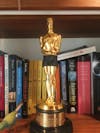
Have you ever wondered what it’s like to win an Oscar?“You feel like you’re playing a role; it doesn’t feel real,” Rodney Rothman ’95, the writer and director of “Spider-Man: Into the Spider-Verse” and a first-time Oscar winner, explained. Rothman, who credits his creative start to the Otter Nonsense Players improv comedy group at Middlebury, talked to The Campus two days after taking home gold at the 91st Academy Awards, discussing the surreal experience of winning the highest honor in the film industry.Rothman described the atmosphere at the Dolby Theater in Los Angeles, where the awards were hosted, as hectic and exciting. “It felt like what I’d imagine the Super Bowl feels like,” he described, noting that the streets around the theater were all closed and helicopters circled overhead as nominees arrived.In the weeks leading up to the awards, nominees are coached about limiting their acceptance speech lengths. Rothman explained, “They say to you, ‘“Everybody thinks they’re going to be able to say what they planned but as soon as you’re up there, you’re going to panic. Don’t plan to say too much.”’ During this period before the event, Rothman was calm; however, once he reached the theater nervousness set in.“You’re obviously seeing a lot of famous people all around, people you recognize, and there’s the chance that you’re going to have to get up live in front of millions of people and say something, which is really cool but also daunting,” he said.As his category, Best Animated Feature Film, approached, Rothman’s mind was full of questions and possibilities: “Was I going to be able to get up there? Was I going to be able to squeeze past the people to the side of me? Are we going to be able to get through what we planned to say fast enough? Am I going to do something embarrassing? Will I fall on the steps? Am I not going to win? What do I do then? Do I go to parties? Do I go home?”Rothman stressed that, although the excitement and grandeur of the Oscars may suggest the opposite, it’s hard to forget about anxieties and extraneous thoughts, even in one of the best moments of your life: “You’re not really in the moment. Your brain doesn’t stop working.”And then, of course, “Spider-Verse” won, and Rothman’s adrenaline “multiplied by 10.” He described the moments walking up to the stage as a series of flashes, a non-stop shaking of hands, and then suddenly he was on stage, looking out onto a crowd of Hollywood elite but trying not to look into the audience, lest he be distracted by a famous person and forget his speech.Rothman took to the mic, in a moment that appears on screen to be full of emotion and excitement and that he describes as a blur. “On behalf of everyone who made this movie, we want to thank our families who stayed with us for four years on this,” he said. “This is for you. We love you all.”Backstage, Rothman and his co-directors were ushered into an elevator — when they got out, they were greeted by a group of other people who worked on the film, many of them sobbing, all incredibly excited. “And that was the first moment that it hit me,” he said. “All of sudden your body just discharges a lot of the emotion and energy that you’ve spent months, if not years, building up to. We worked really hard on the movie, and we were really proud of it, and we didn’t expect to be there.” While backstage, Rothman encountered several celebrities, all of whom congratulated him and his co-directors on their big win: comedian John Mulaney, an old friend of Rothman’s and also a voice actor in “Spider-Verse,” hugged him, as did actor Paul Rudd. After being interviewed by hundreds of journalists — an experience which Rothman explained felt like “talking but not really knowing what you’re saying” — the directors were treated to endless trays of champagne and then hung out with other Oscar winners like Mahershala Ali, who won for Best Supporting Actor and was also a cast member of “Spider-Verse.”After four glasses of champagne, Rothman and his co-directors were sent back out to watch the rest of the show. They took an elevator back down to the theater, and when the doors opened, they were greeted by actors Sam Rockwell and Frances McDormand.“She did this really cool thing where she pointed at, like nine points really quickly, with a smile,” Rothman spoke fondly of his encounter with McDormand. “None of us knew her so that was really cool.”And with that, Rothman returned to watch the rest of the Academy Awards, and ended the night at various Oscar parties around the city. Monday morning, the reality of the situation finally sank in.“It really wasn’t until the next morning in some ways that I could even begin to get my head around the fact that something I’d been working really hard toward for a long time had happened,” Rothman reflected on the evening and the win. “Something that I never really expected was going to happen for me.”
(02/28/19 11:00am)

(02/28/19 11:00am)

(02/28/19 11:00am)
Two Middlebury alumni took the stage last Sunday — at the Dolby Theater in Los Angeles, for their Oscars acceptance speeches. Rodney Rothman ’95 won the award for best animated feature as the co-writer and co-director of “Into the Spider-Verse”; Brian Currie ’83 accepted two awards for “Green Book”, best original screenplay and best picture.
For Rothman, the Oscars ceremony was a culmination of three years working on “Spider-Man: Into the Spider-Verse”, and 25 years working in the industry. The animated film, which focuses on a teenager named Miles Morales who becomes the new Spider-Man, was produced by Sony Pictures Animation, and is the first non-Disney or Pixar film to win in eight years. The award was surreal for Rothman, who was unable to wrap his mind around the achievement on the night of the Oscars.
“It really wasn’t until the next morning in some ways that I could even begin to get my head around the fact that something I’d been working really hard toward for a long time had happened,” he said. “Something that I never really expect was going to happen for me.”
Rothman described the process of creating “Spider-Verse” and of tackling an ambitious project outside of the comfort zones of its creators.
“We weren’t working for Pixar or Disney, we were just making a movie that we thought was really cool and that we were psyched about, and we were trying to do things in a movie that we had never done before,” Rothman explained.
However, that ambition paid off, and “Spider-Verse”, as Rothman put it, “took on a life of its own.” Through the support and enthusiasm of fans, the film saw massive success; it’s quality was noted by Middlebury professor of Film Jason Mittell.
“Spider-Verse was certainly the best animated film I've seen in years, and arguably the most effective superhero film — including live-action — ever made in capturing the essence of the comics genre,” praised Mittel. “The animation style was groundbreaking in a way that supported its storytelling and tone, using visuals to make a very complex story both comprehensible and emotionally engaging.”
_
After “Spider-Verse” landed well with audiences, it was only a matter of time before Rothman confronted the possibility of winning an Academy Award. “At a certain point we realized we had a shot at winning an Oscar. It was a shock, but it was also plainly happening in front of us,” he explained.
Rothman credits the foundations of his career in TV and film to his time in the Otter Nonsense Players improv group while at Middlebury. The school community was incredibly supportive of the Otters, treating performers to crowded audiences at every performance, and the environment allowed the group, and Rothman, to develop new forms of comedy that merged with storytelling — a space that he “likes to play in as a writer and filmmaker today.”
He also noted that the culture at Middlebury was ideal for growing as a performer and writer: “People appreciated what I was doing and that pushed me to try new things. Ideas I had at Middlebury are concepts that I’ve continued to develop for years, and decades.”
Otters have gone on to see great success in Hollywood — Jason Mantzoukas, with whom Rothman lead the improv group 25 years ago, is a successful comedic actor, as is Jessica St. Clair, who was also a part of the Players. “We all see each other all the time,” Rothman noted, and then joked, “There must be something going on in the fruit punch in Proctor.”
Rothman was also a columnist and editor with The Campus, and wrote several Saturday Night Live jokes used on air during Weekend Update, as well as his application for The Late Show with David Letterman (a position he was hired for) from our Hepburn basement offices.
Brian Currie ’83 received his Oscars this Sunday after several awards for “Green Book” accumulated over the last several months. The film, which tells the story of a black pianist, his white driver, and a friendship they developed on a tour through the South in 1962, has faced criticism for promoting the “white savior” concept. Additionally, it faced backlash after the surviving family of Donald Shirley, on whom the main character is based, accused the filmmakers of historical inaccuracy and exaggerating the friendship between the two men.
Film professor Jason Mittell compared the two films that won awards for Middlebury alumni and their various successes, and addressed the controversies of “Greenbook”: “The character of Miles Morales created a sophisticated mixed-race protagonist in ways that many have said is more grounded and impactful than almost all live-action films. Certainly it's notable that an animated film seemed to represent a more nuanced and realistic relationship between black and white characters than the official Best Picture did.”
(02/28/19 10:56am)
Last night, the 91st Academy Awards went off without a hitch and without a host. After Kevin Hart abdicated the position following some inappropriate tweets, the Academy could not find a willing replacement. Therefore, the awards forged on. This was the first time in 30 years that the show has gone host-less, leaving the “Best of Hollywood” to lead themselves, crack their own jokes and be their own timekeepers.
Would the lack of a host lead to a show without continuity and humor? Ratings were up for the first time in five years so apparently the public had faith that the amazing minds behind the art could speak for themselves. The strong mix of planned bits along with the emotional spontaneity that accompanies nights like this created an atmosphere that was not in need of strict direction.
Tina Fey, Amy Poehler and Maya Rudolph kicked off the night with comfortable quips and their classic, impeccable timing. In her presentation of Excellence in Costume Design, Melissa McCarthy raised the comedic bar. Her royal bunny robes, mocking Olivia Colman’s bunny children in “The Favourite,” got things hopping. Her struggle to open the envelope with the bunny puppet just added to the moment. The four honors bestowed by the Academy on Bohemian Rhapsody were varied, from Sound to Best Actor, but possibly the best praise was when Mike Myers and Dana Carvey spoofed themselves, reviving their Wayne’s World bit from decades ago. “We’re not worthy” works on so many levels and on every level when talking about Queen.
The classic comedy was paralleled by emotionally charged moments that came naturally from the passion on the stage. Lady Gaga and Bradley Cooper’s heated performance of “Shallow” and Regina King’s (Best Supporting Actress) heartfelt thank you to her mother, making her cry, were instances that could not have been planned or expected. The absence of a host almost highlighted these amazing moments, cutting out the constant narration, and letting them speak for themselves.
While “Green Book’s” impressive showing last night was a shock to much of the entertainment community, one of the names that followed the film was familiar to the Middlebury community. Last night’s winner of Best Original Screenplay, Brian Currie, was the class of ’83. He went from the Middlebury football field to center stage at the Dolby Theatre. Currie walked away with two Academy Awards last night. In addition, not only was Brian Currie’s classmate, Ted Virtue – yes our Virtue Field House Ted Virtue – listed as a co-producer and was thanked by Peter Farrelly in his acceptance speech. It looked like Virtue was on stage alongside Currie to close the Oscars with Green Book’s success. What we didn’t hear was a “Go Midd!”
But Currie was not the only Middlebury alum to walk away a winner. Rodney Rothman ’95 was one of three directors to take home an Oscar for “Spider-Man: Into the Spider-Verse” which won Best Animated Feature.
It looks like Hollywood pulled it off. No Host, No Problem.
