
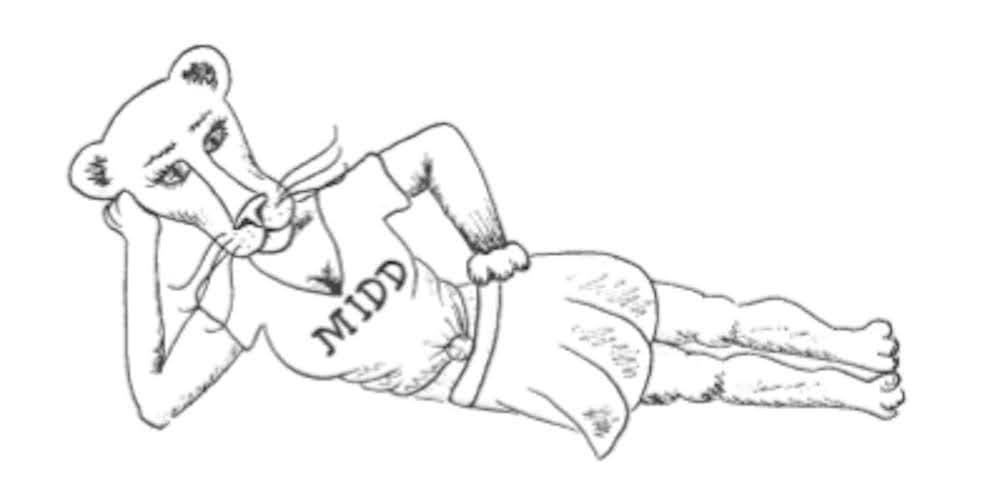
SPECS Panther is a mascot for SPECS (sex positive education for college students) and serves the Middlebury community. As a part of Health & Wellness Education, SPECS Panther seeks to educate and spark independent dialogue, not be the end-all be-all resource on campus. We encourage Midd Kids to break down the walls of silence by engaging in sex-positive conversation — wherever, with whomever and about whatever is most comfortable, easy, and safe for you. Our editions will be educational!
Watching TV is a uniquely American pastime. Almost 80% of U.S. adults who watch TV tune into reality series, 39% of which are dating shows. Younger demographics are the primary audiences, mainly women ages 18 to 34. In fact, Netflix’s “Love Is Blind” was ranked in 2024 as the second most streamed original show in the U.S., totaling 16.45 billion minutes. These reality dating shows tap into human nature, providing a temporary escapist route in a world fractured by divisiveness where viewers have an easier time relating to and establishing parasocial relationships with an accessible on-screen cast. Still, their growth and marketing results in a complicated reality: The simultaneously negative, but also surprisingly positive, portrayals of consent, sexuality and masculinity.
While reality dating shows are not new, their historical trajectory, particularly with consent, is nothing short of controversial. In 2006, on “Big Brother Australia,” contestants Michael Cox and Michael Bric were kicked out and referred to the police after footage caught one allegedly holding down Camilla Severi, another contestant, while the other unconsensually rubbed his penis in her face. The sexual assault, seemingly facilitated by the show’s lax oversight and alcohol policies, was met with such fierce public backlash that the Prime Minister at the time advised the show to be discontinued. In 2012, Tonya Cooley filed a lawsuit alleging that she was dismissed from “The Real World” after she reported that she was raped by two of her male housemembers while incapacitated. Or in 2015, when “The Challenge” contestant Nia Moore sexually assaulted her ex Jordan Wiseley, forcibly removing his pants, touching his genitals and yelling a homophobic slur at him.
While much has changed in reality dating rules — “Love Island” strictly limits alcohol — problematic behaviors persist. During “Love Island UK” in summer 2022, for example, Women’s Aid accused the show of enabling “misogyny and controlling behaviour.” Critics argue that the premise of many of these shows center love as a sexual conquest won through coercion and control, where contestants are treated like transferable objects.
The female contestants are regularly portrayed as overly emotional and hysterical, strong-armed into a performance of heteronormative stereotypes like the ‘crazy’ woman trope. Especially with more unregulated formats, the lines between consent and coercion blur, allowing for microaggressions, slut-shaming and inflammatory racial remarks to continue unchallenged.
Still, reality dating shows resist a normative framework. Female contestants can actively engage and have freedom over their pleasure and sexual experiences. Multiple leads regularly promote sex-positivity and feel empowered by their time on set, from Katie Thurston on “The Bachelorette” embracing her ‘vibrator girl’ persona to Giannina Milady Gibelli on “Love is Blind” communicating with her fiance about being unsatisfied with their sex life to the staple Yoni puja workshop in “Too Hot To Handle” where self-expression and body positivity are explored through vulva-themed art.
Reality dating shows also evolve alongside cultural norms. “Temptation Island” host Mark Walberg commented that “what has happened is that this generation, the people that are on the show now, we kind of dispelled some of the fakeness of how we were back then. In other words, if you feel sexual, you’re allowed to be sexual. There’s less shame behind action, so people are living their best life.” Even the creation of “The Bachelorette” — a spin-off of the acclaimed “The Bachelor” — enables a female-led perspective on dating.
And not all of the attention is directed toward romantic relationships. In “The Real Housewives,” the women are unabashedly themselves and engage in both realistic romantic relationships and, more iconically, friendships. Thus, the main audience takeaway extends to the touching displays of platonic friendship, which are more likely to last after the conclusion than even the couples themselves.
New frontiers are also emerging. Efforts to be more inclusive with sexuality, demographics or gender roles are slow-moving in the industry, but change is occuring. “Love Trip: Paris” features a queer and POC cast, while Japan’s “The Boyfriend” focuses exclusively on same-sex relationships. In 2024, “Love Island UK” finally crowned a Black couple as their winner via public vote. These recent developments have destabilized the normative portrait of an almost exclusively heterosexual, white and thin cast, allowing for viewers to feel more directly represented. Still, there remains the question of tokenism and performativity. Stereotyped media representations of Black women in particular regularly portray the hyper-aggressive and angry woman or the hyper-sexualized Jezebel who is a seductress.
Most surprising, however, is the subtle subversion of traditional masculinity. “Love Island USA” summer 2024 showcased a scattering of authentic representations of male-male friendships, entrusted with emotional support that destigmatized gentle intimacy. The ‘bromance’ bond between Rob Rausch and Aaron Evans, despite their questionable individual romantic pursuits, granted viewers an insider understanding of socialization, advice-seeking and a softer side to modern masculinity than usually depicted on TV. In fact, Evans — from the U.K. — and Rausch — from Alabama — learned from each other’s unique lived experiences of the American and European conceptions of masculinity.
Ultimately, reality dating shows are nothing more than smoke and mirrors, a fact viewers are capable enough to understand. While a utopian future for the industry is overblown, significant positive steps forwards have been made to make today’s landscape ripe for an active, albeit cautious, viewing. Acknowledging the limitations of the genre allows for productive conversations on what is real: Sex, consent, gender and masculinity.
