
I am not sure how many of you caught the news over the break. Amidst missing airlines and aggressive Russian foreign policy you may have noticed a headline about a particularly bad fire in Boston. While usually a fire is not newsworthy, this one made the headlines as it occurred on a day with 50 mile per hour winds coming off the Charles River and tragically claimed the lives of two firefighters. The burning home in question sits across the street from mine.
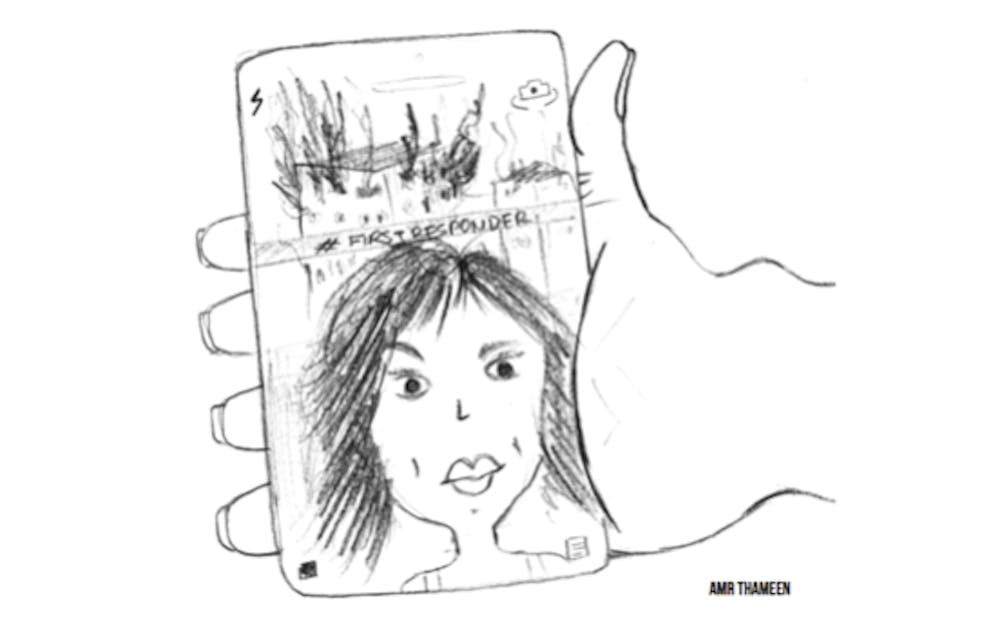
My home was unharmed and through a struggle that lasted upwards of 24 hours the fire was eventually contained. However, being in a city and being in such close proximity made my family a part of the situation whether or not we wanted to be. The Internet and cable lines were cut early on and most of our news, somewhat ironically, simply came from looking out the window. For those of you that have seen fires that consume houses you know that there is more smoke than fire usually. Great, rancid plumes covered the streets in my neighborhood, while fire trucks, ambulances and police cruisers filled the streets. Strangely though, instead of fleeing an apocalyptic scene, a crowd formed on the corner of my street, iPhones held outstretched to document the whole thing.
I am no Luddite; it is hard to imagine anyone of our generation is. In many ways the integration of technology and social media into our daily lives has defined our generation, and we have changed the world for it. Usually, I would see this as a benefit. Faster communication, free information, the global spread of ideas and perspectives are all good things. Yet, as I stood looking out my window as screaming firefighters pulled one of their burned and dying brothers from an inferno I could not help but feel disgusted as a crowd recorded the whole thing.
I have been lucky enough to have seen only one person die, calmly in bed and surrounded by his family. That event had a gravitas to it. Everyone in the room understood at a human level what could be said or done in that moment. A priest was present and the family prayed and cried together. There was a code of ethics built into the situation and while the rest of the world did not know my grandfather or my family, everyone pulled over when the funeral procession drove to the graveyard.
Perhaps it was naïve of me to assume similar unwritten laws would govern the virtual world. However, it seems the codes of respect and dignity that hold true in human interaction are insufficient in the virtual world where privacy and accountability are iffy at best. I sincerely wonder whether those videos garnered likes and re-tweets in the days that followed. Did people feel validated? That maybe they had provided some kind of service? Would people feel a little unnerved to watch firefighters try to resuscitate a dying brother while people screamed for an ambulance?
We have yet to come up with ethics for our new world of social media. The tools seem to have evolved faster than our morality. Whether we like it or not, this will be an issue for our generation. The Internet is rapidly becoming less and less of the anonymous, private tool it once was. The frontier is being tamed, no longer is anything truly private and total anonymity is becoming a thing of the past. This is not such a bad thing, is it? Should we not punish hate speech on the Internet as we would if it were on the sidewalk? Why would certain laws be exempt in the virtual world?
What concerns me more is the ethics we will build in this virtual environment. As of now it seems we are sorely lacking. Hurtful personal content and often lies can be propagated at the click of a button. Things we speak about with hushed tones in person can be given a megaphone on the Internet. Hopefully, in a community or a classroom this would be met by rebukes or admonishments. People would honk at the car tailgating a hearse. The Internet does not yet have those social customs that keep us getting along in the real world day to day. It is up to us to build them. Technology is not slowing and information will only move faster. We should anticipate this. We will have to formalize it, make certain practices unacceptable not in law, but in culture. So that maybe when a firefighter dies in the street, our phones are turned to silent instead of posting to Facebook.
Artwork by AMR THAMEEN

