Economy slows quest for carbon neutrality
Though much has been done in the 18 months since the College announced its commitment to carbon neutrality in May 2007, new innovations will hold the key to upholding that promise by 2016 given current economic conditions, according to faculty and students already searching for creative ways for the College to meet its environmental goals.…
Post the First Comment
|
|
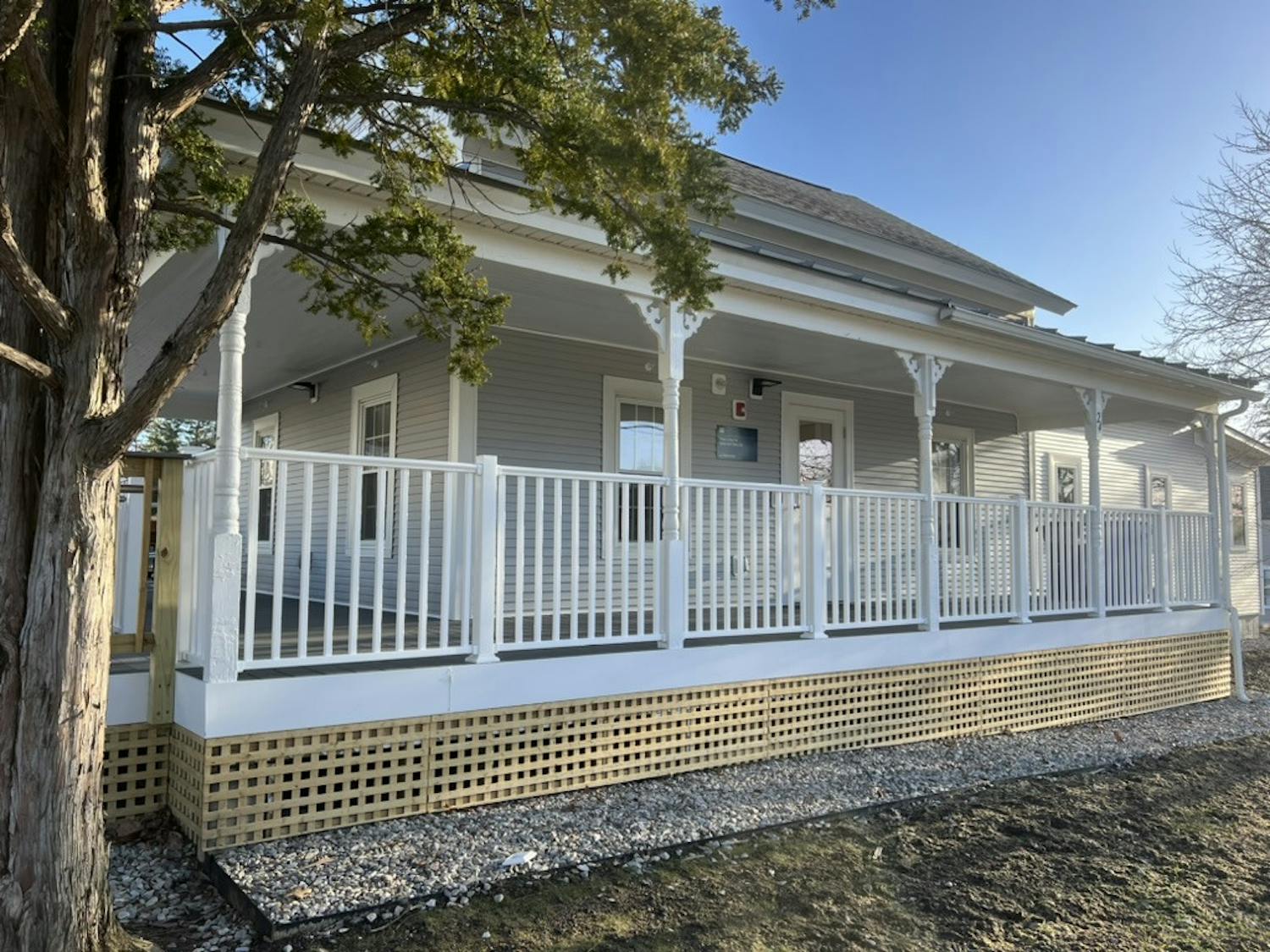
Hillcrest earns LEED platinum certification
In mid-October, The Franklin Environmental Center at Hillcrest became just the nation's seventh building to earn The United States Green Building Council's Leadership in Energy and Environmental Design (LEED) platinum status, the system's highest level of certification.…
Post the First Comment
|
|
EditorialWhy Green?
Why the Green Issue? Why not? After a handful of our peer publications (Vanity Fair, Time, The New York Times Magazine) produced their own Green Issues, featuring a more sustainable production process and an emphasis on environmental content, we thought that we should try adopting the idea for our college newspaper.…
Post the First Comment
|
|
Dining Services scores on local food initiativesThe College strives to reduce waste while supporting area farmers
In the commotion of Ross Dining Hall, you brave the line and emerge with a plate of chicken parmesan, unaware that you are part of a chain of sustainability and environmental awareness that has resulted in the steaming poultry dish in your hands.
Middlebury Dining Services' primary source, Burlington Food Services, has provided many of the ingredients in the chicken parmesan - including the parmesan itself, which hails from Schuman Parmesan and Great Lakes Parmesan.…
Post the First Comment
|
|
After fewer than two years of construction in the southern part of campus, the Biomass Plant project is nearing its end and will likely be operational by January 2009. Flanked by the recently completed Donald E. Axinn '51 Center for Literary and Cultural Studies at Starr Library and the under-renovation McCullough Student Center, the Biomass Plant will contribute to the College's Carbon Reduction Initiative and catch up with the campus' current energy demands.
"Conservation Congress" conjures up an image of a room full of Vermonters drawing up legislation and making decisions on local environmental issues. Against the backdrop of society's current fixation with climate change and national politics, "conservation" could only mean environmental conservation, and "congress" obviously alludes to decision making and action.
My first thought about environmentalism, "I don't know much about it, and I don't care." Then I realized that this very apathy provides for compelling conversation. Sure, I've always refrained from littering, and separated plastic from paper (thank you, dorm room double trash bin system).
At the outset of the 1994 academic year, President Emeritus John McCardell delivered an all-campus address that highlighted distinct areas in which the College had emerged as a national leader. McCardell imagined that these "Peaks of Excellence," as he dubbed them, extended far beyond the classroom, though - more than a decade later - the phrase tends to be employed most often in an academic context.
On a campus with its largest academic buildings - McCardell Bicentennial Hall and the Donald E. Axinn '51 Center for Literary and Cultural Sutides at Starr Library - almost diametrically opposed, the Environmental Studies program makes its physical and intellectual homes between the two, straddling the deeply ingrained divide between the sciences and the humanities.
Two of the things Middlebury students, benefactors and administrators hold dear are the College's commitment to environmental sustainability and its continued athletic success. Perhaps, then, it should come as no surprise that the Middlebury College Athletic Department leads the way among peer institutions in terms of its cognizance of environmental issues.